Blog
How to Improve Farm Ditches for Wildlife Without Stopping Them Working
A practical guide to improving farm and estate ditches for wildlife while retaining drainage, using selective clearance, varied margins, refuge sections and connected wetland features.
Can You Build a Wildlife Pond on Sloping Ground? Levels, Banks and Spoil Explained
A practical guide to building a wildlife pond on sloping ground, including water levels, cut-and-fill, stable banks, liner edges, spoil and access.
Ghost Ponds: Bringing Lost Farm Ponds Back to Life
Ghost ponds are historic ponds that were filled in but can leave clues in the landscape — and sometimes viable aquatic plant seed banks beneath the soil. Here’s what landowners in Devon and Cornwall should consider before trying to restore one.
Green Community Grants 2026: Funding for Ponds, Wetlands and Community Nature Projects
The Green Community Grants Programme is open for its final 2026 round, with grants of up to £25,000 for eligible not-for-profit organisations. Here’s what community groups in Devon and Cornwall should know when considering ponds, wetlands and wider habitat projects.
Spring, Seepage or Surface Runoff? How to Read Wet Ground Before Designing a Pond
Wet ground can come from a spring, seepage, surface runoff, groundwater or a land drain. Learn what to check before designing a pond or wetland.
SFI Closes in Hours: Practical Next Steps for Landowners
SFI’s September window closed within hours. We look at the uncertainty and practical habitat steps landowners in Devon and Cornwall can still consider.
Wetland Insects in Devon & Cornwall: What They Reveal
A practical guide to wetland insects, what they reveal about ponds and streams, and the habitat features that support a diverse aquatic community.
Species-Rich Grasslands, Wetlands and Ponds: Why They Work Better Together
A wildlife pond is part of a wider habitat. Learn how species-rich grassland, wet margins and clean water work together—and how to plan and manage them without damaging what is already valuable.
Can You Build a Pond Fed by a River or Stream?
A river or stream can sometimes supply a pond, but a constant inflow can also bring silt, pollution and extra maintenance. Here is how to assess the options, permissions and alternatives before starting work.
Can You Turn a Wet Field into a Wildlife Pond or Wetland?
A persistently wet corner of a field can feel like a drainage problem, but it may also be the best place on the property to create valuable wildlife habitat. The important question is not simply whether the ground is wet today. A successful pond, scrape or wetland project depends on where the water comes from,…
RPS 374: Low-Risk Abstraction for Nature Recovery
RPS 374 sets out the Environment Agency’s position on qualifying low-risk abstractions, including new backwaters and fish-refuge habitats created for nature recovery.
Why Is the Ground Still Dry After So Much Rain? What Drought Teaches Us About Water in the Landscape
After hours of rain, the surface can look wet while the soil beneath remains surprisingly dry. Here is why drought-stressed ground sheds water — and how ponds, scrapes, swales and wetlands can help keep more rainfall in the landscape.
How Much Does Pond Restoration Cost in Devon and Cornwall?
A practical guide to pond restoration costs in Devon and Cornwall, explaining how access, silt, water management, repairs, ecology and material handling shape a dependable quotation.
Why Rain After Drought Can Cause a Pollution “First Flush” — and How Habitat Creation Can Help
The first substantial rain after a drought can carry a concentrated pulse of sediment, nutrients and other pollutants into ponds, ditches and rivers. Well-designed wetlands, swales, buffers and sediment traps can help slow, spread and filter that runoff while creating valuable habitat.
Building a Stronger Habitat Restoration Partner Network Across Devon and Cornwall
SAS Aquatics is strengthening its network of ecologists, surveyors, specialist contractors, suppliers and habitat professionals for projects across Devon, Cornwall and the South West.
Reeds and Bulrushes Taking Over a Pond? How to Regain Control Without Clearing Everything
A practical guide to controlling reeds and bulrushes that are taking over a pond, using selective thinning, root-mat removal and phased restoration while retaining valuable habitat.
Check Dams and Leaky Dams: Slowing Runoff, Reducing Erosion and Creating Better Habitat
A practical guide to using check dams and leaky dams to slow runoff, reduce erosion, trap sediment and create better wildlife habitat on farms, estates and larger sites.
How to Restore an Overgrown Farm Pond Without Stripping Out Its Wildlife Value
A practical guide to restoring an overgrown farm pond through selective tree clearance, phased desilting, bed assessment and habitat retention rather than complete clearance.
Why Wetter Land Matters: Fire Resilience, Water Security and Wildlife
Why restoring water to the right parts of a landscape can help reduce wildfire vulnerability while supporting drought resilience, flood management, cleaner water and richer habitat.
New Environment Agency Handbook: What It Means for Wetland, Habitat and Natural Flood Management Projects
The Environment Agency’s new England-wide handbook brings planning, permissions, construction, monitoring and maintenance into one practical framework for water-resource nature-based solutions.
Water Management Grant 2026: Farm Reservoirs with Habitat Benefits in Devon & Cornwall
Defra plans to reopen the Water Management Grant in autumn 2026. We explain what growers should prepare and how irrigation reservoirs can be planned with compatible habitat benefits.
What Happens to Pond Silt After Desilting? Testing, Reuse and Disposal Explained
A practical guide to pond silt disposal after desilting, including when sediment may need testing, possible on-site routes and why material handling affects project cost.
Can You Convert an Existing Swimming Pool into a Natural Swimming Pond?
A practical guide to deciding whether an existing swimming pool can be converted into a fully natural or hybrid swimming pond, what can be retained and when rebuilding is the better option.
Farm Pond Grants in 2026: FiPL, Capital Grants and SFI
An up-to-date guide to FiPL, Capital Grants WN12 and SFI WBD1 for farmers and land managers planning wildlife pond creation, restoration or management in Devon and Cornwall.
Rewilding in Action: If Not Now, When? 2026 at Rewilding Coombeshead
Event archive: If Not Now, When? 2026 took place at Rewilding Coombeshead from 24 to 26 July 2026. Ticket sales are closed. This article is retained as a record of the programme and the practical rewilding themes it brought together. Rewilding in Action: If Not Now, When? 2026 at Rewilding Coombeshead At SAS Aquatics, our…
Seaton Wetlands: What It Teaches Us About Creating Better Wetlands
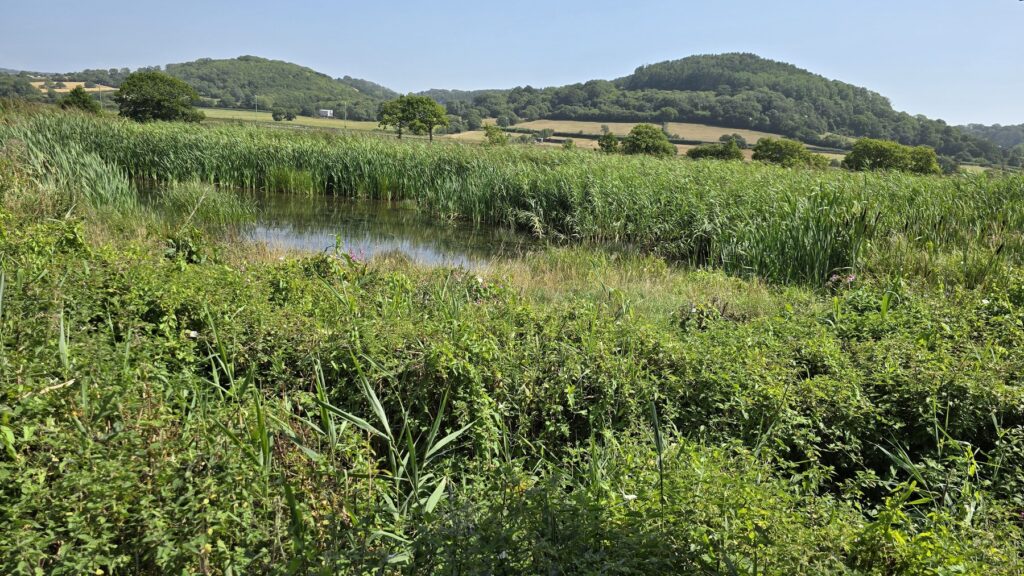
Seaton Wetlands is one of Devon’s best examples of how carefully restored water, marshland and reedbed habitats can transform a landscape. We look at the practical lessons it offers for wildlife ponds and wetland projects of every size.
Hibernacula: The Overlooked Wildlife Feature Every Good Pond Should Have
When most people think about a wildlife pond, they picture open water, marginal plants, dragonflies, frogs and perhaps a shallow stony beach. But one of the most important parts of a successful wildlife pond is often outside the water itself: the surrounding habitat. A hibernaculum is a purpose-built shelter made from logs, stone, branches, soil…
The Different Types of Natural Swimming Ponds: Which Is Right for Your Project?
Natural swimming ponds are becoming one of the most sought-after landscape features in the UK. Combining the beauty of a wildlife pond with the enjoyment of outdoor swimming, they offer a more natural alternative to traditional swimming pools. However, not all natural swimming ponds are the same. A plant-led system should be the starting point…
South West Water Nature Recovery Fund: 2025/26 Round Status
Status checked September 2026: applications to the 2025/26 South West Water Nature Recovery Fund are closed. South West Water states that applications are being reviewed. This page is retained to explain the fund and help successful or future applicants plan deliverable work. South West Water launched a £2 million Nature Recovery Fund for community-led projects…
Bentonite Clay For Pond Use
Bentonite Clay Pond Sealing in Devon: Natural Solutions for Leaky Ponds If your pond is losing water or struggling to hold a consistent level, you may be dealing with a leaky pond — a common issue across Devon, Dartmoor, and the wider South West. Many ponds built on sandy or stony soils simply don’t retain…
Devon’s Living Waters: How Ponds, Streams and Wetlands Are Bringing Biodiversity Back
A Devon Morning Reawakened Early light ripples across a new pond near Yelverton. Water mint releases its scent as dragonflies rise from the shallows; a frog plops from a fringe of sedge; and a small cloud of damselflies flashes electric blue above the surface. For many years, this field was hard-drained pasture. Now, under a…
What to Do If My Pond Pump Stops Working
A pond pump is the heart of any healthy pond — keeping water circulating, oxygen levels stable, and filters performing efficiently.When it suddenly stops, your pond’s balance can quickly shift, leading to cloudy water, algae growth, or even stressed fish. Before rushing to replace your pump, follow this step-by-step troubleshooting guide from the SAS Aquatics…
Do You Need Planning Permission for a Wildlife Pond in Devon and Cornwall?
Reviewed September 2026. Planning and environmental requirements depend on the site and the work proposed. This guide is practical information, not legal or planning advice; confirm the position with the relevant authority before starting work. Why a wildlife pond matters Wildlife ponds are one of the most effective, cost-effective ways to boost biodiversity on your…
How much does a professionally built pond cost in Devon & Cornwall?
The cost of a professionally built pond depends less on its surface area than many people expect. Access, excavation volume, ground conditions, water retention, spoil, stone, planting, filtration, levels and the way the finished pond connects to the wider site can all change the scope substantially. Budget guidance, excluding VAT. The figures below are not…
Biodiversity Net Gain and Aquatic Habitat Creation in Devon & Cornwall
Reviewed September 2026. Biodiversity Net Gain (BNG) is part of the planning system in England. Unless an exemption applies, development must deliver at least a 10% improvement in biodiversity value, measured with the statutory biodiversity metric. The rules changed during 2026. From 6 August 2026, planning applications for developments of 0.2 hectares or below are…
5 Common Pond Leak Causes and How to Prevent Them in Devon’s Climate
Devon and Cornwall’s mild, wet climate is ideal for thriving ponds — but it’s also tough on pond materials. Heavy rain, fluctuating temperatures, and shifting clay soils can all cause leaks that slowly drain away water and patience alike. At SAS Aquatics, we repair and maintain ponds of every type — liner, fibreglass, concrete, and…
DIY Pond Leak Repair vs Professional Help – What Works in Devon & Cornwall?
A leaking pond can be frustrating — one day it’s full, the next it’s mysteriously dropping. Many Devon and Cornwall pond owners wonder whether to tackle a repair themselves or call a specialist. In this guide, we’ll explore the real causes of pond leaks, what can be fixed DIY, and when it’s worth calling in…
Wildlife Ponds for Small Gardens: A Practical DIY Guide
You do not need a large garden to create useful freshwater habitat. A carefully placed small pond can support insects, birds and amphibians while adding movement and seasonal interest to the garden. This is a practical guide for straightforward DIY wildlife ponds. If access, drainage, structures or detailed landscaping make the project more complex, see…
Native Pond Plants of Devon: The Complete Guide to a Thriving Wildlife Pond
Whether you’re restoring a farm scrape, designing a garden pond, or managing a community wetland, the right plants make all the difference.Native aquatic and marginal plants not only look beautiful — they keep your pond healthy, oxygenated, and teeming with wildlife. Across Devon and Cornwall, our clients are finding that a well-planted pond becomes the…
Community Ponds & Pocket Wetlands: How to Rewild Shared Spaces in Devon
A single pond can bring life back to a whole community space — dragonflies over the water, birds at the margins, and children discovering frogs for the first time. Across Devon and Cornwall, more parish councils, schools, and local groups are discovering that small-scale water projects can deliver huge ecological, educational, and wellbeing benefits. At…
The Climate-Ready Garden: How Rainwater Ponds and Swales Protect Homes from Flooding
After another year of heavy downpours and sudden droughts, many Devon and Cornwall homeowners are asking the same question: “How can I make my garden cope better with extreme weather?” The answer often lies in how your land manages water. By adding rainwater ponds, swales, and permeable planting zones, you can turn excess runoff into…
Natural Swimming Ponds Through the Seasons: What Owners Should Expect
A natural swimming pond is a living waterbody, not a conventional pool with different finishes. Its appearance and behaviour change through the year as plants grow, water warms, leaves fall and the balance of nutrients and circulation shifts. What “natural” really means Natural swimming systems manage water through a combination of biological processes, planted areas,…
Professional Small Garden Pond Design: What Changes the Result
A small garden pond can provide excellent wildlife habitat, but limited space makes every design decision more important. The water must sit comfortably within the garden, retain water reliably, offer safe shallow access for wildlife and remain manageable without overwhelming the space. This guide explains the decisions behind a professionally planned small pond. For a…
Scrapes, Swales and Seasonal Ponds: Practical Habitat Features
When we think of rewilding, we often imagine vast landscapes, beavers, and sweeping ecological change. But you don’t need hundreds of acres to make a real difference. Even a single shallow scrape, swale, or seasonal pond can spark a remarkable transformation in local biodiversity — creating habitat, restoring water balance, and helping nature thrive again.…
Turning Water into Wildlife: How to Fund and Deliver a Rewilding Pond Project in Devon
Reviewed September 2026. Funding availability changes. Treat this as a project-planning guide and confirm the current scheme before committing expenditure. If you own land in Devon or Cornwall — whether it’s farmland, a community site, or a private estate — you’ve probably noticed how water behaves differently in recent years. Heavy downpours, flash flooding, and…
Autumn Pond Maintenance and Refurbishment: What to Plan
As autumn arrives and leaves begin to fall, many garden ponds start to suffer from murky water, sludge build-up, and tired filtration systems. If your pond’s looking dull or struggling to stay clear, autumn can be a suitable time to plan professional pond cleaning service in Devon or Cornwall. Whether you’ve got a large koi…
Rewilding Wetlands: How SAS Aquatics Supports Funded Projects
Reviewed September 2026. Funding schemes and payment rates change. Check the current agreement rules before designing work around any grant. Published October 2025 Wetlands are some of the UK’s most precious and productive habitats. They filter water, store carbon, buffer floods, and provide a home for extraordinary wildlife. Yet, too many of our wetlands have…
The Common Toad’s Decline in the UK: How Rewilding, Wetlands, and Wildlife Ponds Can Help in Devon and Cornwall
The common toad (Bufo bufo) has long been an iconic part of Britain’s countryside, inspiring myths, folklore and even children’s stories like The Wind in the Willows. But behind this cultural heritage lies a stark reality: the once-abundant common toad is becoming alarmingly uncommon. Recent studies show that toad populations in the UK have almost…
Unlocking the DEFRA MAGIC Tool for Your Land
A practical guide to using the Defra MAGIC Map before planning a pond, wetland or habitat project, including the layers to check and the limits of desk-based mapping.
How Habitat Creation Can Support Land Resilience and Rural Income
Rewilding is often seen as something that happens on vast estates or remote reserves, but the truth is simpler: every landowner can benefit from letting nature back in. Whether you manage a farm, a smallholding, or a community space, rewilding can improve biodiversity, strengthen your land’s resilience, and open up new streams of income. At…
How to Get Your Garden Pond Ready for Winter
Essential Autumn Maintenance Tips As the leaves begin to fall and the nights draw in, autumn is a useful time to prepare a garden pond for winter. A little care and attention in autumn can save you headaches in spring, keeping your fish healthy and your pond water clear. Why Autumn Pond Care Matters…
Planning Pond and Wetland Work in Autumn
As the days shorten and autumn rains soften the ground, autumn can be a useful time to review how water moves through a site. Whether you’re a homeowner wanting to create a beautiful wildlife pond in your garden, or a landowner looking to restore wetlands on a larger scale, autumn offers the best conditions for…
Climate-Resilient Wildlife Ponds in Devon & Cornwall
Wildlife Ponds for Climate Resilience: How Ponds Protect Against Floods and Droughts Climate change is bringing heavier rainfall, longer dry spells, and greater weather extremes to the UK. For landowners, farmers, and local councils in Devon and Cornwall, the question is no longer if these challenges will affect us — but how we adapt. One…
Northern Pool Frog in the UK: Habitat, Food & Rewilding Potential
The Northern Pool Frog: Restoring the UK’s Rarest Amphibian When we think of rare amphibians in the UK, the Great Crested Newt usually comes to mind — it’s strictly protected, a flagship species for ponds, and a regular feature in conservation headlines. But did you know there is an even rarer amphibian, once native to…
Moor Barton Wilding: Rewilding, Beavers & Habitat Restoration on Dartmoor
Moor Barton Wilding: Rewilding in Action on Dartmoor Moor Barton Wilding is one of the most inspiring rewilding projects in the UK. Set on some 120 acres of land in Dartmoor, Devon, Moor Barton is doing more than just talking about restoring nature—it’s doing it, with people, with species, and with real, visible ecological transformation.…
Beavers in the UK: Why They’re Essential for Habitats & Flood Control
Beavers in the UK: The Complete Guide to Reintroduction, Habitat Benefits, and Conservation Beavers (Castor fiber) have captured the UK’s imagination in recent years. Once hunted to extinction in the 16th century for their fur, meat, and castoreum, these extraordinary ecosystem engineers are now making a comeback. From river valleys in Devon to wetlands in…
Wildlife Pond Construction in Devon & Cornwall: Power of Native Aquatic Plants
Top Native Aquatic Plants: The Beating Heart of Wildlife Ponds in Devon and Cornwall When creating a wildlife pond in Devon or Cornwall, one of the most powerful choices you can make is planting native aquatic plants. These plants aren’t just decoration – they’re living filters, wildlife magnets, and vital players in keeping your pond…