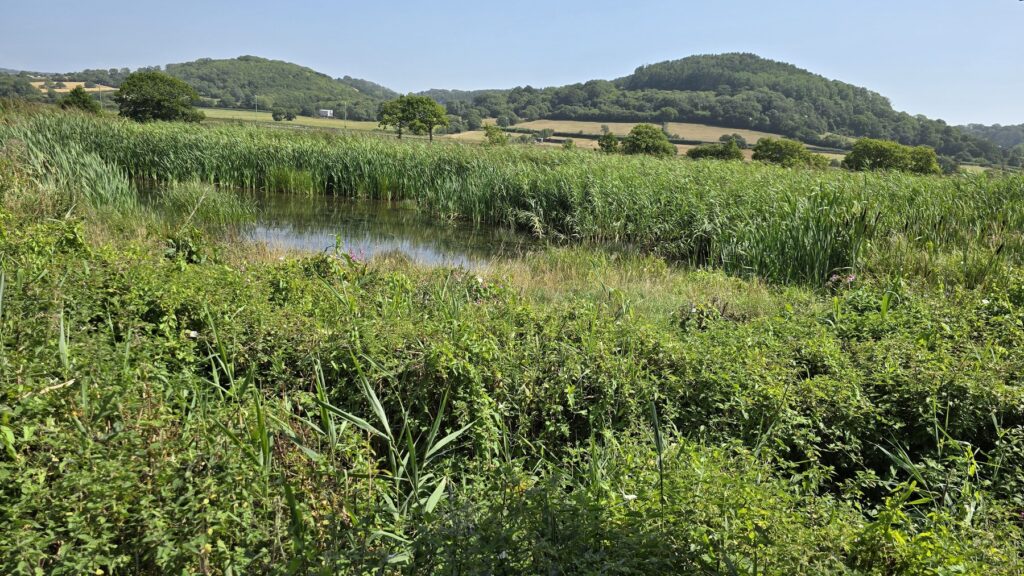
Why Rain After Drought Can Cause a Pollution “First Flush” — and How Habitat Creation Can Help
After weeks of dry weather, rain is usually welcomed. Rivers begin to
respond, fields start to green up and ponds receive some much-needed
water.
However, the first substantial rainfall after a prolonged dry period
can also create a short but significant water-quality problem.
Dust, fine soil, manure, fertiliser residues, oils, tyre and brake
particles, decaying organic matter and other contaminants can accumulate
across fields, yards, tracks and roads while conditions remain dry. When
intense rain finally arrives, some of this material can be washed into
drains, ditches, ponds and rivers in a concentrated pulse.
This is often described as the “first flush”.
Following the exceptionally dry summer of 2026, this is especially
relevant across Devon and Cornwall. Recent rain may make the landscape
look as though it is recovering, but drought conditions and low river
levels can continue long after the surface has turned green.
The good news is that carefully planned habitat creation can form
part of the solution. Buffer strips, swales, sediment traps, scrapes,
wetlands and connected ponds can slow water down, intercept sediment and
create space for natural processes to work — while also adding valuable
habitat.
Why can runoff be worse
after a drought?
Several factors can come together when rain follows a long dry
spell.
Pollutants have had time
to accumulate
During dry weather, material builds up on the land rather than being
washed away little by little. Depending on the catchment, the first
runoff may carry:
- loose and eroded soil;
- nutrients from fertilisers, slurry or manure;
- pesticides and other agricultural residues;
- oils, hydrocarbons, metals and tyre particles from roads and
yards; - animal waste and harmful bacteria;
- fine organic matter from vegetation; and
- dust and debris from roofs, tracks and other hard surfaces.
The exact mixture is different on every site. This is why it is
important to understand where the water has come from, rather than
treating all runoff in the same way.
Dry or compacted
soil may absorb water poorly
Very dry ground is not always ready to soak up a sudden downpour.
Baked surfaces, soil crusting, compaction, gateways and vehicle tracks
can all reduce infiltration.
Instead of entering the soil gradually, water may move quickly across
the surface and become concentrated in wheelings, drains, ditches and
low points. The result can be erosion and rapid delivery of sediment and
pollutants to the nearest waterbody.
Rivers and ponds may still be
low
A short period of rain does not necessarily end a drought.
Groundwater, reservoirs, ponds and river flows can take much longer to
recover.
If a concentrated pollution pulse reaches a river while flows remain
low, there is less water available to dilute it. Fine sediment can
smother gravel and aquatic habitat, while nutrients and organic matter
can contribute to algal growth and falling oxygen levels.
For an existing pond, the effects may appear as unusually cloudy
water, a layer of fresh silt, excessive plant or algae growth,
unpleasant smells, stressed wildlife or a sudden deterioration in water
quality.
Habitat
creation can help — if it is designed around the water
The aim is not simply to dig a pond wherever runoff collects. A
successful scheme starts by understanding the catchment and then
creating a sequence of features that slows, spreads, stores and filters
water before it reaches a sensitive pond or watercourse.
On some sites, a relatively small intervention in the correct place
can be more effective than a large feature installed without that
understanding.
1. Map how water moves
across the site
Before deciding what to build, it is useful to establish:
- where runoff begins;
- which fields, roofs, tracks or yards contribute to it;
- where flows become concentrated;
- which drains and ditches are connected;
- where erosion or sediment deposition is already occurring;
- how the route changes between ordinary rain and an intense storm;
and - which ponds, streams or habitats need protection.
This can involve site observations, level information, drainage
records, test holes and visits in both wet and dry conditions. The
objective is to work with the natural movement of water and address the
main pathways first.
For larger or more complex sites, our hydrology
and water-management assessments can help identify practical
opportunities and constraints before construction begins.
2. Keep soil
and nutrients close to their source
Preventing pollution is better than trying to remove it
downstream.
Useful measures can include maintaining soil cover, reducing
compaction, relocating high-risk activities, repairing eroded tracks and
preventing clean roof water from mixing unnecessarily with dirty yard
runoff.
Grass and habitat buffers beside fields, ditches, ponds and streams
can intercept overland flow, capture sediment and reduce the direct
movement of nutrients and pesticides into water. Wider, structurally
varied buffers that include rough grass, trees, low banks, swales or
small wet areas can do more than a narrow strip of regularly cut
grass.
They also provide cover, feeding habitat and connections between
ponds, hedges, woodland and watercourses.
3. Slow and spread
concentrated flow
Water becomes more erosive when it is channelled and accelerated.
Shallow vegetated swales, contour features, rough grass margins and
carefully placed low bunds can interrupt the direct route downhill. By
slowing and spreading the flow, they give sediment a chance to settle
and allow more water to infiltrate where ground conditions permit.
These features need safe overflow routes. A swale or bund designed
only for normal rainfall can cause erosion, waterlogging or local
flooding if there is no considered route for larger events.
4.
Use sediment traps and forebays where they can be maintained
Where runoff is carrying visible soil, it is usually better to
capture the heavier sediment before water reaches the main wetland or
pond.
A small sediment basin, forebay or offline silt trap can be designed
as an accessible sacrificial feature. Material can then be inspected and
removed periodically without repeatedly disturbing the more valuable
habitat downstream.
This is particularly useful below tracks, cultivated slopes or
drainage outlets. The feature must be large enough for the expected flow
and positioned so that maintenance machinery can reach it safely.
5. Create shallow,
vegetated wetlands
Constructed wetlands can hold runoff temporarily and pass it slowly
through shallow water and dense vegetation. This encourages suspended
particles to settle and gives plants, soils and microorganisms more
opportunity to retain or transform some pollutants.
A treatment wetland may include several linked cells rather than one
deep basin. Different depths, broad shelves, sinuous flow paths and
varied planting can increase the time water spends within the system and
create a richer range of habitats.
Wetlands can also provide breeding, feeding and refuge areas for
amphibians, invertebrates, birds and other wildlife. Their treatment
function and habitat function should, however, be designed together. A
system receiving heavily contaminated water cannot automatically be
treated as clean wildlife habitat.
6. Build a connected habitat
mosaic
One permanent pond is not always the best answer.
Depending on the land, a stronger design may combine:
- an upstream sediment trap;
- a grass or woodland buffer;
- shallow swales;
- temporary wetland cells;
- seasonal scrapes;
- one or more cleaner wildlife ponds; and
- rough grassland, wet planting, hedgerows or deadwood around
them.
This creates several stages through which water can move, rather than
allowing it to travel directly from a pollution source into a stream or
pond. It also provides a wider range of wet and dry habitats through
changing seasons.
You can read more about our approach to wildlife
ponds for landowners, farms and estates and our practical habitat
creation proposals.
A
wildlife pond should not automatically become the treatment pond
This is one of the most important design points.
It may be tempting to direct every available source of water into a
pond, especially during a drought. However, runoff that brings water may
also bring sediment, nutrients, chemicals or bacteria.
Sending dirty first-flush water straight into a clean wildlife pond
can gradually fill it with silt, encourage nutrient enrichment and
reduce its ecological value. In many cases, the better approach is to
intercept and treat runoff in a separate upstream feature, allow extreme
flows to bypass sensitive habitat safely, or keep a high-risk source
disconnected altogether.
Similarly, habitat creation should not be used to justify an
avoidable pollution source. The first priorities are to prevent
contamination, improve land management and separate clean and dirty
water. Wetlands and buffers then provide additional protection and
resilience.
Restoring existing ponds
and ditches
Older farm and estate ponds often reveal what is happening in the
wider catchment. Rapid silt accumulation, cloudy water after rain,
eroded inlets and dominant nutrient-loving vegetation can all suggest
that too much sediment or enriched runoff is entering the water.
Restoration may involve more than removing silt. It can include:
- investigating and modifying inflows;
- adding an accessible upstream silt trap;
- widening or planting buffer areas;
- stabilising eroding banks;
- separating the pond from a field drain;
- creating adjacent scrapes or wetland cells; and
- improving the overflow without sending the problem further
downstream.
Our pond
restoration and habitat enhancement work considers the pond’s water
source, surrounding land and long-term management rather than treating
it as an isolated feature.
Funding and permissions
There may be funding support for suitable farm water-quality and
habitat measures. Current English schemes include actions for
watercourse and pond buffer strips, while some constructed wetlands
designed to treat agricultural runoff may qualify for capital support
when they form part of an approved feasibility study or Catchment
Sensitive Farming plan.
Eligibility and payment rates change, so the current scheme rules
should be checked before committing to a design or starting work.
Depending on the location and scale, a project may also need advice
or consent relating to ordinary watercourses, main rivers, flood risk,
protected sites, existing drainage, planning, abstraction, impoundment
or the handling of excavated material. Features intended to treat
contaminated runoff require particular care.
We can help develop the practical concept and supporting information,
and work alongside ecologists, Catchment Sensitive Farming advisers,
drainage specialists and regulatory bodies where their input is
needed.
Designing
for the next drought as well as the next storm
Good water management is not only about dealing with too much
water.
A landscape that slows and stores rainfall can retain wet areas for
longer, reduce erosion, support wildlife through dry periods and make
sudden storms less damaging. Ponds, scrapes, swales, wetlands, rough
margins, trees and healthy soils all have different roles. The best
results usually come from connecting several of them in the right
places.
With longer dry spells and more intense rainfall becoming a greater
part of land management, we need to design for both extremes — and for
the rapid change between them.
Discuss a runoff,
wetland or habitat project
If rain is carrying silt or polluted water across your land, into an
existing pond or towards a ditch or watercourse, it is useful to
understand the source before deciding on the solution.
SAS Aquatics assesses, designs and constructs wildlife ponds,
wetlands, scrapes, swales and wider habitat schemes across Devon and
Cornwall. We can help map how water is moving, identify practical
interception points and develop a proportionate scheme that improves
water management and creates worthwhile habitat.
Tell us about your site
and start a project enquiry.
Frequently asked questions
Does heavy rain end a
drought?
Not necessarily. Surface vegetation may respond quickly, but dry
soils, rivers, reservoirs and groundwater can take sustained rainfall to
recover. Heavy rainfall can also run off hard or compacted ground before
it has much opportunity to soak in.
What is first-flush
pollution?
First flush describes the relatively concentrated wash of sediment
and contaminants carried from a surface during the early part of a
rainfall event, particularly after a dry period. Its importance varies
according to the catchment, the pollutants present and the pattern of
rainfall.
Can a wildlife
pond clean agricultural runoff?
A purpose-designed sequence of sediment traps, buffers and wetland
cells can help improve some forms of runoff. Directing uncontrolled
agricultural runoff into an ordinary wildlife pond may instead damage it
through siltation, nutrient enrichment or contamination. The source and
likely pollutant load should be assessed first.
Which habitats help
reduce runoff pollution?
Depending on the site, useful features can include rough grass and
riparian buffers, hedgerows, woodland strips, swales, sediment traps,
shallow constructed wetlands, reedbeds, seasonal scrapes and offline
ponds. Their position and connection to the water pathway are usually
more important than simply creating the largest possible feature.
Can these features
also reduce flood risk?
Slowing, spreading and temporarily storing runoff can contribute to
natural flood management, particularly when measures are distributed
through a catchment. They must be designed with realistic storage limits
and safe overflow routes; a small pond or swale should not be presented
as preventing flooding on its own.
Sources and further reading
- Environment
Agency: Dry weather and drought in England, 21–27 August 2026 - Met
Office: Summer 2026 provisionally hottest on record for the UK - Environment
Agency and Forestry Commission: 3D buffer strips designed to deliver
more for the environment - Natural
Resources Wales: Constructed wetlands for slowing and storing
water - Rural
Payments Agency and Natural England: Constructed wetlands for the
treatment of pollution - SFI26:
12m to 24m watercourse buffer strip on cultivated land