How Much Does Pond Restoration Cost in Devon and Cornwall?
There is no reliable fixed price for pond restoration based on length and width alone. Two ponds of a similar size can require completely different work: one may need selective vegetation removal and a day of practical maintenance, while another needs water management, excavator access, desilting, bank repairs and a planned route for many tonnes of wet material.
The useful question is not simply “how big is the pond?” It is “what has failed, what needs retaining and what work will achieve the result?” This guide explains the main pond restoration cost drivers for garden ponds, wildlife ponds, farm ponds and estate lakes across Devon and Cornwall.
The short answer: pond restoration is priced by scope, access and risk
A sensible quotation normally has to account for five things:
- the condition of the pond and the result you want;
- how water, fish and wildlife will be managed during the work;
- what plant, labour and materials are required;
- how removed vegetation, roots and silt will be handled;
- what uncertainty remains beneath the water and sediment.
This is why photographs can be enough to price straightforward maintenance, but larger or technically uncertain restoration normally needs a site assessment before a dependable scope can be prepared.
What type of restoration does the pond need?
“Pond restoration” can describe several very different jobs. Establishing the right level of intervention is the first cost decision.
Targeted maintenance and clearance
This may include reducing plants, removing accumulated debris, opening an inlet or outlet, servicing equipment or recovering a limited area of open water. It suits a pond that is still structurally sound and broadly functioning.
The work may be completed by hand, with pumps and specialist pond equipment, or with small machinery where access allows. The main cost factors are labour time, water depth, vegetation density, fish handling and the volume of material that needs removing.
Drain-down and refurbishment
A tired garden or ornamental pond may need to be lowered or drained so the liner, edges, pumps, pipework, shelves and planting can be inspected properly. The scope might combine cleaning with local repairs, relining, stonework, improved filtration or a revised planting layout.
Drain-down work carries more planning than a simple clean. Temporary fish welfare, safe water disposal, refilling, hidden defects and the possibility that a local repair will not solve wider liner deterioration all affect the quote.
For leaking or poorly designed ponds, our pond refurbishment service explains the difference between repairing the immediate fault and rebuilding the parts that no longer work.
Desilting and larger pond restoration
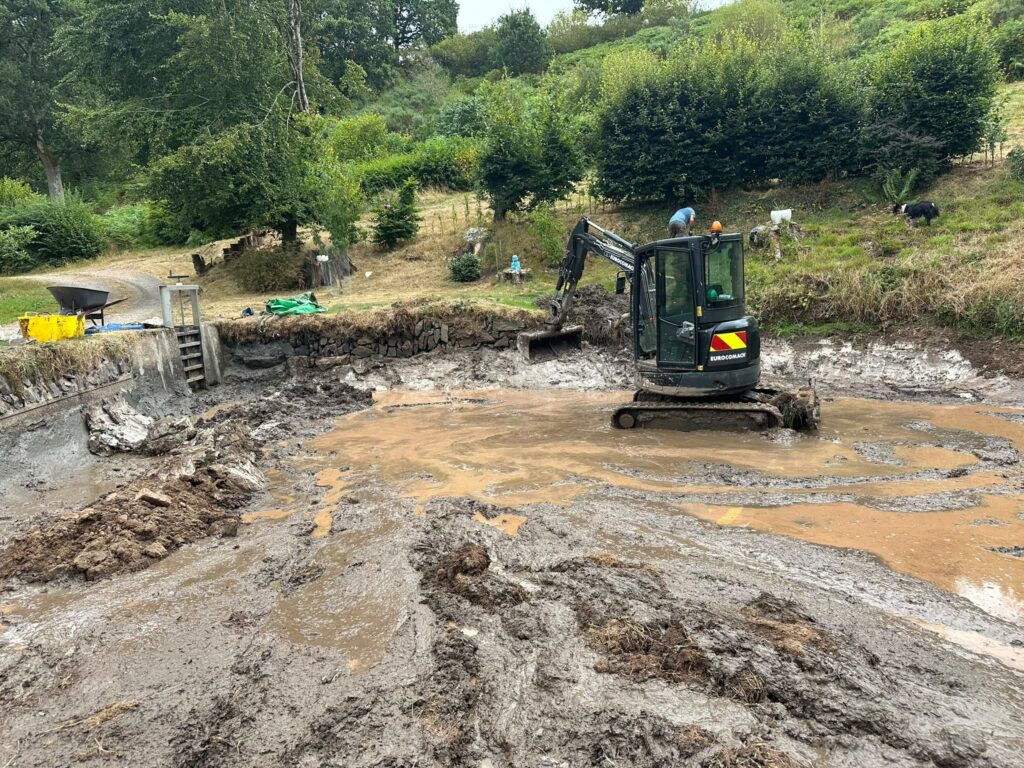
Farm ponds, estate ponds and lakes can require excavators, dumpers, pumps, ground protection and enough working space to handle saturated silt. Vegetation clearance may expose damaged banks, old structures, roots, buried debris or an unreliable clay bed.
The restoration may also include reprofiling shallow margins, repairing an overflow, rebuilding access, stabilising disturbed ground and retaining refuge habitat. Our pond and lake desilting service treats those items as one deliverable project rather than pricing only the excavator.
The biggest pond restoration cost drivers
1. Access for people and machinery
Good access can make a larger restoration surprisingly efficient. Poor access can dominate the programme.
A quotation needs to consider:
- gate widths, tracks, slopes and soft ground;
- safe machine positions around the bank;
- overhead and underground services;
- the reach needed to work without repeatedly tracking through sensitive ground;
- whether temporary ground protection or access improvements are required;
- how pumps, fuel, stone, liner or other materials will reach the pond;
- reinstatement after the work.
A pond beside a firm track with space for excavated material is a different job from the same-sized pond below a steep garden or across waterlogged pasture.
2. The volume and condition of silt
Surface area does not reveal the volume of sediment. Silt may be shallow at one bank and much deeper near an inlet, old channel or reedbed. Its consistency also matters: wet organic sediment behaves differently from firmer mineral material.
A practical assessment may use probing across representative points to estimate the depth to a firm bed. The result informs machine choice, working time, likely volume and whether targeted desilting could achieve the objective without clearing the entire pond.
Complete removal is not automatically better. Retaining selected margins or restoring the pond in phases may reduce disturbance, preserve habitat and focus the budget on the areas that have lost their function.
3. Where removed material can go
Silt, roots and wet vegetation do not disappear once they leave the pond. Their destination can change the cost more than the excavation itself.
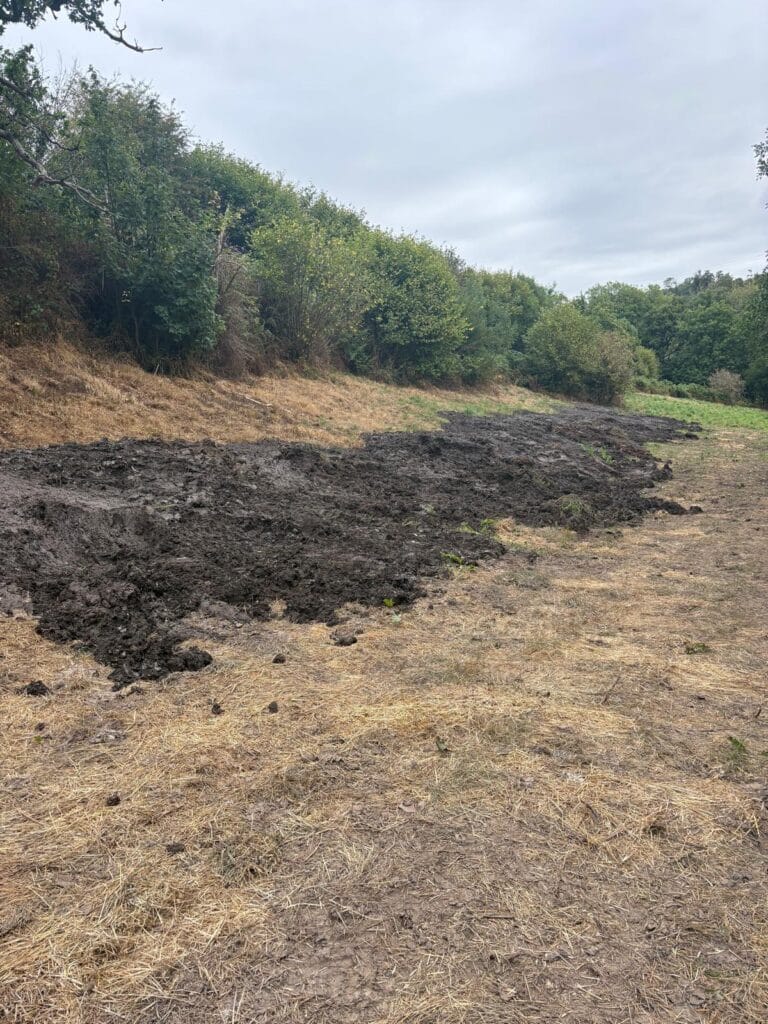
Suitable material may sometimes be dewatered or managed on site where the location and regulatory route allow. Other material may need testing, containment, loading, haulage and an authorised destination. Wet silt is heavy and awkward to move, so distance between the pond and the agreed handling area matters.
Our guide to pond silt testing, reuse and disposal explains why the material route should be settled before machinery arrives.
4. Water management
Some ponds can be worked at naturally low water. Others need pumping, controlled drawdown, temporary bypass arrangements or continuous management of spring and stream inflows.
The method must avoid uncontrolled discharge, flooding elsewhere or sending dirty water downstream. If the pond quickly refills, the pumping and sequencing may determine how much useful work can be achieved each day.
Where a pond is connected to a watercourse, permission may be needed for work affecting the bed, banks, structures or flow. Current government watercourse guidance directs owners to the Environment Agency for main rivers and to the relevant lead local flood authority or internal drainage board for other watercourses.
5. The pond bed, liner and banks
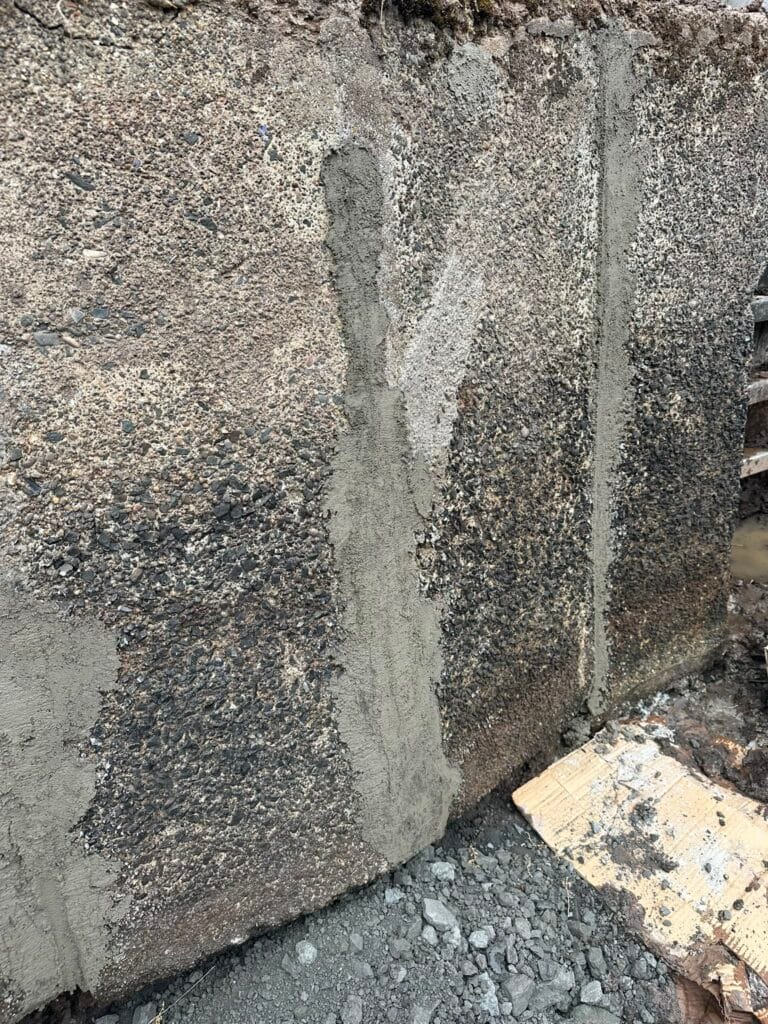
Restoration often reveals the condition that was hidden beneath plants and sediment. A clay bed may be suitable for careful reworking, too thin to provide dependable retention, or disturbed by roots and previous excavation. A flexible liner may have a local puncture, widespread ageing or badly formed edges. Concrete and masonry can have movement, cracking or failing joints.
A quotation should distinguish between:
- work that can be defined before draining or excavation;
- reasonable allowances for likely repairs;
- unknown work that needs agreement once exposed.
Promising a guaranteed seal before the bed is visible can make an estimate look attractive, but it does not remove the underlying risk.
6. Vegetation and root systems
Cutting stems is different from removing a consolidated root mat. Reeds, reedmace, willow and other vigorous growth can hold large quantities of wet material and may be integrated with the bank or pond bed.
The right method may be selective cutting, root removal, staged clearance or wider mechanical restoration. Our guide to controlling reeds and bulrushes explains why useful habitat should be retained rather than clearing every margin.
7. Wildlife, timing and ecological checks
Ponds and the surrounding rough ground can support protected species, nesting birds and valuable terrestrial habitat. Timing and method need to reflect what is present and the scale of disturbance.
Natural England’s current great crested newt guidance identifies pond management, vegetation removal, ground disturbance and silt placement as activities that can affect newts and their habitat. Depending on the site, surveys, avoidance measures, ecological supervision or licensing may be needed.
Those requirements are not administrative extras. They affect access routes, working areas, programme and the amount of habitat that can be disturbed at one time.
8. The quality of the finished restoration
A cheap clearance can still be poor value if it leaves steep banks, no shallow margins, a damaged overflow or no way to maintain the pond again.
A complete scope may need to include:
- varied depths and gently sloping wildlife margins;
- safe and stable banks;
- inlet, outlet and overflow repairs;
- retained refuge vegetation and deadwood;
- appropriate aquatic planting;
- erosion control and ground reinstatement;
- future maintenance access.
Our pond restoration and habitat enhancement service considers the finished waterbody and its long-term management, not just the material removed on the day.
Why price per square metre is usually misleading
A square-metre rate can be useful for known materials such as a new liner, but it is a weak basis for an existing pond restoration. It does not show:
- sediment depth;
- water inflow and pumping requirements;
- machine access and reach;
- root density;
- the condition of the bed and banks;
- the travel distance for excavated material;
- structures hidden below water;
- ecological or consent requirements.
For a new-build comparison, see our separate guide to professional pond construction costs in Devon and Cornwall. Keeping new construction and restoration as separate decisions avoids comparing unlike projects.
How to control the budget without cutting the wrong things
The best savings normally come from defining the outcome and reducing avoidable handling, not from removing essential parts of the method.
Useful options include:
- targeting the inlet, outlet, deepest area or most obstructed margin first;
- retaining suitable material on site under the correct arrangement;
- completing tree or scrub work before the main machinery visit where appropriate;
- working at a naturally lower water level;
- phasing a large restoration while retaining refuge habitat;
- separating essential repairs from optional landscape finishes;
- providing accurate access details and historic photographs early;
- agreeing how genuine hidden defects will be handled before work starts.
Some work should not be split. Mobilising machinery twice, disturbing the same access route again or postponing a failing overflow can cost more than completing a coherent phase once.
What should a useful restoration quotation include?
A clear quotation or proposal should state:
- the intended result and limits of the work;
- what vegetation and habitat will be retained;
- water, fish and wildlife arrangements;
- plant, labour and expected duration;
- the route for silt, roots and other material;
- repairs, profiling and reinstatement included;
- client responsibilities and site access requirements;
- exclusions, assumptions and identifiable unknowns;
- how variations will be agreed;
- whether VAT is included or added.
The lowest total on the first page is not meaningful if pumping, waste handling, reinstatement or likely repairs have been omitted.
What to send for an initial review
Good information helps us identify whether photographs are enough or a paid assessment is the sensible next step. Send:
- wide photographs from several sides;
- approximate length, width and known depths;
- summer and winter water-level behaviour;
- details of springs, drains, streams, inlets and overflows;
- close photographs of leaks, damaged edges or structures;
- gate widths, tracks, slopes and possible machine access;
- where removed vegetation or silt might be handled;
- known fish and wildlife information;
- previous work and any old photographs;
- the result you actually want from the pond.
Planning pond restoration in Devon or Cornwall
SAS Aquatics assesses and delivers pond and lake restoration across Devon and Cornwall, from targeted wildlife pond improvements to machinery-led desilting, repairs and habitat enhancement. We review the existing waterbody first, define the proportionate scope and make the access and material plan part of the quotation.
Send photographs and site details through the Pond & Lake Desilting and Restoration enquiry form. We will confirm what can be assessed remotely and whether a site visit is needed before pricing.
Frequently asked questions
Can you estimate pond restoration from photographs?
Sometimes. Clear photographs and access information may be enough for straightforward maintenance or a tightly defined task. Larger desilting, uncertain leaks, structural work and watercourse-connected ponds normally need a site assessment.
Is partial desilting cheaper than clearing the whole pond?
It can be, provided targeted removal achieves the objective and the machinery can work efficiently. Partial restoration is not automatically cheaper if difficult access or repeated mobilisation offsets the smaller excavation volume.
Does a small pond always cost less to restore?
No. A small pond with fish, poor access, a failed liner and detailed stone edges can require more careful labour than a larger rural pond with good machine access and an on-site material route.
Can the final price change after a pond is drained?
Hidden damage can change the required work. A good quotation should identify known scope, allowances and genuine unknowns, then explain how any variation will be approved before additional work proceeds.