In water and at the margins
- Parrot’s feather
- Floating pennywort
- New Zealand pygmyweed / Crassula helmsii
- Water fern / Azolla
- Water primrose
- Nuttall’s waterweed
- Curly waterweed
Identification · Control · Habitat restoration
Practical management for invasive plants affecting ponds, lakes, ditches, riverbanks and wet ground. We identify the plant, plan how to contain and control it, and look at what the waterbody needs to recover.
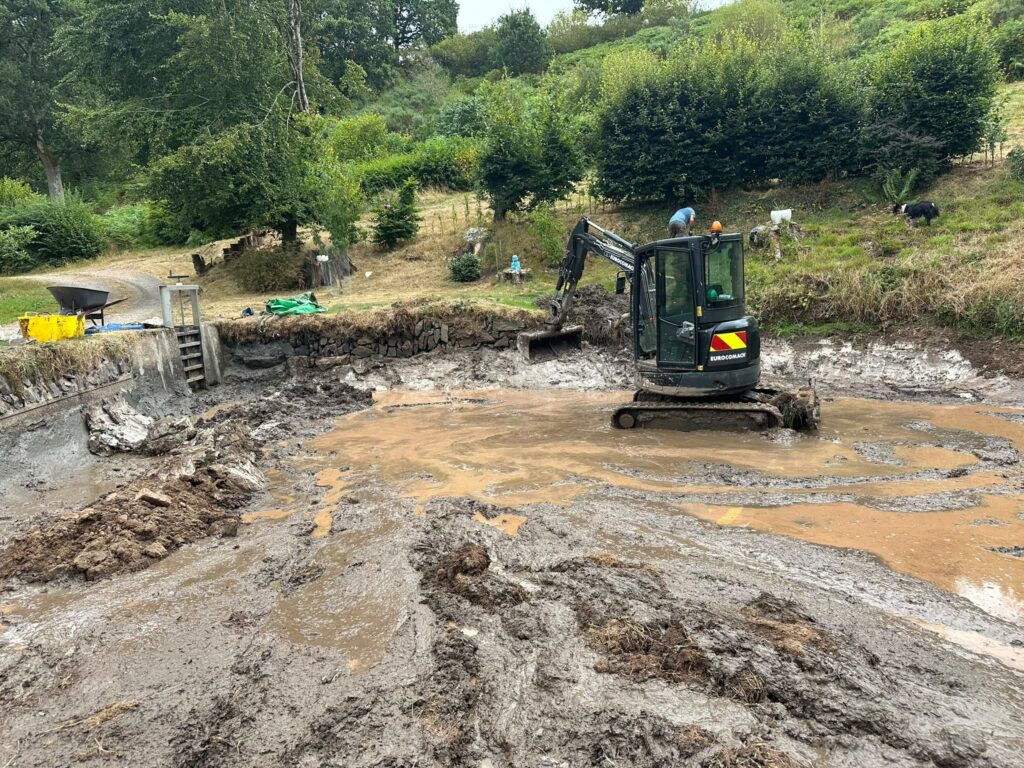
Control with a purposeSAS Aquatics restoring pond depth and margins at a North Devon site.
Start with identification
A dominant, unfamiliar or troublesome plant is not automatically an invasive species. Native plants can also spread strongly where depth, light or nutrient conditions favour them. Identification comes first, followed by a review of the extent, water connections and the habitat you want to retain.
Send clear close photographs and wider views before pulling, cutting or digging. Some aquatic plants can spread from small fragments carried in water, mud or on equipment. Disturbing them without a containment plan can make the problem harder to manage.
Plants and places
We assess suspected invasive plants in garden ponds, large ponds and lakes, farm and estate ponds, ditches and drains, streams and riverbanks, wetlands and wet woodland.
The species, growth stage and site conditions determine what is appropriate. If identification or the treatment needs specialist input, we arrange that before work is agreed.
Giant hogweed requires separate specialist confirmation before any treatment is offered. Do not handle a suspected plant. It is not part of our standard aquatic and wetland control programme.
A managed project
SAS Aquatics manages the full project. We agree the method, responsibilities, containment measures and restoration scope before work starts.
Review photographs, survey the site where needed and map the affected areas. Establish the main problem and desired outcome.
Check water connections, wildlife, access, timing and permissions. Plan fragment and seed containment, equipment cleaning and material handling.
Manual or mechanical removal, targeted desilting or specialist treatment may be appropriate. No single method suits every plant or waterbody.
Reinstate depth, banks and margins where needed, with native planting and wider pond or wetland restoration where suitable.
Inspect for regrowth and new spread, carry out follow-up control and adapt the programme to the site’s response.
Specialist herbicide treatment, where justified and permitted. We use experienced, appropriately qualified subcontract operatives for specialist herbicide application. Any treatment follows the applicable product authorisation, site constraints and required permissions, including Environment Agency agreement for use in or near water.
The site shapes the method
Before choosing a method, we consider:
Watercourse works, sensitive habitats and protected sites may need separate advice or consent. Our planning, grants and environmental support can help establish the practical next steps, with specialist input where required.
Realistic management
Removing the visible growth is only one stage. Plants may regrow from remaining roots, fragments or seed, and connected water can bring material back into the site. We do not promise one-visit eradication.
For an established infestation, the useful approach is often a staged management programme with repeat inspections and further control. The frequency and duration depend on the confirmed species, scale, water connections and response to treatment. We agree what can realistically be achieved and how progress will be assessed.
Targeted desilting and restoration
Partial desilting may be useful where accumulated silt, root mats or heavily colonised margins prevent effective control or have reduced the function of the pond. It can reopen selected deeper areas, restore a channel or make a margin easier to manage.
Excavation is not a universal treatment. Moving contaminated vegetation or sediment can spread the plant, and the work can disturb wildlife, banks or liners. We assess whether it will help the particular infestation and specify containment and material handling before machinery arrives.
Where a wider intervention is justified, control can form part of pond and lake desilting or a broader pond restoration and habitat enhancement project.
Habitat-led outcomes
The aim is controlled spread and a functioning habitat, with useful native vegetation retained wherever possible. Depending on the site, the restoration may recover open water and depth, stabilise banks, reshape shallow margins or improve access for future maintenance.
Suitable native aquatic planting can help rebuild vegetation after control, once follow-up needs and the risk of reinfestation have been considered. For larger sites, this may sit within a wetland and habitat creation programme. Planting supports recovery; it is not a guaranteed cure for an invasive infestation.
Homeowners, landowners, farmers, estates, community groups, conservation organisations and commercial site managers. We can manage a defined control project or coordinate the control element within a larger restoration scheme, working with the site’s ecologist or appointed adviser where needed.
We provide aquatic invasive plant control and associated restoration across Devon and Cornwall, from garden ponds to larger rural and organisational sites. Send the site location, photographs and approximate extent so we can establish the most useful first step.
Common questions
Tell us what you know. If the plant, area or water connections are uncertain, say so rather than guessing.
A small, recently established patch may be dealt with in one working visit, but that does not prove eradication. Established infestations often need staged work, repeat inspection and further control. We agree realistic expectations for the species and site.
No. Identification and site assessment determine the method. Manual or mechanical removal may be suitable, while some infestations need specialist treatment. Where herbicide is justified and permitted, appropriately qualified subcontract operatives carry out that element within the project managed by SAS Aquatics.
Sometimes. Targeted removal of colonised silt or root mats can support control and recover useful depth or margins. It is only appropriate where the benefits outweigh disturbance and spread risks, with a secure method for containing and handling the removed material.
We agree a species-specific handling and disposal plan before work. Suitable material may be retained, securely contained and dried onsite where the site and applicable rules allow it. Drying alone is not proof that fragments or seed are no longer viable. Material must not be spread around the property, returned to water or taken offsite without an appropriate route.
Yes. We assess the affected banks or wet ground and plan control around plant growth, seed prevention, access and the surrounding habitat. Follow-up checks are needed to deal with later seedlings and any reinfestation from neighbouring or upstream areas.
Include close views of leaves, stems and flowers if present, the whole affected area, inlets, outlets, overflows and downstream connections, machinery access, and any potential containment or drying area. Take photographs safely without moving plants between sites or disturbing suspected giant hogweed.
Choose “not sure” on the enquiry form and send clear photographs. We start with identification and arrange further site or specialist checks if the images are insufficient. We will not assume that an unfamiliar or troublesome plant is an invasive species.
Start with the site
Send the location, close and wider photographs, approximate affected area, water connections and previous control attempts. We will review the information and advise on identification, assessment and the next practical step.