Lake Management silt removal weed control

Wildlife Ponds for Landowners, Farms & Estates

Wildlife pond creation for landowners, farms and estates across Devon and Cornwall. Larger wildlife ponds, scrapes, wetland margins, rewilding ponds and habitat focused pond restoration.

wave

We design and build wildlife ponds, scrapes and wetland features for landowners, farms, estates, smallholdings, community land and rewilding projects across Devon and Cornwall.

Many landowners come to us with a simple question: what could we do with this land to make it better for wildlife? Sometimes the answer is a new wildlife pond. Sometimes it is restoring an old pond, creating shallow scrapes, improving a wet field, adding wetland margins, or linking several small features together to hold water and create better habitat.

At SAS Aquatics, we help turn those ideas into practical, buildable projects. We look at how water moves across the site, where wet areas already exist, how the land is managed, what access is available and what kind of habitat value can realistically be created.

The result is a pond or wetland feature that works with the land rather than against it.

Is this service for you?

This service is suited to landowners, farms, estates and community projects considering:

• A new wildlife pond in a field, paddock or wider landholding
• Restoring an old, silted, leaking or overgrown pond
• Creating scrapes, wetland margins or seasonal ponds
• Improving wet or underused areas for wildlife
• Supporting a grant, planning or nature recovery project
• Holding water more naturally within the landscape
• Creating habitat as part of a wider rewilding or biodiversity project
• Understanding where a pond or wetland would work best on the site

If you have land and want to improve its value for wildlife, water and biodiversity, we can help you explore the best options.

Pond and wetland creation for nature recovery

A well designed pond can be one of the most valuable habitats on a piece of land. Even a single pond can support amphibians, dragonflies, birds, bats, pollinators and aquatic invertebrates. When combined with scrapes, wet margins, deadwood, native planting and surrounding rough grassland, the habitat value can increase significantly.

Landowner projects often create opportunities for:

• Wildlife pond creation
• Farm pond restoration
• Estate pond restoration
• Wetland margins
• Seasonal scrapes
• Pond and wetland mosaics
• Water retention features
• Habitat creation around existing wet areas
• Nature recovery and rewilding projects
• Grant supported land improvement schemes

Our focus is to create water features that are practical to build, manageable long term and genuinely useful for wildlife.

Working with natural water movement

Many of the best pond and wetland opportunities are found where the land is already trying to hold water.

This might be a naturally wet field, a low point, a rushy area, a historic pond, a drainage route, a valley bottom, a spring fed area or a place where water already collects after rain.

Before deciding what to build, we consider:

• Where water naturally comes from
• How water moves across the site
• Whether water is seasonal or permanent
• What happens during heavy rain
• Where excess water could safely overflow
• How the surrounding land is managed
• Whether the area could support pond, scrape or wetland habitat

This helps avoid forcing the wrong feature into the wrong place.

Wildlife ponds at scale

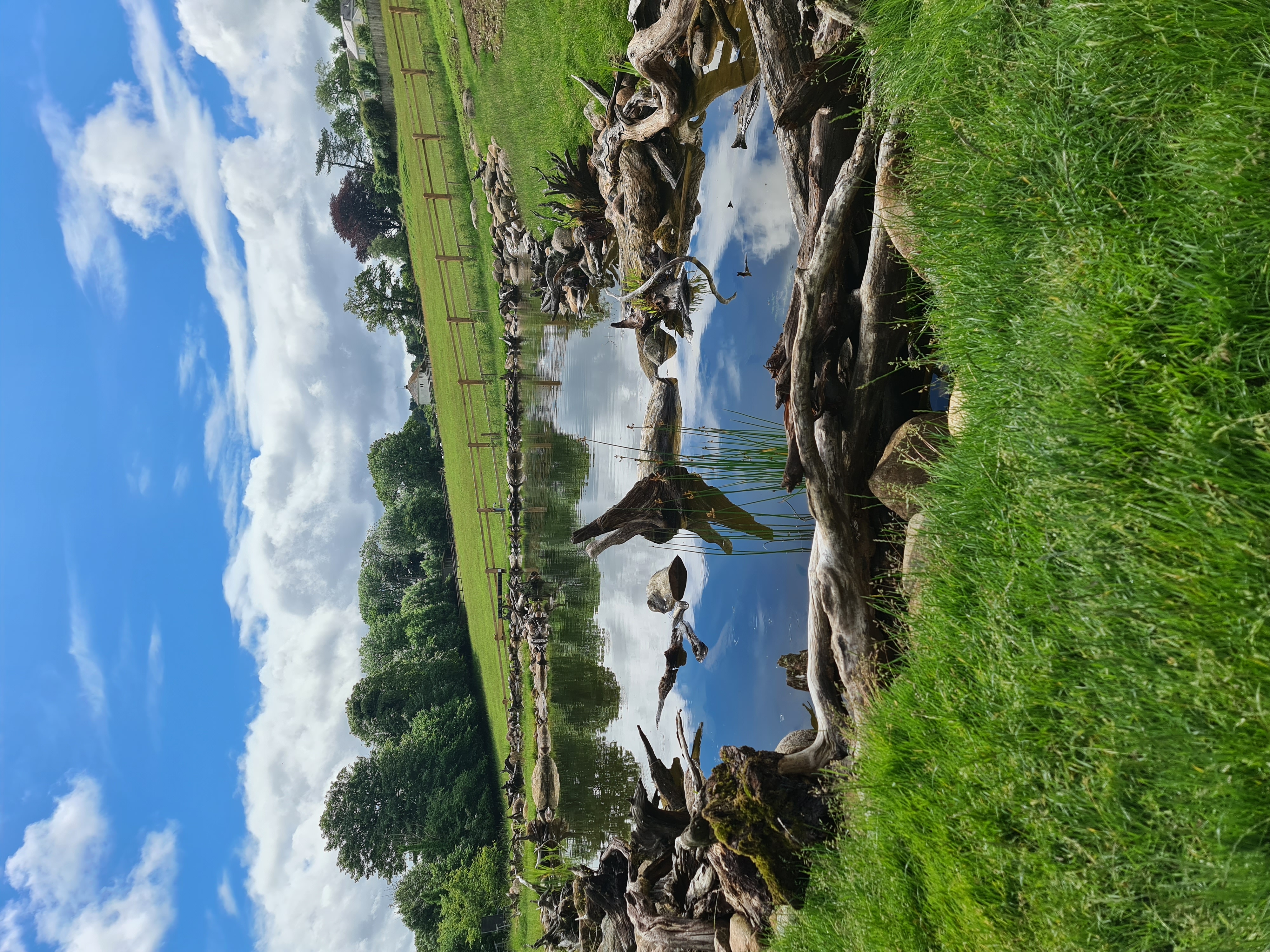
Larger wildlife ponds can create significant habitat value when they are shaped properly.

A strong landowner pond design may include:

• Wide shallow margins
• Varied depths
• Gently sloping edges
• Native aquatic and marginal planting
• Deadwood, stone and gravel habitat features
• Open sunny areas for amphibians and insects
• Damp grassland or wetland planting around the edges
• Safe overflow routes
• Practical access for future management

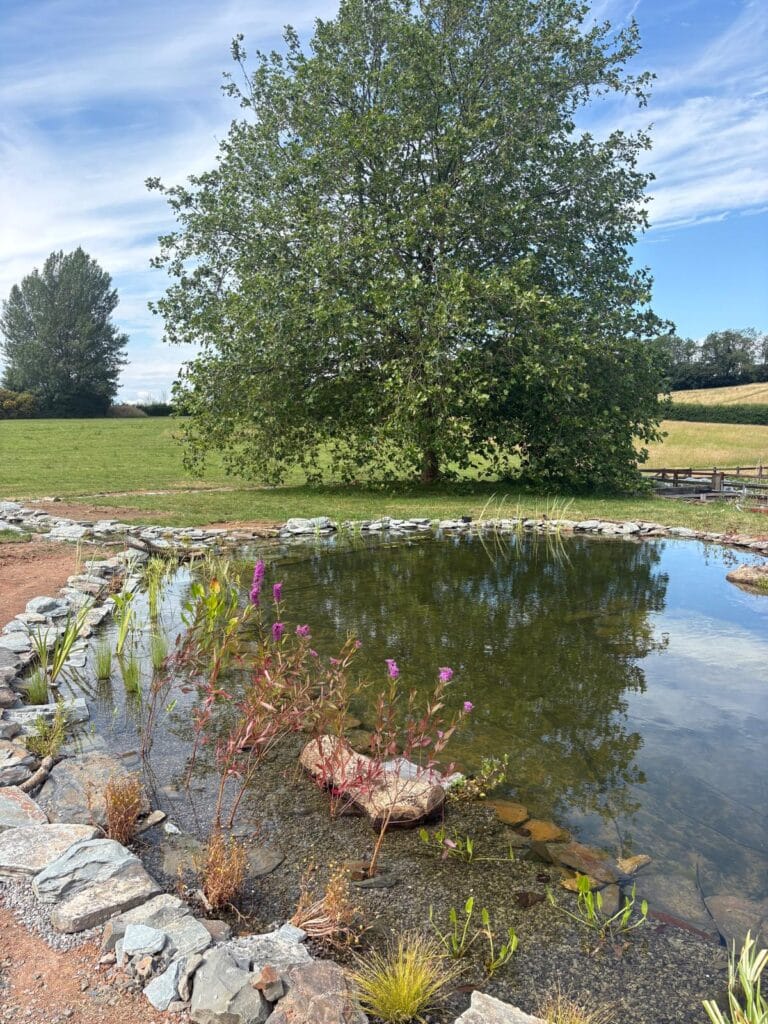
A pond does not need to look formal to be successful. In many cases, the best results come from naturalistic shaping, soft edges and a mix of permanent and seasonal wet areas.

Scrapes, seasonal ponds and wetland margins

Not every habitat feature needs to be a deep permanent pond.

Shallow scrapes and seasonal ponds can be extremely valuable for wildlife. They can provide warm, shallow water for invertebrates and amphibians, feeding areas for birds and a more varied wetland edge.

For some sites, we may recommend a combination of:

• One main wildlife pond
• Smaller scrapes
• Seasonal pools
• Wetland margins
• Silt traps
• Damp planting areas
• Shallow overflow areas

This approach can be especially useful where a site already has wet ground, surface water runoff, springs, ditches or an existing pond that needs improving.

Pond restoration for landowners

Creating a new pond is not always the best option. Many farms and estates already have old ponds, silted ponds, leaking ponds or historic water features that can be restored.

Pond restoration may include:

• Desilting
• Reprofiling banks and margins
• Restoring depth
• Improving wildlife access
• Repairing or replacing failed liners
• Improving overflows
• Adding wetland planting
• Creating safer edges
• Managing vegetation
• Adding deadwood, stone and marginal habitat
• Creating nearby scrapes or silt traps

Restoration can often increase biodiversity, improve water quality and bring an old pond back into useful management.

Water retention and land resilience

Although our focus is habitat creation, ponds and wetlands can also help hold water more naturally within the landscape.

Depending on the site, pond and wetland features can support:

• Slower surface water movement
• Better water retention during dry periods
• More varied wet habitat
• Reduced erosion where water is managed carefully
• Improved resilience during heavy rainfall
• Better use of naturally wet or underused areas

Where appropriate, larger ponds can also support practical land management aims such as livestock resilience, irrigation planning or water storage, but the design needs to balance function, safety, water quality and habitat value.

The main aim is always to create a pond or wetland feature that works with the land and supports long term ecological value.

Key design considerations

Every site is different, but successful landowner pond projects usually depend on the same core principles.

Water source and catchment

We look at where water is coming from, how much is likely to be available and how the pond or wetland will behave through the year.

Some ponds rely on rainfall and surface water. Others may be influenced by springs, ditches, drains, groundwater or existing wet areas.

Understanding the catchment helps us decide whether a permanent pond, seasonal pond, scrape or wetland system is the best fit.

Ground conditions and soils

Soil type affects excavation, sealing, bank stability, spoil handling and water retention.

Clay soils may provide opportunities for natural sealing. Free draining soils often need a liner or clay based sealing system. Wet or unstable ground may need a more sensitive design approach.

Overflow and drainage

A pond needs somewhere for excess water to go.

A well planned overflow helps protect banks, reduce erosion and route higher flows safely. This is especially important where a pond receives runoff from a larger area.

Access and future management

Landowner ponds still need future access.

We consider machinery routes, turning space, safe working areas, spoil movement, future desilting, vegetation management and how the pond will be maintained over time.

Livestock and site safety

Where livestock are present, pond design needs to consider bank damage, erosion, water quality and safe access.

Options may include fencing, protected margins, designated access points or separate water supply points to avoid livestock damaging the main pond edges.

Habitat structure

The best wildlife ponds have complexity.

We build in shelves, varied depths, planting zones, deadwood, stone, wet margins and surrounding habitat features so the pond becomes more valuable for wildlife as it matures.

Sealing options for larger wildlife ponds

The right sealing method depends on soil, groundwater, water source, pond size, budget and the intended finish.

Natural clay where suitable

Where the ground has suitable clay content and the right conditions, a clay sealed pond can be a good option.

This depends heavily on the site. The clay needs to be suitable, properly compacted and protected from drying, cracking or disturbance.

Bentonite clay sealing

Bentonite can be used to improve water retention where soils need support. It is often considered for natural ponds, farm ponds and habitat creation projects.

It needs careful installation and realistic expectations. Ground conditions, water movement and compaction all affect performance.

Geosynthetic clay liner

Geosynthetic clay liner, often called GCL, can be a strong option for larger wildlife ponds, wetland features and rewilding projects where reliable retention is needed.

GCL uses bentonite clay contained within geotextile layers. When hydrated and correctly covered, it forms a low permeability barrier.

It can be especially useful for larger ponds where a more natural clay based lining approach is preferred, but it needs enough suitable cover material and careful installation.

EPDM liner

EPDM may still be suitable for some landowner ponds, especially smaller features, garden estate ponds or areas where a flexible liner is the most practical solution.

The liner needs to be protected properly and integrated with planting, soil, stone or marginal shelves to create a natural finish.

Planning, grants and project support

Some landowner pond and wetland projects may need planning consideration or additional checks, depending on the site, scale, water source, nearby watercourses, protected habitats, public rights of way and the amount of excavation.

We can support projects with practical information, including:

• Satellite based location images
• Project descriptions
• Ecological purpose
• Landscape integration notes
• Water source context
• Supporting wording for low impact habitat creation projects
• Grant application wording
• Practical delivery notes
• Habitat focused project descriptions

Technical drawings are not included unless separately arranged.

This type of support can be useful for landowners applying for grants, speaking with planners or trying to explain the purpose and benefits of a pond or wetland project.

Our build process

1. Initial enquiry

We start by understanding what you want the pond or wetland feature to achieve.

Useful information includes your location, photos, access notes, a rough size, any known drainage or water source, and whether the main aim is wildlife, restoration, rewilding, water retention, grant support or a mix of these.

2. Site visit and assessment

For landowner, farm and estate projects, a site visit is usually needed.

We look at access, levels, soil, wet areas, water movement, likely inflows, overflow options, spoil handling, planting opportunities and any constraints that may affect the build.

3. Concept and layout

We agree the broad pond location, shape, size, depth, margins, access and overflow route.

For larger sites, this may also include linked scrapes, wetland areas, silt traps or planted margins.

4. Estimate or quote

Once the likely scope is clear, we provide a practical estimate or quote based on the size, method, machinery, liner or sealing approach, spoil handling, planting and finishing detail.

5. Excavation and profiling

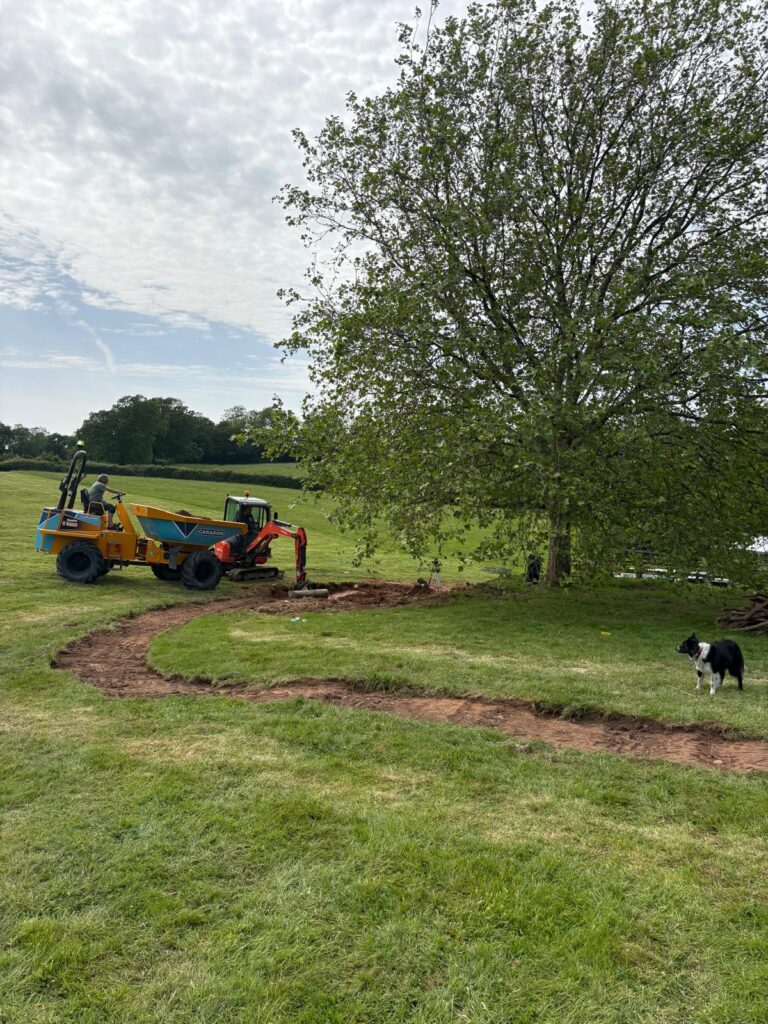
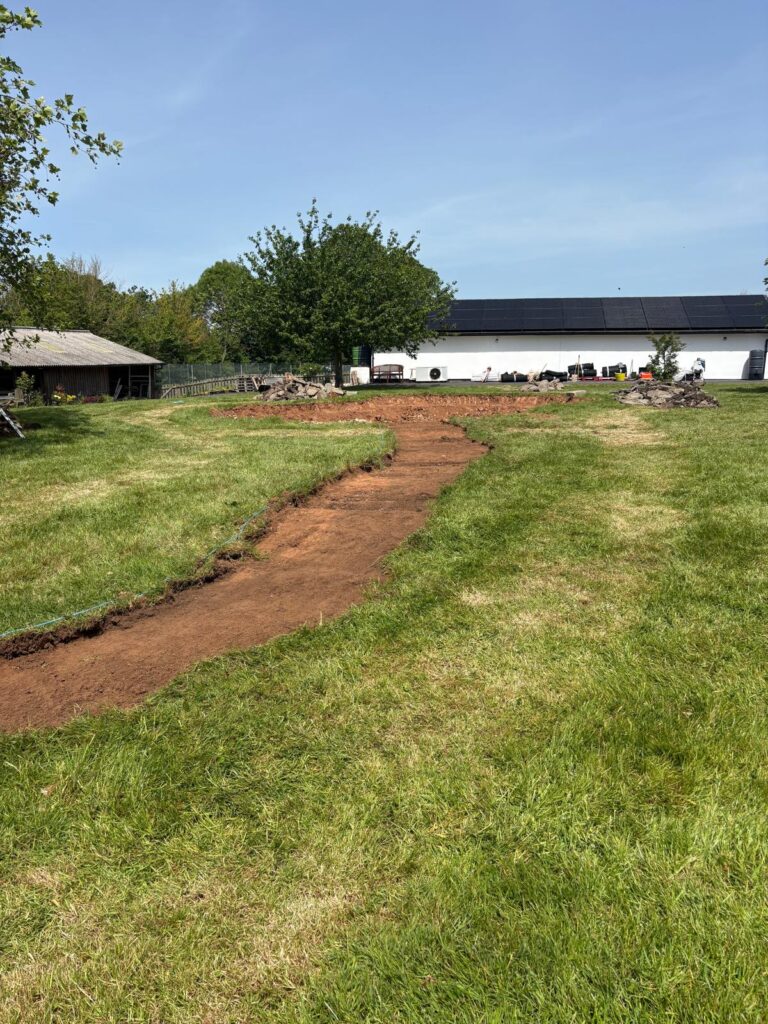
The pond is excavated and shaped with stable slopes, varied depths, shelves, margins and practical access in mind.

This stage is critical because the shape of the pond affects habitat value, safety, maintenance and how natural the finished pond feels.

6. Sealing and protection

We install the chosen sealing method. This may be natural clay, bentonite, GCL, EPDM or another suitable approach depending on the site.

Where required, we protect the liner or sealing system with appropriate cover layers.

7. Habitat features and margins

We add natural features such as deadwood, stone, gravel, shallow shelves, wet margins and planting zones.

These details help the pond support wildlife and blend into the surrounding land.

8. Planting and establishment

Aquatic and marginal planting can be added as part of the build or once the pond has settled.

We select plants to support biodiversity, stabilise margins, soften edges and help the pond develop naturally.

9. Aftercare and management

New ponds change over time. We can advise on establishment, vegetation management, silt control, water levels and seasonal care.

For larger sites, we can also provide ongoing maintenance or periodic checks where required.

Costs and what affects price

Landowner pond and wetland projects vary widely, so we usually quote after a site visit.

The main cost drivers are:

• Size and depth
• Access and machinery requirements
• Soil type and ground conditions
• Sealing method
• Spoil handling and disposal
• Stone, timber and habitat materials
• Planting requirements
• Overflow design
• Links to scrapes, wetlands or silt traps
• Clearance or enabling works
• Distance and logistics

For an initial steer, send photos, a rough location, access details and an approximate target size. We can usually advise whether the project looks straightforward, complex or worth a site visit.

Why choose SAS Aquatics?

SAS Aquatics specialises in wildlife ponds, wetlands, natural swimming ponds and pond restoration across Devon and Cornwall.

We combine practical construction experience with knowledge of pond ecology, aquatic planting, water quality, liners, clay based systems and long term pond management.

Landowners work with us because:

• We understand both pond construction and habitat creation
• We can work on gardens, farms, estates and larger landscapes
• We design ponds around real site conditions
• We understand access, spoil, sealing and maintenance issues
• We can support planting, restoration and aftercare
• We focus on nature based, practical outcomes
• We can provide clear information for planning or grant support where needed

Areas we cover

We work across Devon, Dartmoor and Cornwall.

Common areas include:

• Dartmoor
• Exeter
• Plymouth
• Tavistock
• Okehampton
• Moretonhampstead
• Bovey Tracey
• Newton Abbot
• Totnes
• South Hams
• Mid Devon
• North Devon for suitable projects
• North Cornwall
• West Cornwall for suitable projects

For larger wildlife pond, wetland and rewilding projects, we may travel further by arrangement.

What is the difference between a garden wildlife pond and a landowner pond?

A garden wildlife pond is usually smaller and designed around a residential setting. A landowner pond is often larger and needs to consider machinery access, spoil handling, water movement, overflows, livestock, maintenance and wider landscape value.

Can a wildlife pond help with water retention?

Yes, in some situations. A pond, scrape or wetland feature can help hold water more naturally within the landscape, but the design needs to consider water source, retention, overflow, bank stability and future management.

Can you build ponds for farms and estates?

Yes. We create and restore wildlife ponds, farm ponds, estate ponds, scrapes and wetland features across Devon and Cornwall.

Can you restore an existing farm or estate pond?

Yes. Many old farm and estate ponds can be restored through desilting, reshaping, liner repair, overflow improvements, planting and habitat creation.

Do larger ponds need planning permission?

It depends on the site, size, purpose, location and connection to watercourses. Some ponds may be straightforward, while larger excavation, ponds near watercourses or projects in sensitive areas may need advice or permission. We can help you understand what to check.

What is the best liner for a farm or estate pond?

There is no single best option. Natural clay, bentonite, GCL and EPDM can all be suitable in different situations. The right choice depends on soil, water availability, pond size, budget and the desired finish.

Can you create scrapes and seasonal ponds as well as permanent ponds?

Yes. Scrapes and seasonal ponds can be very valuable for wildlife and are often a good addition to larger pond or wetland projects.

Can livestock use the pond?

Sometimes, but it needs careful design. Uncontrolled livestock access can damage banks and reduce water quality. We can plan protected margins, fenced sections, designated access points or separate drinking options where appropriate.

Do you help with grant applications?

Yes. We can support pond, wetland and habitat creation grant applications with project descriptions, ecological rationale, design notes and practical delivery information.

Do you provide technical drawings?

Not as standard. We can provide satellite based location images, project descriptions, ecological purpose, water source context and supporting wording. Technical drawings are not included unless separately arranged.

How much does a landowner pond cost?

Costs vary depending on size, access, sealing method, spoil handling, planting and complexity. For an estimate please send us pictures and details of you land and what you would like.

Do you cover Devon and Cornwall?

Yes. We are based near Dartmoor and work across Devon and Cornwall, with larger projects considered across the wider South West.

Start your landowner pond project

If you are planning a wildlife pond, wetland feature, pond restoration or rewilding project, we can help you understand the options and build something that works for both the land and wildlife.

To get started, send us:

• Your location
• Access notes
• Photos or videos of the area
• What you want the pond or wetland to achieve
• Any preferred size or budget range
• Whether there are nearby streams, ditches, drains or wet areas

We will come back with the likely next steps, possible sealing options and the best route to a quote.


Email info@sasaquatics.com

Find out how we can help you, by speaking to one of our pond specialists today.

Brands

We’ve worked with many great companies and people.

evolution aqua logoclearseal logogordon low logooase living water logodevon rewilding netwrokmaxspect logo