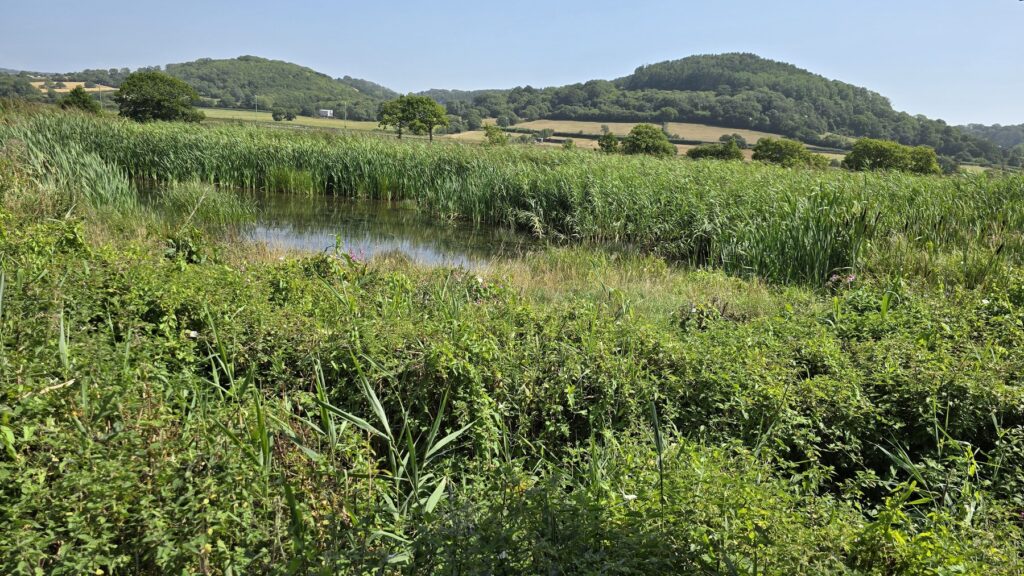
How to Improve Farm Ditches for Wildlife Without Stopping Them Working
Farm ditches do not have to be either clean drainage channels or overgrown wildlife habitat. Managed properly, they can continue moving water while providing wet margins, varied vegetation and connections between ponds, hedges and wider wetland areas.
The best results usually come from selective management rather than clearing the entire ditch back to bare soil. The first job is to understand how the ditch works, where flow genuinely needs protecting and which sections can be improved for habitat without creating a drainage problem.
Why ditches matter for wildlife
A ditch can provide several habitats along one narrow corridor: open water, shallow wet edges, damp banks, taller vegetation and occasional dry sections. Even when it only holds water seasonally, it can connect otherwise isolated ponds and wet areas across a farm or estate.
That connection is often as valuable as the ditch itself. Amphibians, invertebrates and other wildlife can move through sheltered, damp vegetation rather than crossing an exposed field. Flowering banks and margins also extend the habitat beyond the channel.
Ditches work particularly well as part of a wider plan that includes wildlife ponds for farms and estates, field-corner scrapes and existing wet ground.
Start with the ditch’s practical job
Before changing the profile or vegetation, establish what the ditch receives and where the water goes. A useful site review should identify:
- the catchment and main runoff routes;
- culverts, crossings, pipes, headwalls and outfalls;
- sections that repeatedly block or overtop;
- erosion, bank collapse and sediment deposits;
- connections to ponds, streams and downstream properties;
- wet areas where water already spreads naturally;
- machine access and future maintenance routes.
A ditch that protects a road, building or productive field needs a different approach from a shallow boundary ditch that carries water only after heavy rain. Habitat improvements should work with that distinction rather than applying one treatment along the full length.
The biggest improvement: stop clearing everything at once
Complete annual clearance removes vegetation, cover and sediment habitat across the whole channel at the same time. It can also leave bare banks vulnerable to erosion and encourage rapid, uniform regrowth.
A better approach is usually rotational:
- manage one bank while leaving the opposite bank undisturbed;
- clear short sections only where flow or access requires it;
- retain refuge sections between managed areas;
- work in stages over more than one year;
- cut vegetation high enough to retain some structure;
- avoid disturbing the full bed and both banks together.
Defra’s current WBD2 ditch-management guidance advises working from one bank, leaving short undisturbed refuge sections and retaining at least one-third of the overall ditch area each year. It also recommends late-summer or early-autumn bankside management where cutting is needed.
Those figures are useful principles, not a substitute for site judgement. A blocked culvert may need prompt attention, while a stable wet section away from infrastructure may need very little intervention.
Seven practical ways to improve a ditch for habitat
1. Retain a varied vegetation structure
A mixture of short, medium and taller vegetation creates more useful habitat than one uniform cut. Keep some dense cover, some open edge and selected areas of open water. Where shrubs or trees are present, retain useful shade and structure unless roots, falling limbs or debris are causing a real problem.
2. Open selected sections rather than the whole channel
If the ditch has become completely choked, recover a workable flow route and patches of open water while leaving established margins elsewhere. Alternating open and vegetated sections creates variety and reduces disturbance.
3. Create shallow shelves and damp margins where levels allow
Steep, straight-sided ditches offer less edge habitat and can be difficult for wildlife to enter or leave. On suitable sections, carefully reprofiled margins or low shelves can create shallow water and damp ground without narrowing the essential flow channel.
This is an alteration rather than simple vegetation management. Water levels, bank stability, downstream effects and consent requirements need checking before excavation.
4. Add offline scrapes instead of blocking the ditch
Where the surrounding field has a naturally wet corner, a shallow scrape beside the ditch can hold seasonal water without obstructing the main channel. A controlled connection or overflow may allow the features to work together while leaving a clear drainage route.
Offline features are often safer and easier to manage than placing dams or bunds directly in a working ditch. See our guide to scrapes, swales and seasonal ponds for the wider habitat opportunity.
5. Improve the banks beyond the water’s edge
The habitat does not stop at the top of the ditch. A buffer of rough grass, meadow vegetation or damp-ground planting can reduce direct disturbance and create cover between the ditch, hedges and nearby ponds.
On larger schemes, suitable native marginal and wet-ground plants can be included as part of an aquatic and wetland planting plan. Existing natural colonisation may already provide the right structure, so planting should solve a genuine gap rather than replace useful vegetation.
6. Reduce sediment and nutrient inputs
A ditch repeatedly filled with soil or nutrient-rich runoff will need more intervention and provide poorer habitat. Look upslope for the cause: bare gateways, compacted tracks, livestock access, eroding banks, direct field runoff or an unstable inlet.
Small changes outside the ditch can be more valuable than repeated excavation. Buffer vegetation, better crossing points, protected banks and well-positioned settlement or wetland features can reduce the load reaching the channel.
7. Keep culverts and structures working
Habitat enhancement should not hide a failing culvert, blocked outfall or collapsing headwall. Inspect structures separately from the vegetated channel and keep an accessible maintenance route. A well-managed ditch can be visually natural while its critical drainage points remain clear and reliable.
Should woody material stay in a ditch?
Roots, branches and leaf litter can create cover and variation, but loose material can also move downstream and block a pipe or crossing. Retain woody habitat only where the flow, channel width and downstream structures make it sensible.
In a broad wetland channel, selected fixed woody features may add value. Immediately upstream of a small culvert or beside property at flood risk, the same material may be inappropriate. The location matters more than a blanket rule.
When might consent be needed?
Routine cutting and removal of obvious debris may be straightforward, but excavating below the established bed, reprofiling banks, adding crossings, installing structures or changing the flow can require consent.
For an ordinary watercourse, the relevant body is normally the lead local flood authority or an internal drainage board. Work on or near a main river is regulated by the Environment Agency and may need a flood-risk activity permit or registered exemption. The government’s permission checker for work on watercourses is a useful starting point.
Protected species, nesting birds, invasive aquatic and wetland plants and connected designated habitats may also affect timing and method. A ditch that looks ordinary can still be an important wildlife corridor, so the need for ecological advice should be considered before machinery starts.
What about silt removed during ditch restoration?
Excavated sediment needs a planned destination. The source, contamination risk, volume, dewatering area and proposed use all affect whether it can remain nearby under an exemption or must be moved through an authorised route.
Do not leave this decision until the machine is already working. Wet material can be difficult to contain and transport, and an unsuitable spoil area can send silt straight back into the ditch during the next rainfall.
Could ditch management receive funding?
Defra currently includes ditch management within its environmental land-management actions. Eligibility, agreements and payment rules change, so the current scheme requirements should be checked before work is committed.
For larger habitat schemes, our planning, grants and environmental support can help turn the site objectives into a practical scope that can be costed and delivered.
A proportionate ditch-improvement plan
A useful plan does not begin with “clear the ditch.” It separates the channel into sections and gives each one a purpose:
- flow sections where drainage capacity and access are the priority;
- habitat sections where vegetation and wet margins can remain;
- transition sections with selective clearance and varied profiles;
- structures that need regular inspection;
- connected features such as ponds, scrapes and wet field corners;
- risk areas where erosion, pollution or downstream flooding must be addressed.
This gives the contractor, ecologist and landowner a clear basis for phased work and future management.
Improving farm and estate ditches in Devon and Cornwall
SAS Aquatics plans and delivers practical pond, ditch and wetland improvements for farms, estates, organisations and conservation projects across Devon and Cornwall. We assess water movement, access, habitat opportunities and maintenance together, then identify where selective intervention will achieve more than routine clearance.
Send photographs and site details through the landowner project enquiry form. Include the ditch length, where water enters and leaves, known flooding or blockages, nearby ponds or wet ground and what you want the habitat work to achieve.
Frequently asked questions
Should a wildlife-friendly ditch still carry water freely?
Yes. Habitat improvements should retain the ditch’s required drainage function and avoid increasing flood risk upstream or downstream.
Is an overgrown ditch automatically better for wildlife?
No. Dense vegetation can provide useful cover, but a completely uniform, blocked channel may lose open water, varied edges and its drainage role. A mixture of managed and undisturbed sections is usually more valuable.
Can a ditch be connected to a wildlife pond?
Sometimes, but the water source and quality need careful thought. Direct runoff can bring sediment and nutrients into a pond. An offline scrape, settlement area or controlled overflow may be a better solution.
Do all ditch improvements require machinery?
No. Rotational cutting, retaining refuge sections, protecting banks and reducing runoff may deliver meaningful gains. Machinery becomes useful where reprofiling, sediment removal, culvert work or connected wetland creation is justified.