Species-Rich Grasslands, Wetlands and Ponds: Why They Work Better Together
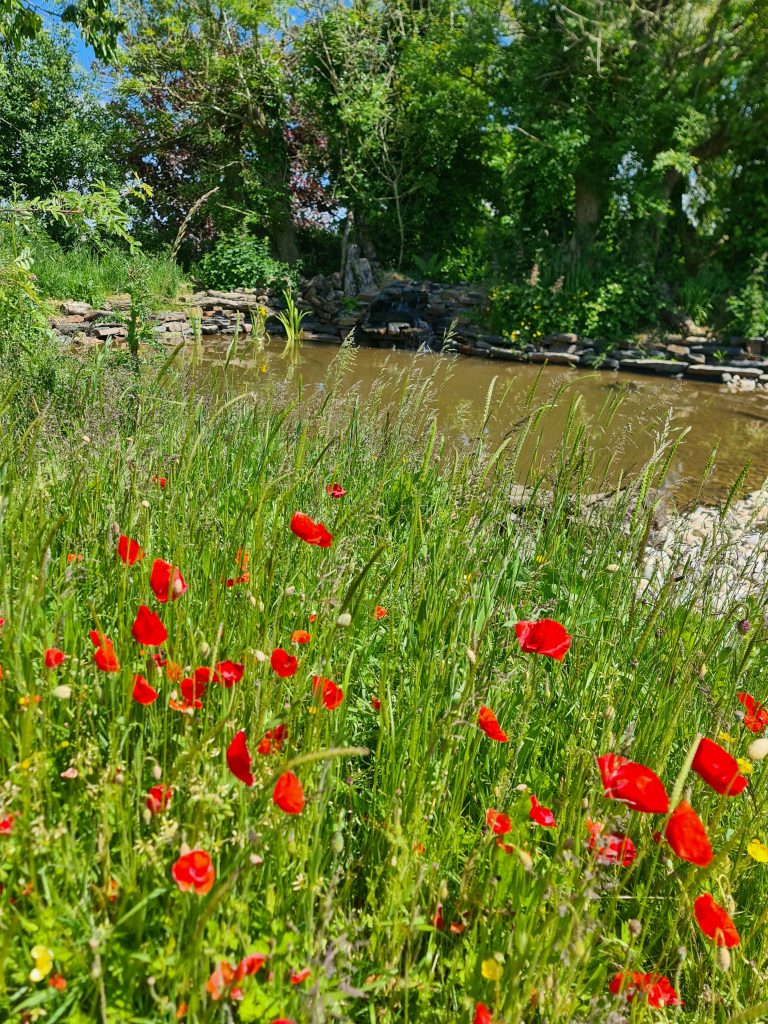
A wildlife pond does not end at the water’s edge. Species-rich grasslands, damp margins and nearby wetlands can help provide the food, shelter and connections that pond wildlife needs through the year.
For landowners in Devon and Cornwall, that opens up a useful way of thinking about habitat creation. A meadow restoration project can include opportunities for freshwater wildlife, while a pond project can improve the surrounding land as well as the water.
The starting point is to understand what is already there, then plan the grassland, water and future management together.
What is species-rich grassland?
Species-rich grassland supports a varied community of grasses and wildflowers, sometimes with sedges and rushes in wetter areas. A traditional hay meadow is one example; flower-rich grazing pasture is another.
There is no single plant mix that suits every site. Soil, fertility, moisture and management shape the habitat. A dry meadow and a wet rush pasture can both be valuable, with different plants and different care requirements. Plantlife’s Good Meadow Guide explains these distinctions and why matching the approach to the land matters.
Wildlife needs both the pond and the grassland
Breeding water, feeding ground and shelter
Frogs, toads and newts use water to breed, but suitable habitat on land is also essential. Damp vegetation near the edge gives young amphibians cover as they leave the pond, while grassland, hedgerows and other sheltered places provide food and refuge.
Rough grass and hedges can also link neighbouring ponds, helping animals move between breeding sites. Freshwater Habitats Trust’s amphibian habitat guidance emphasises the importance of this surrounding landscape.
Our practical recommendation is to retain some sheltered routes from the water to other habitat. Where natural shelter is limited, a carefully placed hibernaculum or log-and-stone refuge can be a useful addition.
Dragonflies connect the water to the meadow
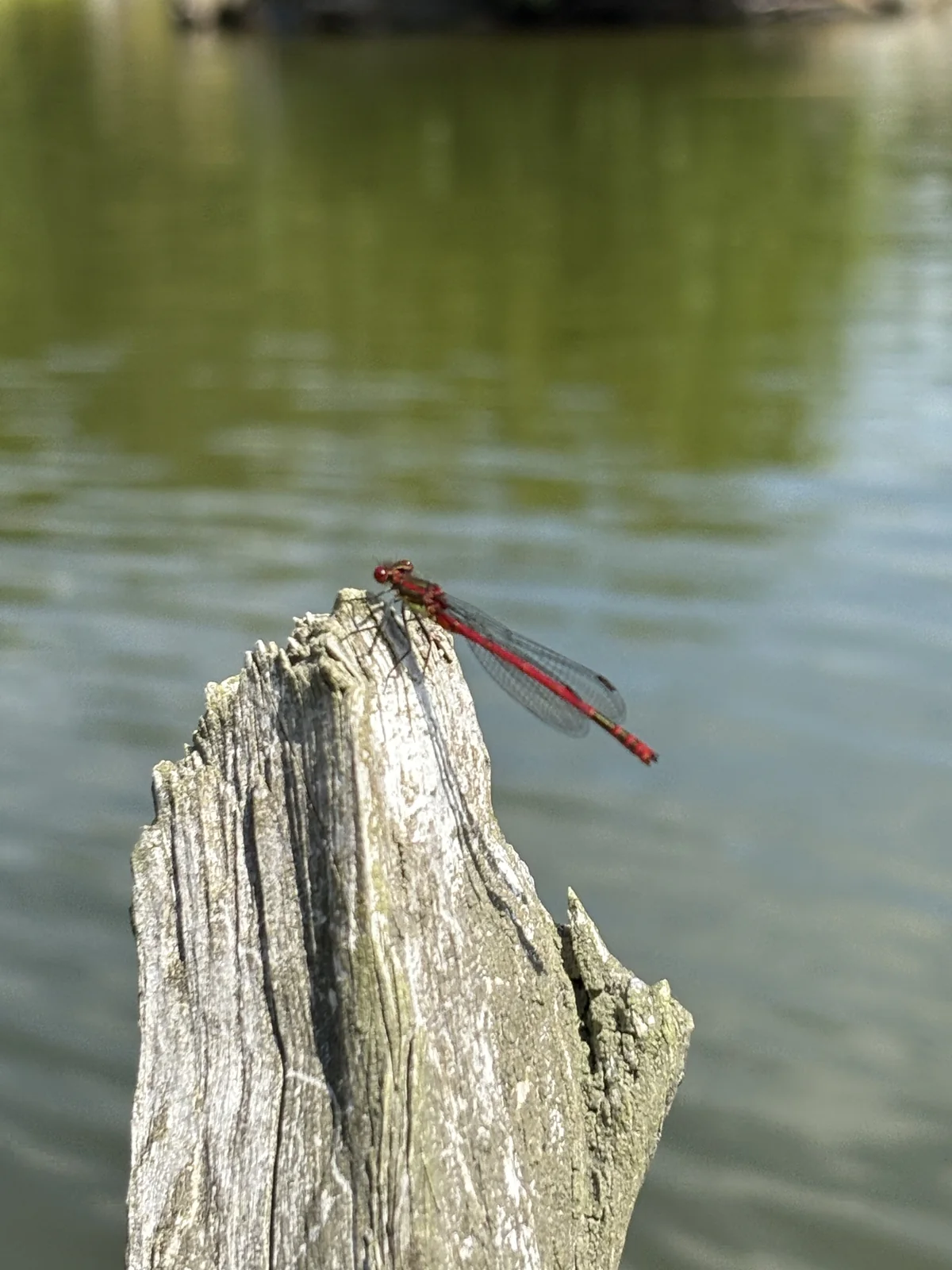
Dragonflies and damselflies develop underwater before emerging as flying adults. They need suitable pond vegetation, but they also benefit from insect-rich surroundings where they can hunt and shelter.
Flowers support insects, and those insects provide prey for dragonflies. The British Dragonfly Society recommends meadow patches and areas of longer grass alongside pond creation. This is a direct link between improving the grassland and supporting life associated with the water.
Wet grassland is part of the wetland
A wetland does not have to be open water or a reedbed. Ground that stays damp, or becomes waterlogged seasonally, can support its own valuable plant communities.
North Devon’s Culm grasslands show this particularly well. Devon Wildlife Trust describes Speccott Moor as a mixture of flower-rich wet grassland, wet flushes, scrub and streams, supporting wildlife including marsh fritillary butterflies. The habitat’s value comes from this varied landscape.
For a new project, we would look for opportunities to retain that variety: drier grassland, damp ground, shallow seasonal water and a pond where conditions suit. There is no need to make the whole area equally wet.
Plan around the best existing habitat
If you already have flower-rich grassland, protect it in the layout. Excavating a pond, spreading spoil or running machinery over a valuable patch could damage the very habitat you want to improve.
We would first identify the areas to retain and assess less diverse ground for new features. A botanical survey at the right time of year may be needed before deciding where to dig, seed or change water levels.
Freshwater Habitats Trust’s grassland pond guidance covers siting, sensitive areas and the relationship between ponds and grazing. Keeping valuable grassland intact also means considering whether nearby excavation could change its water supply.
Create a gradual transition from grass to water
Broad, shallow edges allow water levels to rise and fall across a larger area. As levels drop, they expose wet ground where different plants and invertebrates can live. Seasonal pools add another set of conditions alongside water that lasts longer.
These are useful design principles in Freshwater Habitats Trust’s pond design guidance. A seasonal pond can be valuable habitat in its own right; whether it suits particular species depends on how long it holds water.
For example: on suitable, species-poor pasture, we might investigate a pond with generous shallows, nearby seasonal scrapes and meadow restoration on drier ground. Some rough margins could remain between the water and an existing hedge. The exact layout would depend on the soils, water supply, existing wildlife and how the land will be managed.
Our guide to ponds and wetlands in wet fields explains the practical questions to investigate before choosing a feature.
What a joined-up habitat plan should show
A useful plan needs to do more than mark out a pond and a meadow as separate coloured areas. It should explain how water, habitats, construction and future management fit together.
For a farm, estate, community site or larger private project, we would normally want the plan to identify:
- existing species-rich or otherwise valuable grassland that must be protected;
- drier, damp and seasonally wet areas across the site;
- the pond catchment, water sources, runoff routes and safe overflow;
- where permanent water, seasonal pools and broad wet margins may be appropriate;
- hedges, rough grass, scrub and other connections that wildlife can use;
- areas exposed to fertiliser, manure, road or yard runoff;
- machinery routes, working space and a suitable location for excavated material;
- how mowing, grazing and pond maintenance will be carried out after construction;
- which ecological, hydrological or other specialist checks are needed before the design is fixed.
The result should be buildable and manageable, not simply an attractive concept drawing. For more complex sites, a habitat creation proposal can bring the evidence, practical layout, delivery stages and budget assumptions into one controlled document.
Keep the pond’s water clean
The land draining into a pond strongly influences its water quality. A catchment managed with low inputs can offer a better starting point than runoff arriving from intensively fertilised ground, roads or yards. A strip of wildflowers around the edge cannot compensate for a polluted inflow.
Freshwater Habitats Trust recommends assessing the whole contributing area when choosing a pond location and water source.
For a habitat project, we would establish where water enters the site before positioning the pond. If polluted runoff needs managing, that requires its own assessment. Connecting habitats for wildlife does not require piping all their water into the same basin.
Management keeps the habitats working together
Agree the mowing or grazing arrangements while planning the project. Devon-based Moor Meadows highlights this in its meadow restoration advice: access, suitable grazing, cutting and handling the cut material all affect what is achievable.
For a hay meadow, cutting and removing the crop are part of its management. Retaining some margins on a rotation can preserve shelter for insects. Wet pasture may need a different grazing regime, particularly where sensitive species are present.
On your site, we would agree which areas will be cut, which will be grazed, and where longer vegetation will remain. We would also plan access to the pond margins so future maintenance is possible without repeatedly crossing the meadow.
Before buying seed, assess what is growing already and whether changing management could help it recover. Where additional seed is appropriate, choose a source suited to the local habitat. Plantlife describes green hay and locally harvested seed as useful options for larger meadow projects.
Common mistakes when combining grassland and water
- Assuming the existing pasture has little value. A botanical check may reveal habitat that should shape the whole layout.
- Excavating the best grassland. New ponds are often better placed in less diverse ground beside valuable habitat.
- Spreading spoil over a meadow. Excavated subsoil can change fertility, moisture and vegetation, even where no digging takes place.
- Sending polluted runoff into the pond. A grass strip around the edge cannot correct a poor water source.
- Creating steep, uniform banks. Broad, shallow transitions usually offer more useful wet-margin habitat and cope better with changing levels.
- Trying to make the whole site equally wet. A mosaic of dry, damp, seasonally flooded and permanently wet areas is often more useful and easier to manage.
- Using one management regime everywhere. Hay meadow, wet pasture, pond margins and rough refuge areas need different timing and intensity.
- Forgetting access. Future cutting, grazing and pond maintenance should be possible without repeatedly damaging the habitat.
These decisions are easiest to make before excavation or seeding begins. Retrofitting access, changing an overflow or removing misplaced spoil later is usually more disruptive.
Planning a grassland, pond or wetland project in Devon or Cornwall?
SAS Aquatics designs, builds and restores wildlife ponds for landowners, farms and estates and delivers wetland creation and restoration. We consider the surrounding habitat, water, construction and ongoing care together, involving appropriate ecological or grassland specialists where needed.
Where a paid site assessment is useful, we agree the scope and fee beforehand. The visit is followed by a written assessment explaining the findings, practical recommendations and next steps. Any specialist surveys or detailed design are scoped separately.
Habitat projects · Devon & Cornwall
Make more of your land for wildlife
Planning a meadow with a pond, restoring wet pasture or improving the habitat around existing water? Send us your site details and what you would like to achieve.
Include the address and postcode, a few photographs, approximate dimensions labelled in metres or feet, and what you know about winter wetness and summer drying.
You do not need a finished design to get in touch.