Wetland Insects in Devon & Cornwall: What They Reveal
Wetland insects can reveal a great deal about a pond, stream or marsh, but they need to be interpreted carefully. A single dragonfly does not prove that water quality is excellent, and the absence of an obvious species does not automatically mean a site is failing.
The most useful picture comes from the variety of insects present, the life stages they can complete and the range of habitats available across the water and its margins.
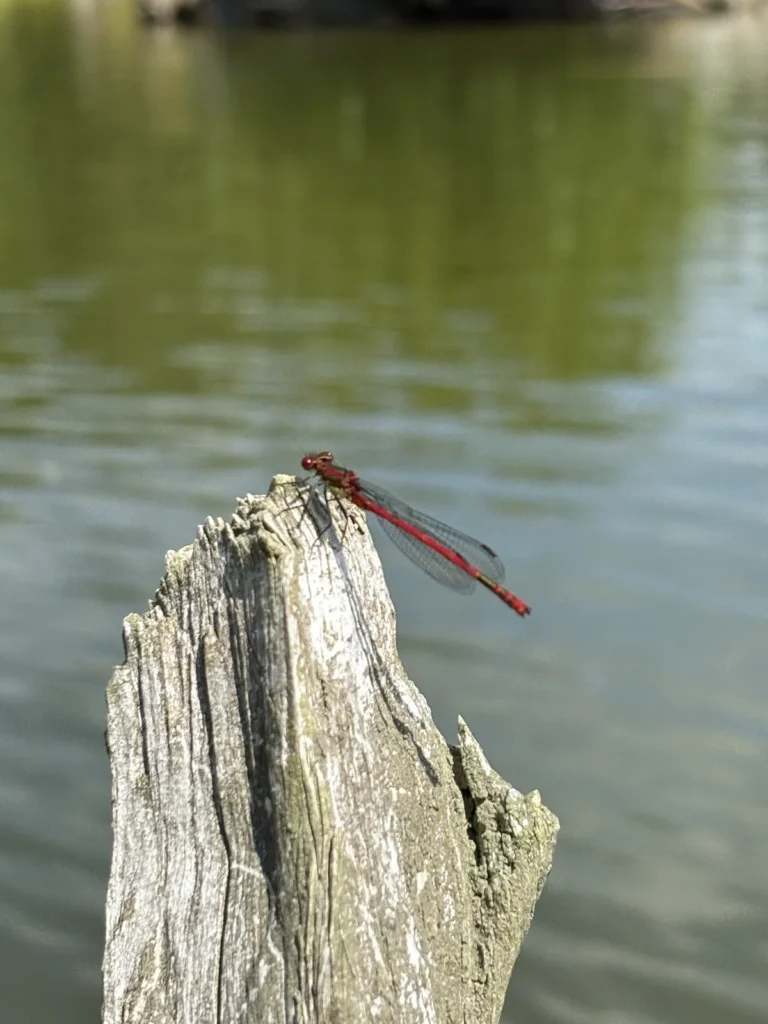
Dragonflies and damselflies
Dragonflies and damselflies spend most of their lives underwater as larvae. Different species favour different combinations of open water, submerged plants, emergent vegetation, bare margins, flowing channels and temporary pools.
Adults are easy to notice, but evidence of breeding is more useful. Larvae and cast skins left on stems show that the site supports the aquatic stages as well as visiting adults.
Mayflies, stoneflies and caddisflies
These groups are especially important in rivers and streams. Many species need cool, well-oxygenated water and suitable gravel, stone, vegetation or leaf litter. They are central to Riverfly monitoring because changes in the community can indicate pollution, sediment or altered flow.
Not every species is equally sensitive, and some caddisflies and mayflies also use ponds and still water. Identification and habitat context matter.
Aquatic beetles and true bugs
Water beetles occupy an enormous range of habitats, from tiny temporary pools to deep permanent ponds. Pond skaters, water boatmen, backswimmers and other true bugs are often among the first visible colonists of new water.
A diverse community usually needs a mixture of open water, shallow margins, plant structure and undisturbed refuge. Avoid judging a site only by the number of insects at the surface.
Flies, midges and hoverflies
Diptera are sometimes overlooked because people associate them with nuisance midges. In reality, fly larvae perform many ecological roles and provide food for fish, amphibians, birds and bats. Some hoverflies have aquatic or semi-aquatic larvae and are closely tied to wet vegetation, seepages and decaying organic material.
What a healthy wetland insect community needs
- Variation in depth and water duration: permanent and seasonal water support different species.
- Clean water sources: nutrient-rich or contaminated runoff can overwhelm small habitats.
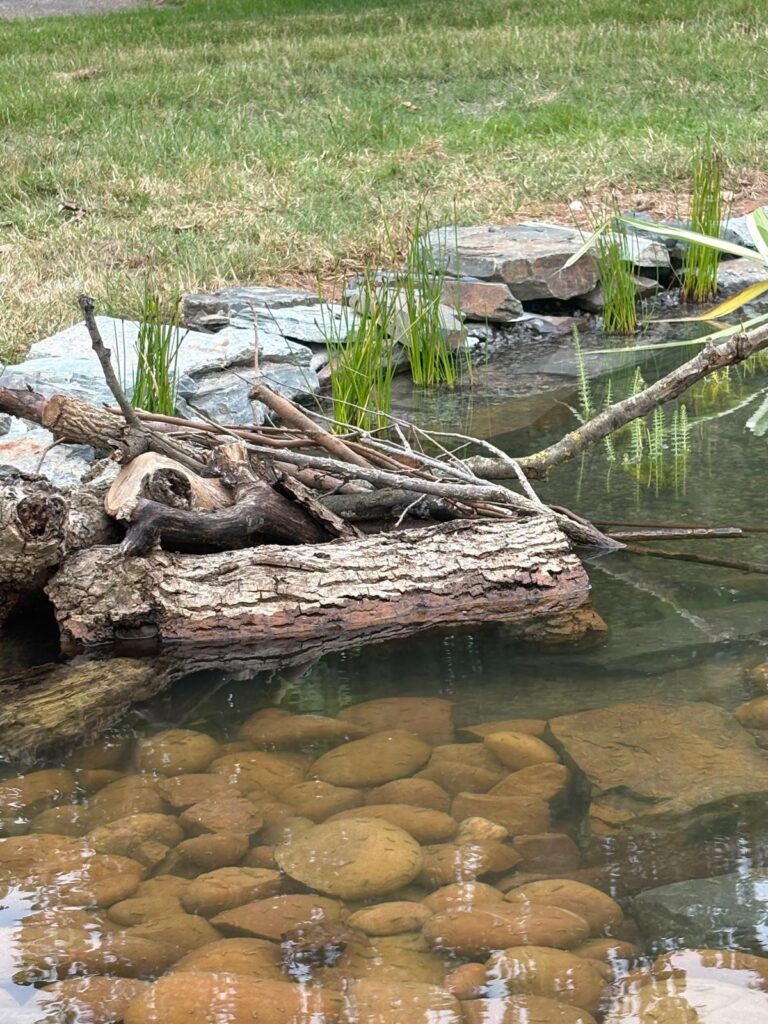
- Structure: submerged plants, emergent stems, leaf litter, gravel, woody material and open water create different niches.
- Connected terrestrial habitat: adult insects need shelter, flowers and suitable land around the water.
- Low disturbance: phased vegetation management retains refuge while keeping the wetland functional.
- Safe hydrology: inlets and overflows should work without scouring the habitat or introducing pollution.
How management can accidentally reduce diversity
Removing every plant, dredging an entire pond in one operation, applying pesticide near the water or repeatedly disturbing all margins can remove the variety insects depend on. Management is often more effective when it is selective and phased.
Equally, doing nothing is not always best. Dense scrub, accumulated silt or a single dominant plant can remove open water and habitat variation. The right intervention follows the site rather than a fixed recipe.
Monitoring and identification
Simple observation can be valuable, but formal conclusions about water quality or protected species require appropriate survey methods and competent identification. Avoid moving animals between sites. Where a project could affect protected species or designated habitat, obtain ecological advice before work begins.
Further information
Planning wetland habitat work?
Send the location, photographs, approximate scale, access information and what you want the site to achieve. We will review the project and explain the most useful next step.
Explore wetland creation and restoration Send project details