RPS 374: Low-Risk Abstraction for Nature Recovery
Information checked against the Environment Agency guidance on 19 August 2026.
The Environment Agency has introduced a new regulatory position for certain low-risk abstraction activities associated with nature recovery and fish or eel passage.
Published on 29 June 2026, RPS 374 applies in England.
The most important point is that RPS 374 is an Environment Agency regulatory position, not an exemption from abstraction licensing.
What does RPS 374 mean?
The legal requirement to hold and comply with an abstraction licence remains in place where one is required.
However, the Environment Agency says it will normally not take enforcement action where:
- the activity is one of those described in RPS 374;
- every relevant general and activity-specific condition is met; and
- the activity does not cause, and is not likely to cause, harm to human health or the environment.
If a project falls outside the stated activities or cannot meet all the relevant conditions, an abstraction licence may still be required.
Which activities can it cover?
RPS 374 applies to specified activities rather than nature-recovery work generally. These include:
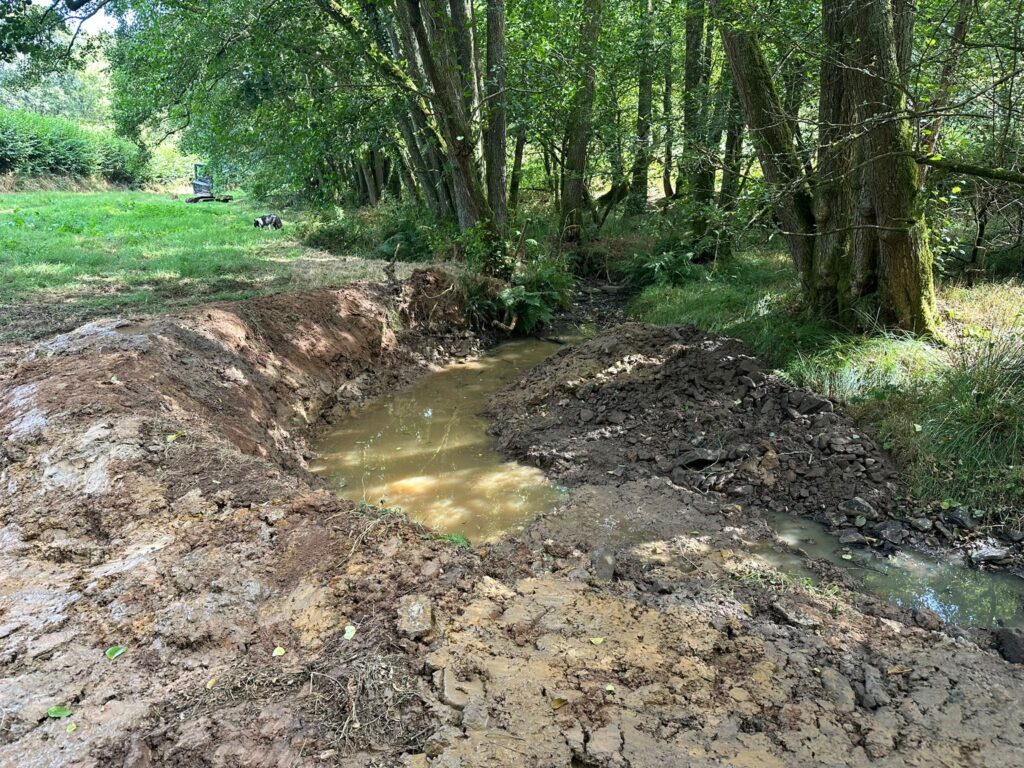
- creating a new bypass channel;
- creating a new additional channel;
- creating a backwater or fish-refuge feature;
- removing raised banks to reconnect a watercourse with its natural floodplain;
- certain abstractions of water being pumped by an internal drainage board;
- fish passes, including passes for elver, eel and lamprey; and
- pumped eel or elver passes.
For the nature-recovery activities, ecological improvement must be the project’s primary aim. The work must seek a net improvement in biodiversity, natural processes, ecological connectivity, habitat or species condition, or ecosystem resilience.
Each activity also has its own detailed conditions. These can include requirements relating to fish passage, water-return arrangements, pump screening and written agreements with landowners, riparian interests and other water users.
Backwaters and fish refuges as habitat creation
The backwater and fish-refuge category is a particularly useful habitat-creation opportunity. It allows suitable projects to create quieter water connected to the main channel rather than concentrating every habitat function within the faster-flowing stream.
A well-designed backwater can provide:
- shelter for adult and juvenile fish during high flows;
- warmer, slower nursery habitat for young fish during normal flows;
- additional shallow margins and vegetated edge habitat;
- cover for eels, aquatic invertebrates and other river wildlife; and
- better connection between the watercourse and a wider wetland or floodplain habitat mosaic.
The Environment Agency has used this approach in river-restoration projects, describing backwaters as places where adult fish can rest during high flows and young fish can develop in shallower water. Its River Stour habitat project provides one practical example.
A refuge may also allow some sediment to settle as a useful secondary function, particularly where this helps protect sensitive habitat. However, it should not be treated as a conventional in-stream silt trap that has simply been renamed for regulatory purposes.
To fall within the backwater or fish-refuge part of RPS 374, the abstraction must supply a blind channel that is closed at one end with no outlet. Ecological improvement must be the project’s primary aim, and the feature must remain safe for fish species at, or moving through, the site at all times.
For SAS Aquatics, the opportunity is to assess whether a deliberately designed backwater or refuge could form part of a wider channel, wetland or floodplain-restoration project. Water levels, flow velocity, fish access and escape, planting, sediment management and future maintenance all need to be considered from the outset.
Notification and evidence are essential
The Environment Agency must be notified before abstraction begins. The notification must provide information about the site and proposed activity and confirm that all applicable RPS conditions have been read and met.
A specific project record should then be retained. Depending on the activity, this may include:
- the RPS 374 notification;
- evidence that the project qualifies as a nature-recovery action;
- landowner, operator and access details;
- relevant written agreements;
- hydrological assessment;
- ecological and other site surveys;
- technical specifications;
- drawings and plans; and
- before-and-after photographs.
Records must be kept throughout the abstraction activity and for six years after it permanently stops. They must be made available to the Environment Agency if requested.
Some conditions require technical assessment and site screening. Where the project team cannot undertake this competently, a suitably qualified professional may be needed.
Other permissions remain separate
RPS 374 concerns the Environment Agency’s enforcement position on abstraction licensing. It does not replace other permissions or approvals.
Depending on the location and work involved, a project may still require:
- a flood risk activity permit for works on or near a main river;
- ordinary-watercourse consent from the lead local flood authority or internal drainage board;
- Natural England consent for works within, or potentially affecting, a designated site;
- approval for a fish or eel pass;
- an impounding licence or compliance with a separate regulatory position; and
- permission from landowners, riparian owners or other relevant authorities.
These requirements need to be checked separately and early in the project.
What changes for SAS Aquatics projects?
SAS Aquatics will now include the following checkpoint when assessing relevant river, floodplain and channel-restoration work:
“Is RPS 374 potentially applicable?”
Where it may be relevant, the assessment will identify:
- the potential RPS activity category;
- the applicable general and activity-specific conditions;
- the assessments, surveys and agreements likely to be needed;
- any separate permits or consents;
- the information required for notification; and
- the evidence that should be retained.
Where the agreed SAS Aquatics project scope relies on RPS 374, a dedicated notification and evidence record will be maintained for the project.
This helps ensure that the regulatory position is considered without being mistaken for automatic approval or an abstraction-licence exemption.
Planning a water-based habitat project?
RPS 374 may be relevant to carefully designed projects involving channel creation, backwaters, floodplain reconnection or fish passage. Whether it can be used will depend on the precise activity, the site and the ability to meet every applicable condition.
SAS Aquatics works with landowners, farms, estates and organisations across Devon and Cornwall on ponds, wetlands and water-based habitat projects. We can help examine the site, water movement, habitat objectives, buildability and practical information needed to develop an appropriate proposal.
Related services include hydrology and water-feature design reports, habitat creation proposals, wetlands and rewilding, and farm and estate pond construction.
Explore fish-refuge, river-backwater and connected wetland habitat creation
Check the current Environment Agency position
The Environment Agency intends to review RPS 374 by 24 June 2029, but it can amend or withdraw the regulatory position before then. Anyone considering relying on it should check the current version before starting an abstraction activity.
Read the official Environment Agency RPS 374 guidance.
This article provides general project information and is not legal or regulatory advice. Requirements should be confirmed with the relevant authorities and competent specialists for each individual project.