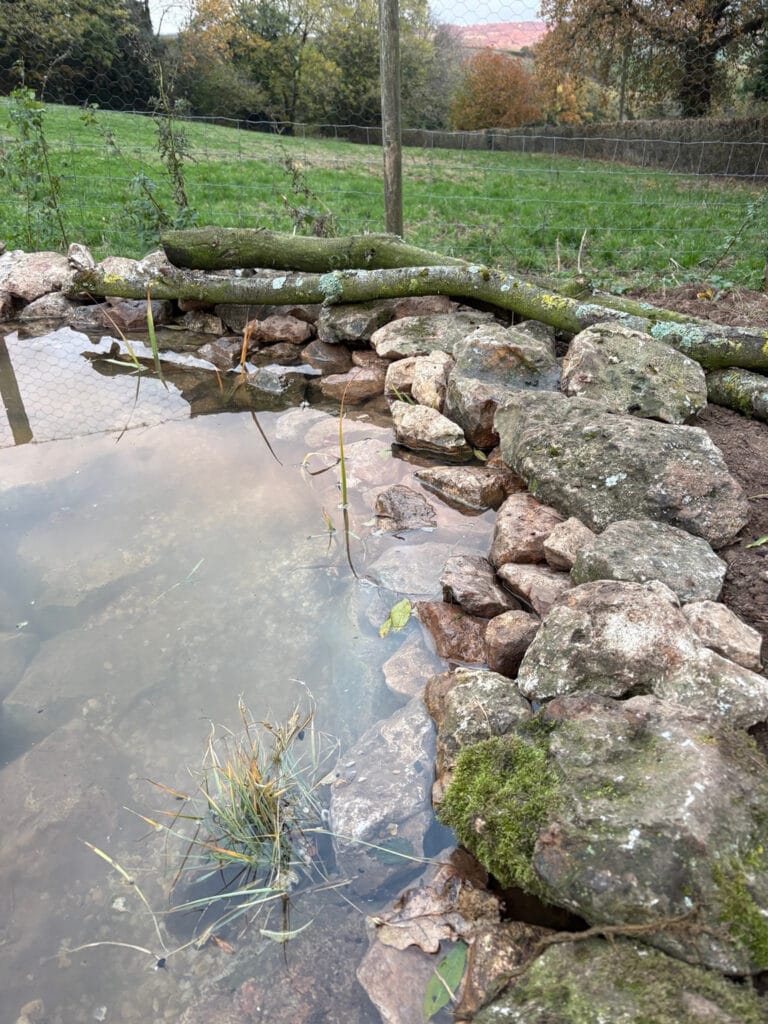
Why We Prefer Planted Shelves to Plastic Pond Baskets
Plastic pond baskets are convenient, but they are rarely our first choice for a natural-looking wildlife pond. Visible rims interrupt the pond edge, old baskets can crack or break when handled, and they add plastic where a well-designed planting area may not need it.
We generally prefer to build the planting into the pond: broad shallow shelves and pockets held by carefully placed stone, with suitable gravel or other low-nutrient planting material. The aim is a living margin, rather than a row of pots under water.
Why we prefer to avoid plastic baskets
They can look out of place. Black mesh and square rims become particularly noticeable when water levels fall or foliage dies back. Hiding them with stones can help, but designing a planted edge from the outset usually gives a more convincing result.
They are another component that can fail. A basket carrying a heavy, established rootball can split during lifting or division. Broken pieces then need retrieving from the pond. We would rather avoid unnecessary plastic than plan for its eventual replacement.
They can encourage a pot-by-pot approach. A few isolated containers on a narrow ledge are not the same as a varied, planted shoreline. The opportunity is to improve the whole margin, not simply change the container.
What we use instead
Where the pond allows it, we create shallow planting shelves of varied widths and depths, or smaller pockets retained by stable rocks. Suitable marginal plants can establish through the planting material and soften the transition between water and land.
Gravel planting is not a trick that suits every plant. Species, water depth, water chemistry and the available rooting space all matter. The Natural History Museum’s wildlife pond guidance describes planting many marginal and emergent plants directly among gravel or stones.
On lined ponds, protection and construction matter too. Heavy or sharp stone must not damage the liner, and planting material needs to stay on the shelf rather than slide into deeper water. We do not recommend simply tipping gravel into an existing pond.
A more useful edge for wildlife
The benefit comes from the habitat we create, not just the absence of a plastic pot. A gently graded, planted margin can provide cover at the water’s edge, stems for emerging insects and a connection to damp vegetation on the bank. Plants in baskets can still provide useful habitat.
Sand and washed gravel can provide rooting material and habitat for aquatic creatures, as explained in Freshwater Habitats Trust’s garden pond guide. We combine planted areas with open water and accessible shallow edges, rather than covering every surface in rock.
Our small wildlife pond project shows how shelves, gravel, stone and planted margins can be brought together in a natural-looking pond.
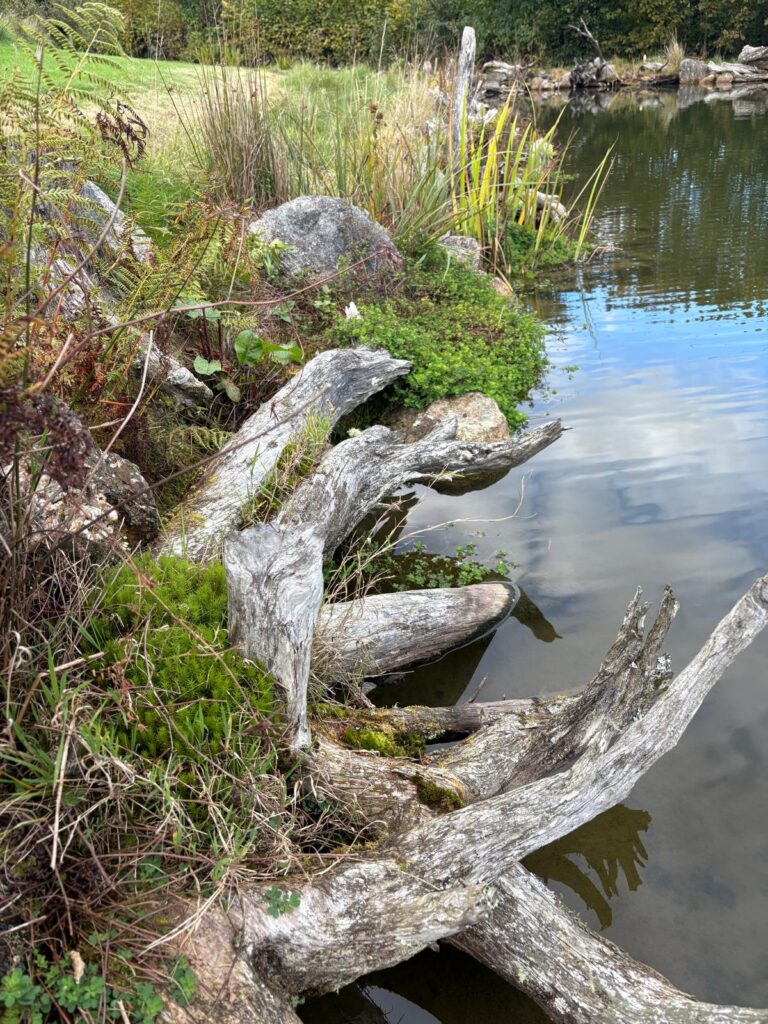
There is still a place for baskets
Baskets can be sensible where plants need lifting or moving, where a formal pond has limited planting space, or where a vigorous plant needs more control. The RHS notes their value for managing vigorous aquatics. Waterlilies may also be easier to manage in suitable containers.
We would not disturb a healthy, established pond just to remove every basket. Reuse sound containers where useful, replace damaged ones carefully, and improve planting areas when restoration or relining provides a sensible opportunity.
Design the planting into the pond
Our preference is simple: less visible plastic, planting with room to establish, and margins that look and function more naturally. That still needs sensible species selection and ongoing thinning, not a promise of a maintenance-free pond.
We design and install aquatic planting schemes across Devon and Cornwall, often alongside pond creation or restoration. Send us a few photographs and your location if you would like to improve your pond’s planted margins.