Small Garden Wildlife Pond
Small garden wildlife pond
A compact pond shaped for planting, access and open water
Stone, gravel, aquatic planting and a varied pond profile created a useful water habitat without asking a modest garden to accommodate an oversized feature.
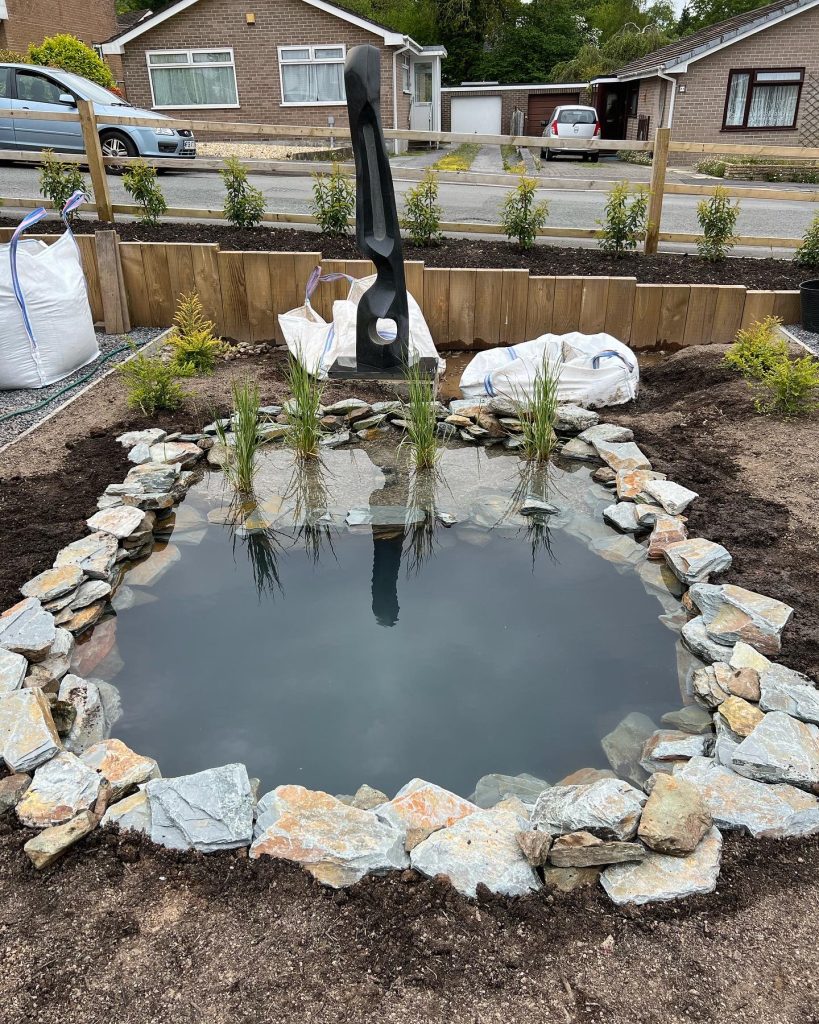
Compact by size, layered by design
Open water, planted margins and textured edges each give the pond a different role.
Project overview
Make a modest space work harder for wildlife
A small pond still needs deliberate levels, margins and finishing. Here, the design kept a clear area of open water while using shelves, gravel, stone and aquatic planting to create variety around the perimeter.
The result is a garden pond with a natural character and room for the planting to develop, without relying on unnecessary visual clutter.
← View all projectsDesign priorities
Balance water, planting and the garden edge
The pond needed enough open water to remain legible as a feature, with planting held in useful zones rather than allowed to obscure the whole surface from the outset.
- A varied profile rather than one uniform depth
- Shallow margins that connect water to the surrounding garden
- Stone and gravel adding texture without a hard formal edge
- Planting positioned to develop around retained open water
- A scale that suits the available garden space


Design approach
Give each part of the pond a clear role
Good small ponds are not simply reduced versions of larger ones. The available water area has to be divided carefully so access, planting, depth and the visible surface support one another.
Vary the water depth
Different levels create places for marginal planting while retaining a clearer central area.
Soften the boundary
Gravel and stone connect the water to the garden without a continuous hard rim.
Leave room to establish
Aquatic plants were arranged in defined areas so their development can add cover without immediately crowding the pond.
Keep the feature proportionate
The pond remains large enough to feel purposeful while fitting comfortably within the garden.
The finished pond
Designed to improve as the planting establishes
The completed pond already has a readable shape, a varied edge and a useful relationship between open water and planting. As the aquatic plants settle and spread, the structure beneath them will continue to keep the feature balanced.
- Open water remains visible from the garden
- Planting is distributed around several margin zones
- Stone and gravel give the edge a natural texture
- The compact footprint still contains several habitat conditions
- The layout can be maintained without remaking the whole pond
Why the layout works
Small does not have to mean simple or generic
The value comes from combining several useful conditions—deeper water, shallow access, planted cover and a textured edge—within one coherent garden feature.
Considering a garden wildlife pond?
Start with the space and what you want the pond to achieve
Share photographs, your location, the approximate available area and any access constraints. We will review the site information and guide you to the most useful next step.