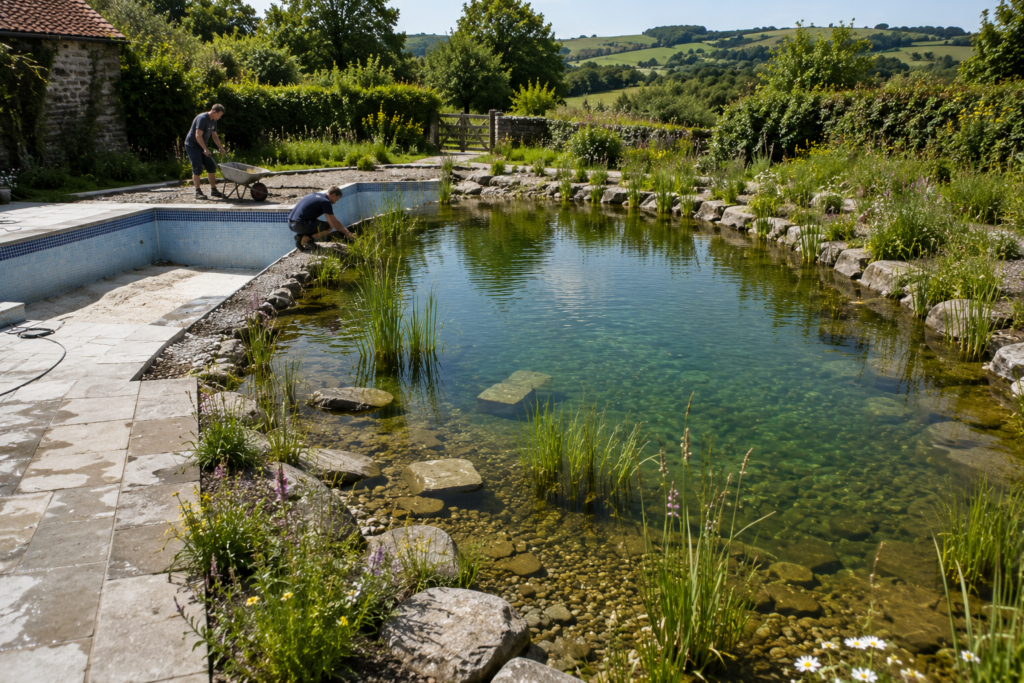
Can You Convert an Existing Swimming Pool into a Natural Swimming Pond?
An existing swimming pool can sometimes be converted into a natural swimming pond, but a sensible conversion involves more than switching off the dosing system and adding plants. The shell, waterproofing, pipework, levels, treatment space and intended maintenance regime all need to work together.
Retaining a sound pool can preserve useful excavation, structure and surrounding landscape. Forcing an unsuitable or failing pool into a new role can cost more and leave compromises behind. The first job is therefore to decide what is genuinely worth keeping.
The short answer: often yes, but not every pool is a good candidate
A pool conversion is most promising when the main structure is sound, the site has space for an appropriate treatment system, and the existing levels can be adapted without creating awkward edges or access. A tired finish or redundant pool plant does not automatically rule the project out; serious structural movement, persistent water loss or restrictive geometry may change the answer.
Our swimming pond conversion service starts by comparing conversion, refurbishment and replacement. Reuse is valuable only when it improves the finished result or reduces unnecessary work.
What actually changes in a natural swimming pond conversion?
A conventional pool is usually designed around treated water held within a relatively simple swimming shell. A natural or hybrid swimming pond needs a complete water-management system that also considers planting, circulation, biological treatment, safe access, rainfall, runoff and long-term maintenance.
Depending on the existing pool and the result required, a conversion may involve:
- repairing, replacing or covering the existing waterproofing;
- altering depths, steps, edges or entry points;
- reworking pipework and circulation routes;
- creating planted regeneration or filtration areas;
- adding suitable mechanical and biological treatment for a hybrid system;
- integrating the retained pool with new stone, planting and landscape levels;
- making filters, pumps and planted areas practical to maintain.
The right scope comes from the condition of the pool and the expected performance. It should not be based on a standard conversion package.
Which parts of an old pool can be retained?
Useful elements can sometimes include the excavation, a sound shell, retaining walls, selected service routes, a plant room and parts of the surrounding terrace. Each one needs to be assessed rather than assumed suitable.
Structure and waterproofing
Cracks, movement, previous repairs and unexplained water loss need to be understood before finishes hide them again. A sound-looking surface does not confirm the condition behind it, while an unattractive finish may be perfectly workable if the structure beneath is stable.
Pipework and existing equipment
Old pipework may be in the wrong position, too difficult to inspect or unsuitable for the proposed circulation. Some routes or equipment may still be useful, but retaining them should not dictate a weaker treatment design.
Depths, steps and edges
The existing shape has to work for safe entry, comfortable swimming and the way the new pond meets the garden. A rectangular pool can remain visibly formal, be softened with planting, or sit within a wider naturalistic water landscape. The best option depends on the site rather than a fixed idea of what a natural swimming pond should look like.
Fully natural or hybrid: which route suits a conversion?
A fully natural swimming pond relies on a carefully balanced relationship between water volume, planting, regeneration areas and circulation. It suits owners who value a living waterbody and accept that appearance changes through the seasons.
A hybrid natural swimming pond combines planted landscape character with deliberately specified circulation and filtration. It can be useful where the retained pool shape, available space, expected swimming use or water-clarity expectations call for more engineered treatment.
One is not automatically better than the other. The decision should reflect the site, available space, water inputs, desired appearance and the amount of routine management the owner is comfortable with.
Six questions that determine whether conversion makes sense
1. Is the shell genuinely sound?
Known construction details, crack history and previous repairs are useful. Where the condition is uncertain, further investigation may be needed before committing to reuse.
2. Has the pool been losing water?
A leak should be diagnosed rather than covered by a new concept. Water loss can come from the shell, liner, fittings, pipework or surrounding system, and the repair route depends on the cause.
3. Is there enough room for treatment and planting?
Natural and hybrid systems need space beyond the swimming volume. The area may be beside the retained shell, incorporated within a wider redesign or supported by equipment positioned elsewhere on the property.
4. Do the existing levels work?
Pool edges, nearby buildings, terraces, drainage and garden levels affect what can be changed. Good level planning also prevents surrounding runoff from becoming an avoidable water-quality pressure.
5. What standard of appearance is expected?
A living pond does not behave like a freshly dosed blue pool. The design needs to match the owner’s expectations for planting, seasonal change, water clarity and the balance between natural character and engineered control.
6. Can it be maintained properly?
Pumps, filters, planted beds and sediment zones need sensible access. A beautiful conversion that is awkward to inspect or maintain will become frustrating over time.
When is rebuilding more sensible?
Full or substantial reconstruction can be the better long-term option when the shell has serious defects, the waterproofing and buried services are unreliable, the geometry prevents safe and practical use, or there is no workable space for treatment. It may also make sense when most of the surrounding landscape has to be rebuilt anyway.
This is not a failure of the conversion idea. It is a decision to avoid spending heavily on compromises. The retained structure should earn its place in the design.
Will converting an old pool be cheaper than building a new swimming pond?
Sometimes, but it should not be assumed. Savings from retaining excavation or structure can be offset by investigation, demolition, difficult access, structural repairs, new waterproofing, altered pipework and the work required to connect old construction with a new landscape.
A credible budget follows a site-specific scope. Photographs can identify obvious opportunities, but they rarely confirm hidden structure, waterproofing or buried services.
What to send before a feasibility assessment
A useful first review should include:
- photographs from each side of the pool and the wider garden;
- approximate length, width and depths;
- any known construction, liner or finish details;
- the location of the plant room and visible pipework;
- details of leaks, cracks, previous repairs or equipment failures;
- access widths and any restrictions for machinery or materials;
- the result you want: fully natural, hybrid, formal, naturalistic or still undecided.
That information helps establish whether the next step should be a site assessment, targeted investigation or an early design discussion.
Planning a pool conversion in Devon or Cornwall
SAS Aquatics designs and builds natural and hybrid swimming ponds across Devon and Cornwall, including conversions of existing pools and refurbishment of underperforming systems. We assess the existing waterbody first, retain what offers real value and set out the work needed for a durable result.
If you have an unused, leaking or dated swimming pool, send us the pool details and photographs through the natural swimming pond enquiry form. You do not need to know which treatment route is right before getting in touch.
Frequently asked questions
Can a leaking swimming pool still be converted?
Possibly. The source of the water loss needs to be identified and the new waterproofing strategy designed around the actual condition of the shell, fittings and pipework.
Does a converted pool have to look like a wildlife pond?
No. A conversion can remain formal, become more naturalistic or combine a clean swimming area with planted margins. The site and the owner’s preference should guide the appearance.
Can I keep the existing pool shape?
Often, provided the structure, depths and access work for the new design. Retaining the complete shape is not always the best answer if it restricts treatment, entry or landscaping.
Should I choose a fully natural or hybrid system?
That depends on the space available, the existing pool, desired water appearance, expected use and maintenance preferences. Reviewing both routes at feasibility stage is usually more useful than choosing from photographs alone.
For more detail on upgrades to an existing natural system, see our swimming pond refurbishment and upgrades service.