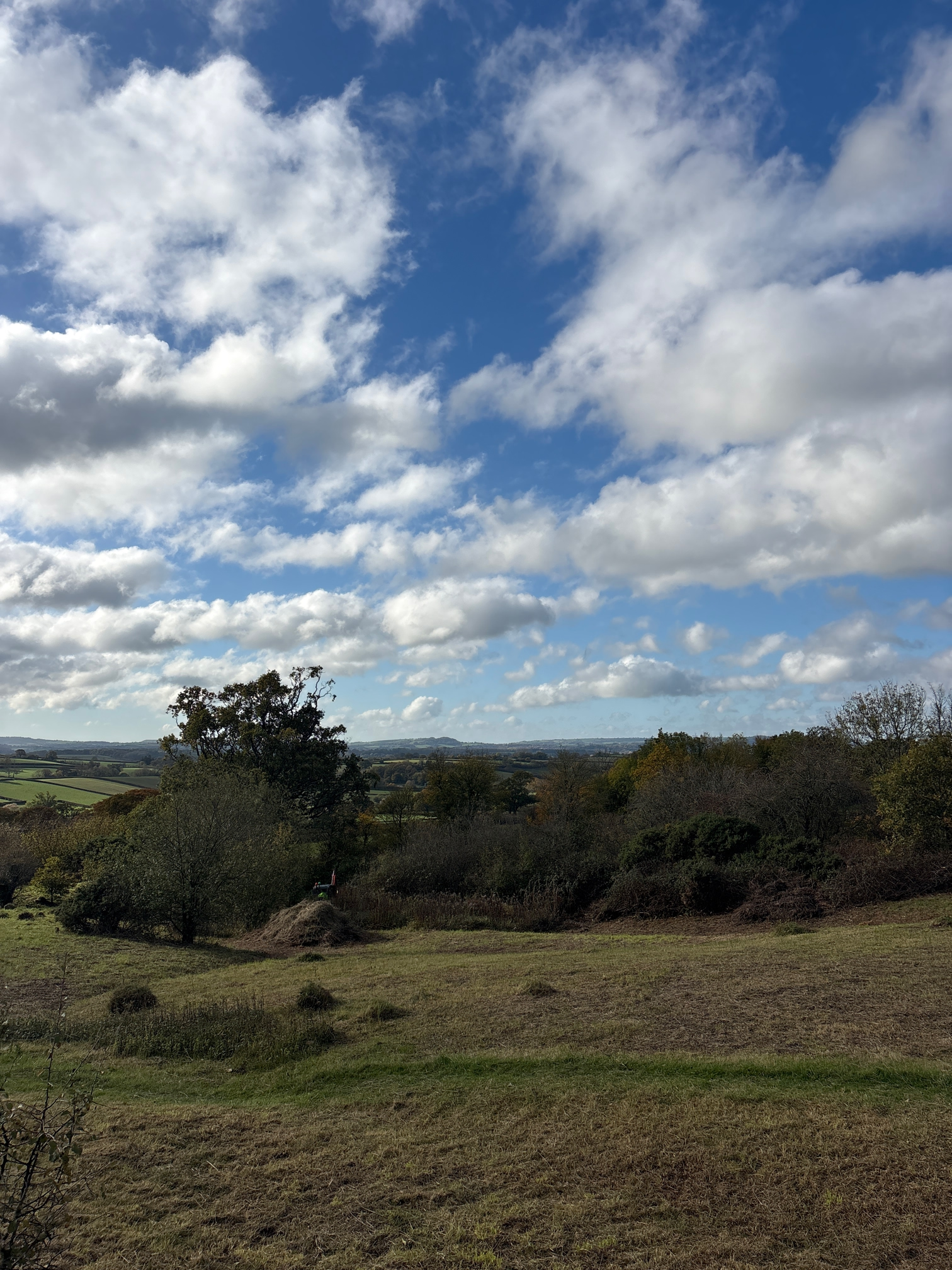
Natural Flood Management in Devon & Cornwall
Farms · estates · conservation projects
Slow the flow. Make room for water. Create habitat.
When heavy rain runs quickly off fields, tracks and slopes, the solution may lie further uphill. Carefully positioned ponds, seasonal storage areas and wetlands can help manage runoff while creating useful habitat.
SAS Aquatics provides practical assessment, project scoping and construction for Natural Flood Management (NFM) projects across Devon and Cornwall. We work with landowners and project teams to establish what is suitable for the site, what needs further design and how the works can be delivered.
Have a catchment adviser’s proposal or an existing design? Include it with your enquiry.
What is Natural Flood Management?
Natural Flood Management uses the landscape’s natural processes to slow, store and manage water, helping to reduce flood risk. Measures are selected around the catchment, ground conditions and people or places affected downstream.
Our focus is the practical pond, wetland and earthworks element: turning a suitable proposal into features that can be built, planted and maintained. Wider schemes may also involve soil management, woodland and river restoration led by the appropriate specialists.
NFM works we can help deliver
Runoff storage ponds and basins
Excavation and profiling of features intended to hold stormwater temporarily and release it gradually. Storage levels, outlets and a safe route for excess water must be established in the design.
Wetlands, scrapes and seasonal pools
Shallow features and wetland areas shaped around seasonal water and habitat objectives. We consider how they connect with the surrounding land and what storage is available when rain arrives.
Swales and runoff pathways
Broad, vegetated channels and associated earthworks where a site assessment identifies a suitable way to slow and spread runoff. Routes and gradients need to suit the land and avoid transferring problems elsewhere.
Sediment management
Accessible settlement areas, pond restoration and silt management, and associated planting where these form part of the agreed scheme. Sediment removal and maintenance access are considered from the outset.
Leaky barriers and small check structures
Practical installation of leaky barriers and check structures where a competent designer has confirmed the location, specification and permissions. Flow, debris, stability, maintenance and downstream effects need to be assessed first.
Planting and establishment
Native aquatic and marginal planting, varied margins and habitat detail, with establishment and maintenance requirements agreed for the finished scheme.
A wildlife pond is not automatically flood storage
A pond can be valuable for wildlife yet have little spare capacity during heavy rain. An NFM feature needs space to receive additional water and an appropriate way to release it. Its position and connections matter as much as its size.
We consider permanent water, seasonal habitat and temporary storm storage separately. Where runoff carries sediment or nutrients, the design should also consider how to protect cleaner wildlife water.
NFM can contribute to reducing flood risk, but it cannot guarantee that a property or village will not flood. Any claim about downstream protection or a specific reduction in peak flow needs appropriate assessment and, where required, modelling and monitoring.
Small-scale earthworks at Half Moon
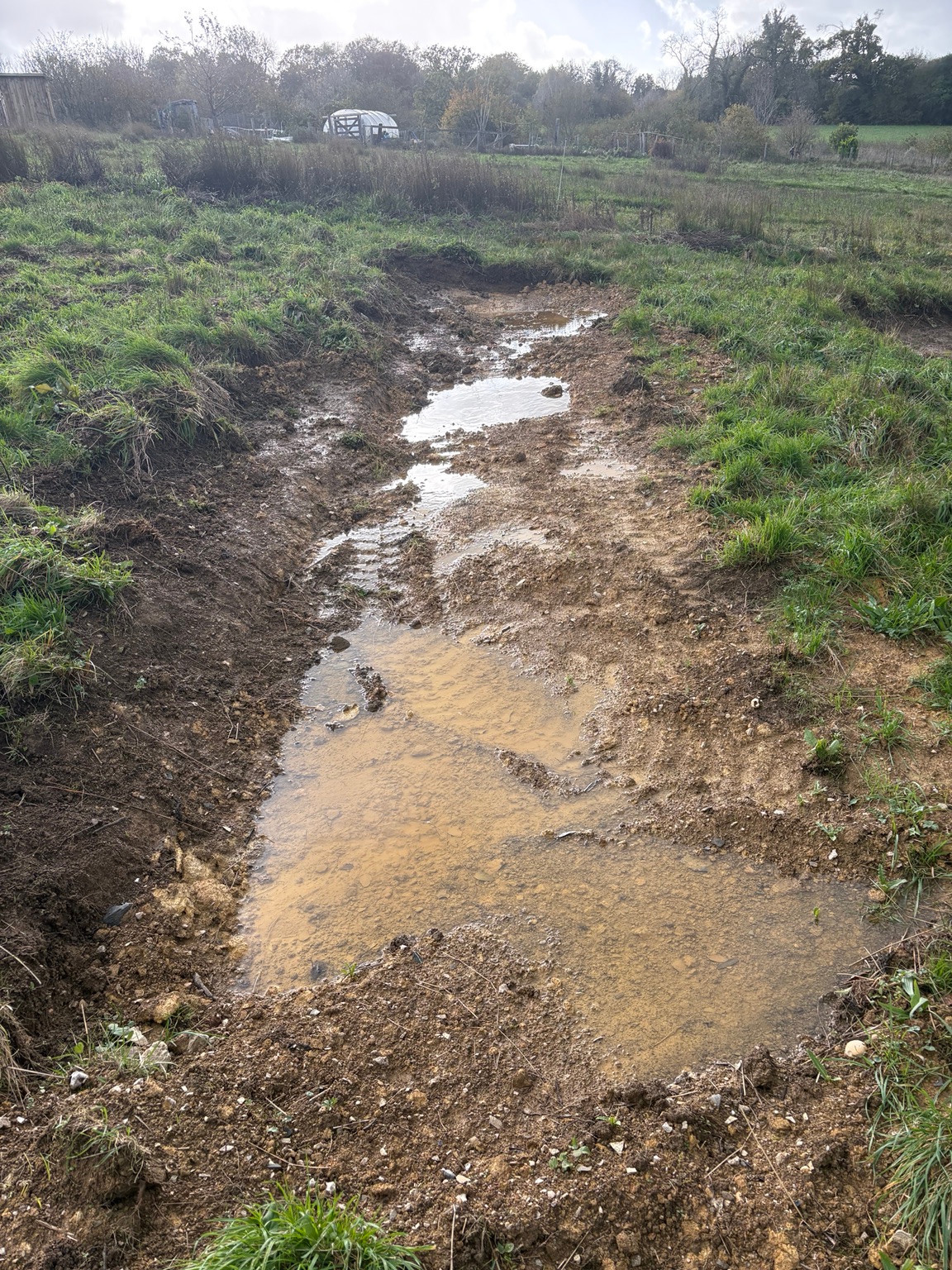
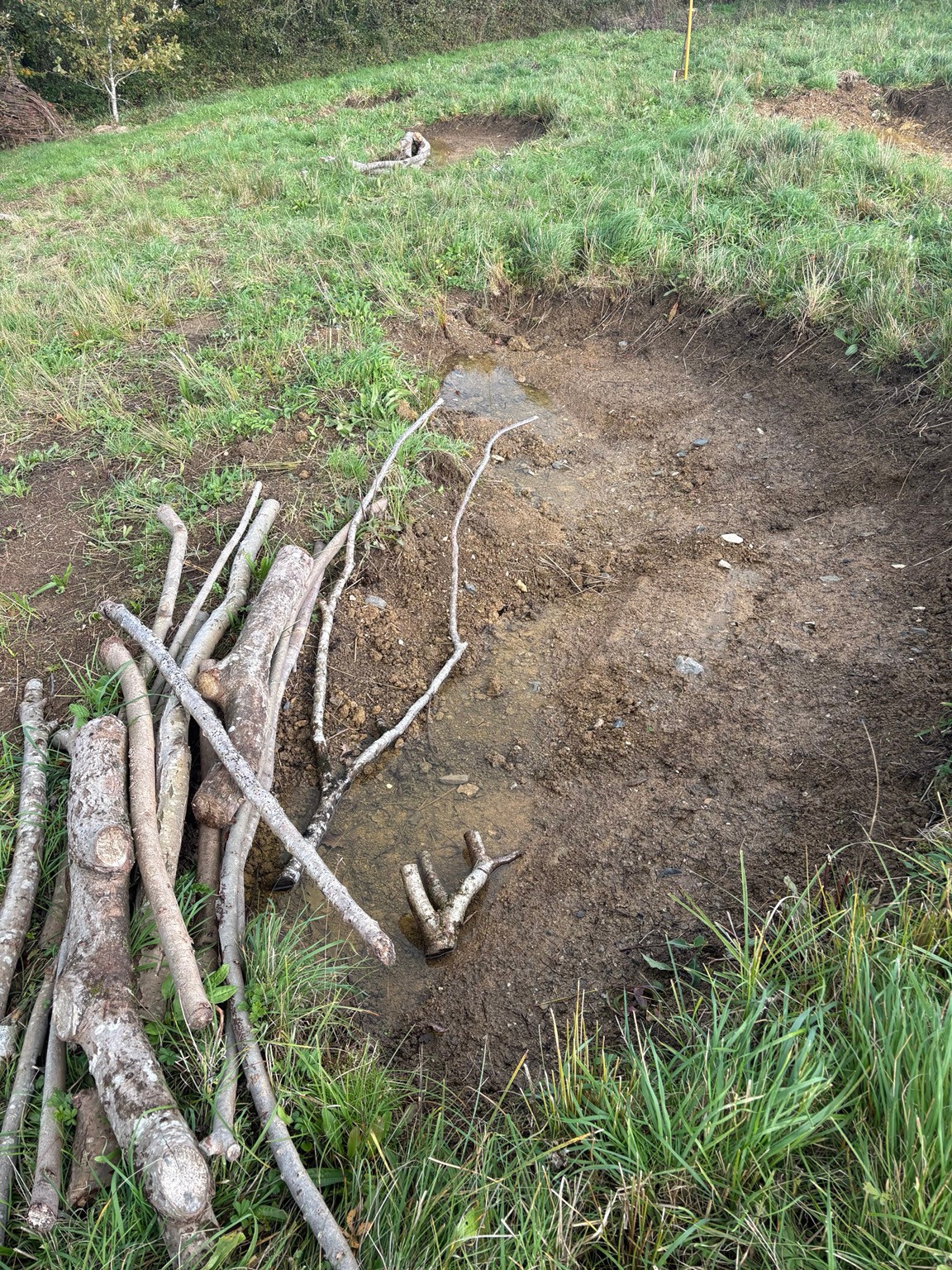
These photographs show shallow excavated features, small areas of standing water and retained grassy margins at Half Moon. Deadwood is visible beside one feature. They illustrate the shape and setting of the works, rather than a measured flood-risk outcome.
From terrain analysis to habitat works
At Hardington Moor, terrain analysis helped us understand potential surface-water routes alongside observations on site. The November photographs show pond earthworks and a seasonal scrape within the wider habitat project.
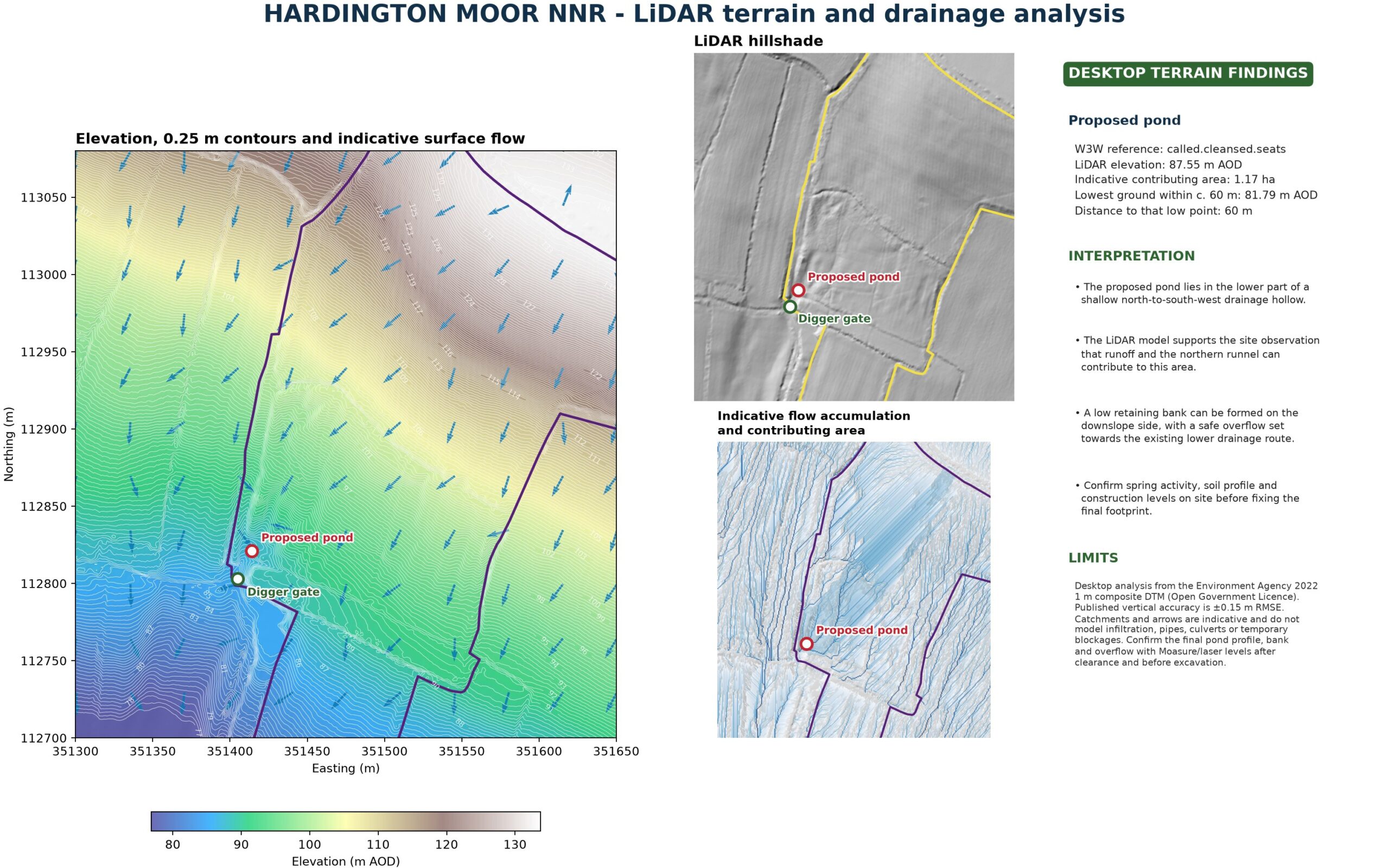
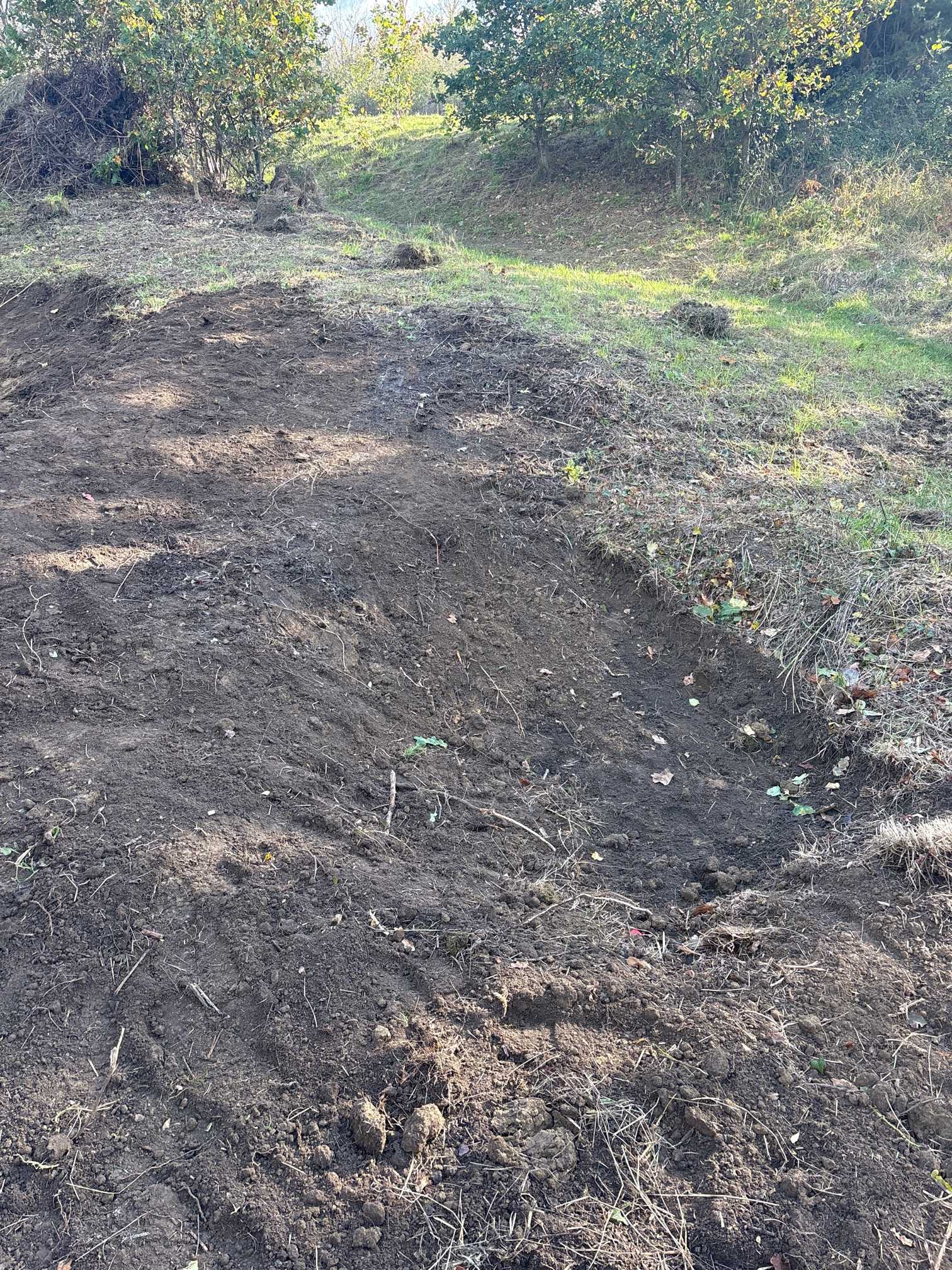
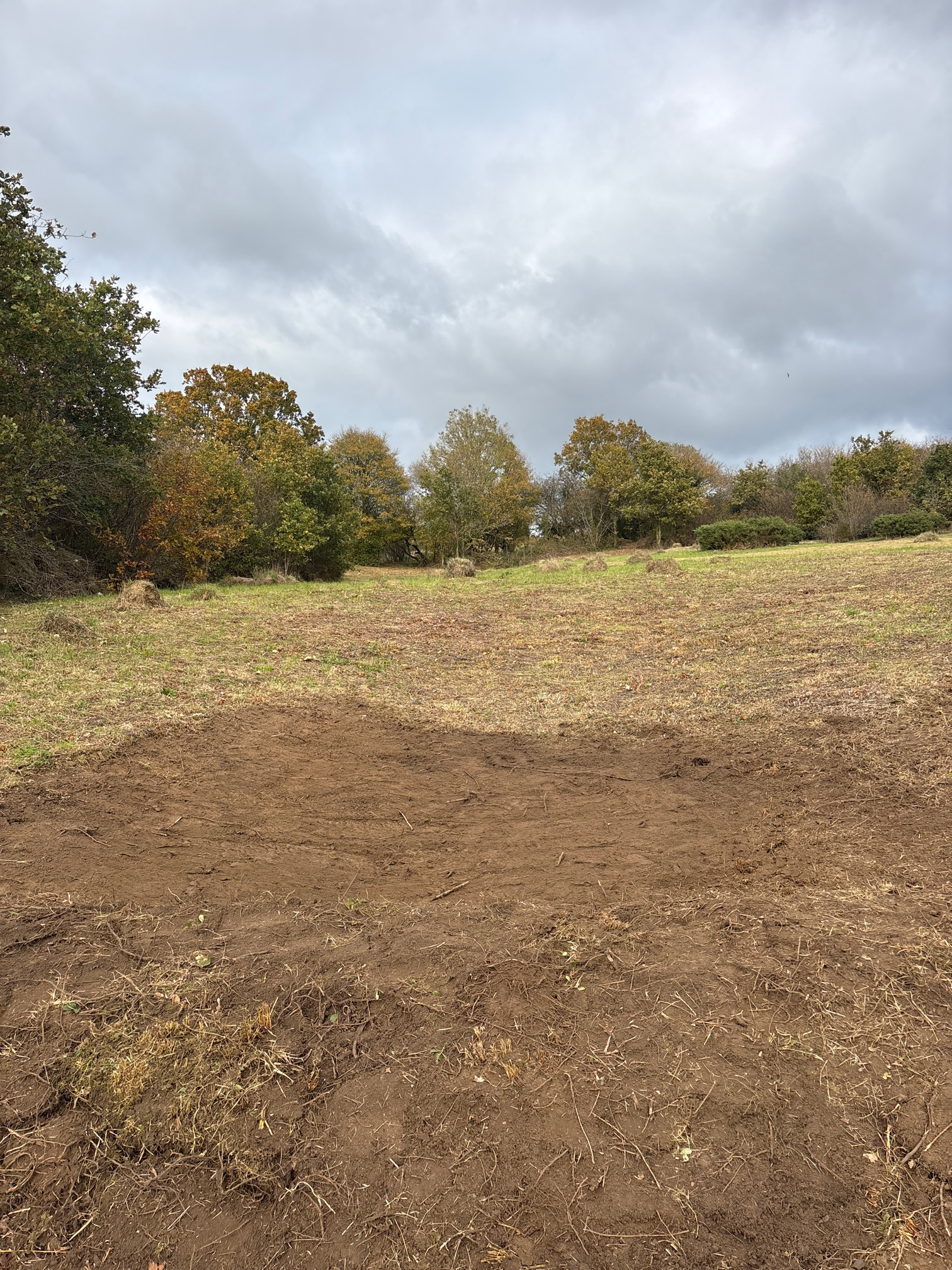
The photographs illustrate habitat earthworks. Any flood-storage capacity or downstream flood-risk benefit needs its own assessment.
From site assessment to practical delivery
- Start with the site. Send the location, photographs, the approximate area and a description of what happens during heavy rain. Include existing plans and any known flooding or drainage concerns.
- Agree the assessment. Where a visit is needed, we confirm its scope and fee first. The visit and written follow-up cover findings, practical recommendations, priorities and next steps, including wider habitat opportunities and budget guidance where appropriate.
- Define the design and responsibilities. We identify the surveys, levels, specialist advice and permissions needed, and agree who will provide them. Detailed design and separately commissioned technical reports have their own scope.
- Plan and deliver the works. Once the design, permissions and scope are agreed, we prepare the construction proposal around access, machinery, ground conditions, excavated material, water control and ecological timing.
- Plan for aftercare. Agree inspection, vegetation management, sediment removal and any monitoring before construction. Safe maintenance access is part of a workable scheme.
Explore practical water management assessments or wetland creation and restoration.
For catchment partnerships and conservation teams
If you already have a concept or design, we can help review buildability, define the pond and wetland work package and prepare contractor costings. This can include earthworks, restoration, planting, practical sequencing and agreed completion records.
We can work alongside your hydrologist, engineer, ecologist or catchment adviser. Specialist flood modelling, engineered structures and formal flood-risk assessments need appropriately qualified input, with responsibilities agreed for the project.
Natural Flood Management: common questions
Is NFM suitable for a smallholding or a single field?
There may be useful opportunities, but suitability depends on the catchment, soils, available space and where the water goes. A smaller habitat project should not be described as protecting downstream properties without evidence.
Will the ponds and scrapes hold water all year?
Not necessarily. Some features are intended to fill during wet weather and then draw down. We distinguish seasonal storage from any permanent-water habitat you want to create.
Do NFM works need permission?
Potentially. Planning, watercourse, environmental and ecological requirements depend on the location and works. For main rivers, the Environment Agency may be involved; for ordinary watercourses, check with the relevant council or internal drainage board. Required approvals must be in place before work begins.
Can a project receive funding?
Some projects may fit catchment or environmental funding programmes. Eligibility, current availability and procurement requirements need checking with the funder or scheme adviser. We can provide agreed scope information and contractor costings; funding is not guaranteed.
How much does an NFM project cost?
Scale, access, excavation, ground conditions, outlets, planting and specialist design all affect the cost. Share the site information or existing brief so we can identify the next step and prepare useful project-specific guidance.
Related advice
- Check dams and leaky dams: runoff, erosion and habitat
- Turning a wet field into a pond or wetland
- Improving farm ditches for wildlife
Further guidance: Environment Agency introduction to NFM, runoff management evidence and flood risk activity permissions.
Natural Flood Management · Devon & Cornwall
Tell us where the water goes
Send photographs, a map or location pin, the approximate scale and what you want to improve. If a Rivers Trust, catchment adviser or consultant is already involved, include their brief or proposal.
Or email info@sasaquatics.com or call 08000 371125.