Hibernacula: The Overlooked Wildlife Feature Every Good Pond Should Have
When most people think about a wildlife pond, they picture open water, marginal plants, dragonflies, frogs and perhaps a shallow stony beach. But one of the most important parts of a successful wildlife pond is often outside the water itself: the surrounding habitat.
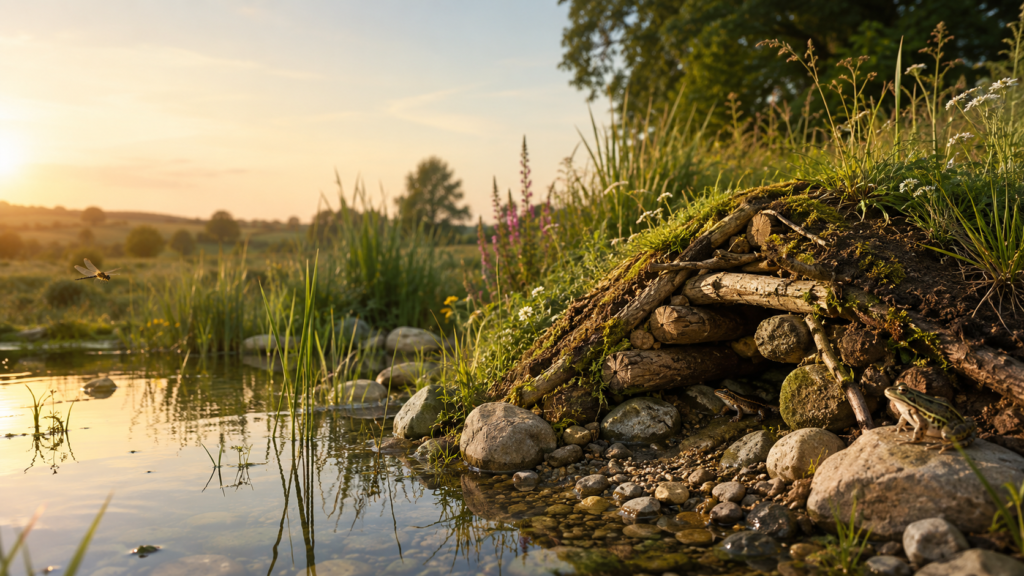
A hibernaculum is a purpose-built shelter made from logs, stone, branches, soil and other natural materials. It creates a network of small gaps and protected spaces where amphibians, reptiles, insects and other wildlife can shelter, hide, feed and overwinter.
For frogs, toads and newts, a pond is mainly a breeding site. For much of the year, they also need safe terrestrial habitat around the pond. Without this, a pond can attract wildlife but fail to support it properly long term.
What Is a Hibernaculum?
A hibernaculum is essentially a wildlife refuge. It is usually built partly below ground and partly above ground, using natural materials such as:
- logs and branches
- stone, rubble or bricks
- soil and turf
- leaf litter
- old tree roots or stumps
- sections of pipe or gaps left as entrances
The aim is not to build something neat and tidy. The value comes from the messy, varied structure: small voids, damp pockets, dry crevices, sheltered entrances and different temperature zones.
During winter, amphibians and reptiles need somewhere protected from frost, predators and disturbance. In summer, the same feature can provide daytime cover, hunting habitat and safe movement between the pond and surrounding vegetation.
Why Hibernacula Matter Around Wildlife Ponds
A pond on its own is only part of the habitat. Amphibians may breed in the water, but they often spend much of their adult life in nearby grass, woodland edges, hedgerows, log piles, compost heaps and damp shaded areas.
Adding a hibernaculum near a pond helps create a more complete habitat. It gives wildlife somewhere to go after leaving the water, especially young frogs, toads and newts emerging from the pond for the first time.
A well-designed hibernaculum can support:
- frogs
- toads
- smooth and palmate newts
- slow worms and other reptiles where present
- beetles and other invertebrates
- solitary bees and pollinators
- small mammals and other garden wildlife
It is particularly useful where a pond sits in a closely mown lawn, new garden, paddock or open field with limited natural shelter nearby.
Where Should a Hibernaculum Go?
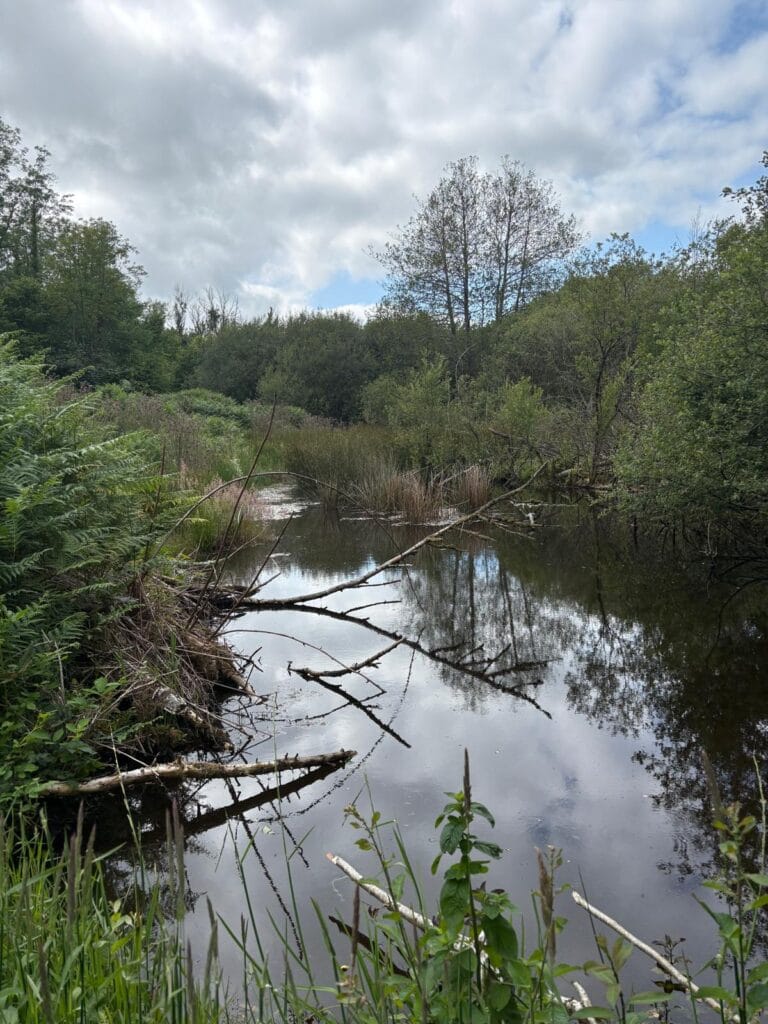
The best location is usually close to the pond, but not somewhere that will become waterlogged or collapse into the water. Ideally, it should connect the pond to other habitat such as long grass, hedgerow, scrub, woodland edge or a wildflower area.
Good locations include:
- beside a wildlife pond but above the normal water level
- near a stony beach or shallow pond edge
- at the base of a bank
- along a hedge or woodland edge
- beside a newly planted native tree or shrub belt
- in an undisturbed corner of a garden or field
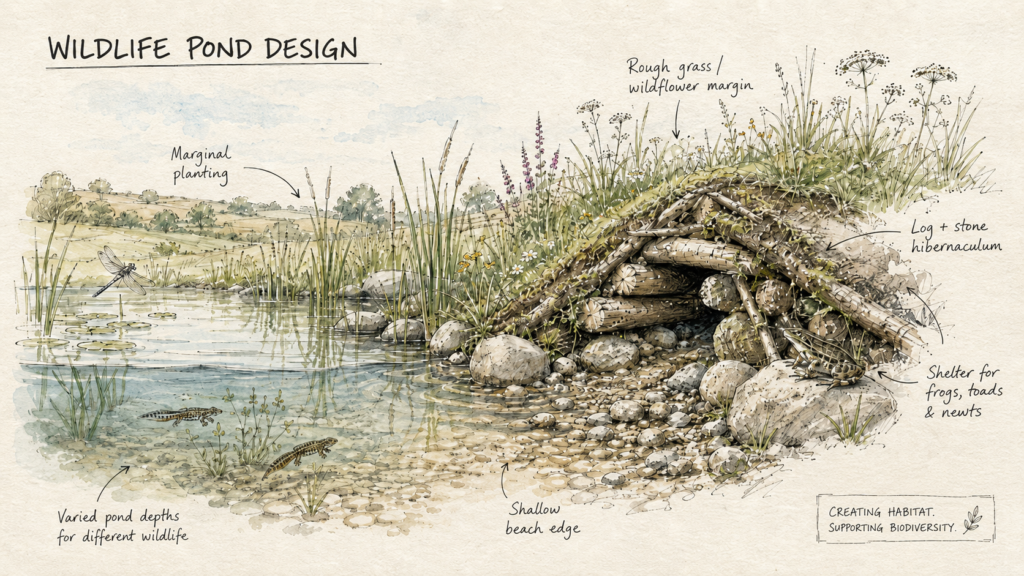
For wildlife ponds, we often like to position hibernacula as part of the wider pond design rather than as an afterthought. A shallow beach, marginal planting, long grass, deadwood, stone and native planting can all work together to create a much richer habitat.
How We Build a Hibernaculum
The basic principle is simple: create a stable, sheltered mound with plenty of gaps inside.
A typical hibernaculum may involve:
- Digging a shallow pit or depression.
- Adding stone, logs, branches and root material.
- Leaving small gaps and tunnels for access.
- Covering parts of the structure with soil and turf.
- Leaving some stone and timber exposed for warmth and habitat variation.
- Planting or seeding around it with native grasses and wildflowers.
It should not be packed too tightly. The gaps are what make it useful. Equally, it should not be built so loosely that it collapses or becomes unsafe.
The exact design depends on the site. A small garden pond may only need a modest log-and-stone shelter, while a larger wildlife pond, landowner pond or wetland scheme might include multiple hibernacula linked with rough grass, scrub, hedges and planted margins.
A Hibernaculum Should Look Natural
One of the advantages of a hibernaculum is that it can be made to look attractive and natural.
It does not need to look like a pile of waste material. With the right stone, timber, soil shaping and planting, it can become part of the landscape. In a garden setting, it can sit beside a stony beach or planted margin. In a field or estate setting, it can be blended into a bank, woodland edge or rough grassland.
Over time, moss, grass, wildflowers and leaf litter soften the structure and make it even more valuable for wildlife.
Common Mistakes to Avoid
The most common mistake is treating the pond as a standalone feature. A wildlife pond with short grass right up to the edge is far less useful than one surrounded by shelter, planting and varied habitat.
Other mistakes include:
- putting the hibernaculum somewhere that floods regularly
- using materials that collapse too easily
- packing everything too tightly with no gaps
- placing it too far from the pond
- keeping the surrounding grass too short
- disturbing it during winter
- making the pond too steep-sided for wildlife to get in and out safely
A good wildlife pond should have gently sloping edges, planting, cover and safe exit routes. The hibernaculum is one part of that wider habitat design.
Best Time to Build One
A hibernaculum can be built as part of a new wildlife pond or added to an existing pond. If we are already carrying out pond construction or pond restoration in Devon and Cornwall, it is often easiest to build one using suitable stone, timber and soil from the project.
Autumn is a particularly good time to have shelter ready before winter, but hibernacula can be created at other times of year as long as care is taken not to disturb existing wildlife.
Better Pond Design Means Better Wildlife Value
At SAS Aquatics, we design and build wildlife ponds across Devon and Cornwall with the surrounding habitat in mind. A good pond is not just a hole with water in it. It should include shallow margins, native planting, access points, cover, shelter and habitat features that support wildlife through the whole year.
Hibernacula are a simple but valuable addition, especially for wildlife ponds, garden ponds, farm ponds, estate ponds and wetland creation projects.
If you are planning a wildlife pond, restoring an old pond, or want to improve the habitat value of an existing pond, we can help design the pond and the surrounding features so they work together properly.
Planning a wildlife pond in Devon or Cornwall?
Contact SAS Aquatics to discuss wildlife pond creation, pond restoration, aquatic planting and habitat enhancement.

Devon & Cornwall
Discuss Your Project
Planning a wildlife pond, natural swimming pond, wetland or habitat project? Send us your photos, videos and ideas and we’ll be happy to help.
What is a hibernaculum?
Why add a hibernaculum to a wildlife pond?
What animals use a hibernaculum?
Where should a hibernaculum be placed?
What materials are used to build a hibernaculum?
Should a hibernaculum be above ground or below ground?
Can I add a hibernaculum to an existing pond?
When is the best time to build a hibernaculum?
Does every wildlife pond need a hibernaculum?
How close should a hibernaculum be to the pond?
Will a hibernaculum attract frogs and newts?
Can SAS Aquatics include a hibernaculum in a wildlife pond design?
Planning a wildlife pond?
Send the location, photographs, approximate dimensions and access information. We will review the site details and explain the most useful next step.