
Pond Designers in Devon & Cornwall
Practical pond design for complex and high-value projects across Devon and Cornwall
Turning a water-project idea into a buildable plan
Good pond design connects the client’s objectives with the realities of the site. Size, depth, water source, access, ground conditions, overflow routes, planting, filtration and long-term management all need to work together before excavation begins.
SAS Aquatics provides proportionate design input for wildlife ponds, natural and hybrid swimming ponds, wetlands, larger waterbodies and restoration projects. We can develop suitable projects through to construction or provide a clear scope that can be coordinated with other contractors and advisers.
Design service overview
When a dedicated design stage is worthwhile
A simple pond on an uncomplicated site may only need a clear construction plan. A more demanding project benefits from design work before plant and materials are committed.
- The waterbody is large, deep or intended for swimming
- There are uncertain water sources, levels, ground conditions or seasonal changes
- The scheme needs inlets, outlets, overflows, streams, waterfalls or filtration
- Access, spoil movement, banks or surrounding landscaping affect construction
- The pond must work as part of a wider habitat or water-management system
- An existing pond needs diagnosis before restoration work is specified
- Ecologists, landscape designers, planners or other contractors need a coordinated scope


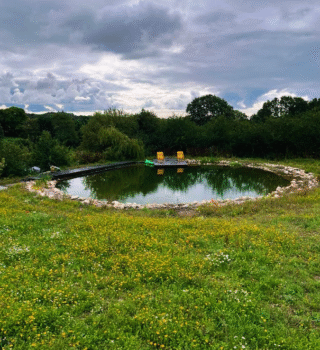
What pond design can cover
Site and water
Existing levels, catchment, inflows, drainage, overflow routes, soil, exposure, shade, access and seasonal constraints.
Shape and depth
Footprint, depth zones, stable banks, planted shelves, shallow access, swimming areas and the relationship with surrounding land.
Water retention
Selection of a suitable liner, clay or geosynthetic approach based on the site, intended use, construction sequence and material availability.
Circulation and treatment
Natural regeneration, pumps, pipework, filtration, UV, streams and waterfalls where the project objectives require them.
Planting and habitat
Planting zones, species selection, natural stone, cobble shallows, deadwood and links with the wider terrestrial habitat.
Construction scope
Work stages, machinery, access, materials, spoil handling, interfaces with other trades, exclusions and establishment requirements.
Our design process
1. Initial project review
Send the location, approximate dimensions, photographs or video, access information and a short explanation of what you want the pond to achieve. We use this to assess suitability and identify the main unknowns.
2. Scoped site visit or feasibility work
Where design input is justified, we agree the scope and fee before visiting. The work may include site levels, water and drainage observations, ground and access constraints, existing habitat, intended use and the likely construction routes.
3. Concept and technical development
The level of detail is matched to the project. Outputs can include a written concept, annotated plans, depth profiles, planting zones, filtration strategy, material assumptions and a staged construction scope. Drawings or specialist input can be coordinated where they add real value.
4. Quotation and delivery route
Suitable projects can move into a detailed quotation for construction by SAS Aquatics. Alternatively, the design information can help the client coordinate landscape contractors, plant operators, ecologists or other advisers.
Design for the type of waterbody—not a generic template
A wildlife pond, wetland, lake restoration and swimming pond may all use water, stone and planting, but they have different performance requirements. The design must reflect how the water will be used and managed.
- Wildlife ponds: dependable water, varied margins, suitable planting and strong connections with surrounding habitat
- Natural swimming ponds: comfortable access, sufficient swimming volume, regeneration and a realistic water-treatment strategy
- Wetlands and scrapes: water movement, seasonal behaviour, levels and links with the wider catchment
- Lakes and larger ponds: banks, depth, material handling, inlets, outlets and a practical long-term restoration or management plan
- Existing pond restoration: diagnosis of the causes of water loss, silt, overgrowth, poor circulation or unstable structures before work begins
From design to construction
When SAS Aquatics delivers the build, the design remains connected to the site team rather than becoming a drawing that is difficult to interpret on the ground. Discover more about our pond-building and contracting service, review our project case studies, or use the pond cost guide to understand the main commercial variables.
Frequently asked questions
Do all projects need drawings?
No. The design output should be proportionate to the risks and complexity. Some projects need a clear written scope and agreed levels; larger or more technical schemes may justify annotated plans, detailed profiles or specialist drawings.
Can you work with my landscape designer, architect or ecologist?
Yes. We can contribute practical aquatic design and construction input while working within a wider landscape or ecological scheme.
Can you advise whether planning or specialist surveys are needed?
We can flag common considerations during the initial review. If formal planning, ecological, structural or regulatory advice is required, that work should be completed by the appropriate specialist and incorporated into the project.
How much does pond design cost?
It depends on the site, project type and level of information required. We agree the design or site-visit scope and fee before starting, so the client knows what the stage will deliver.
Discuss your pond design
Send the location, approximate scale, photographs and your main objectives. We’ll advise whether a remote review, site visit or dedicated design stage is the right next step.