Pond Desilting Access: What to Check Before Booking a Digger
“Can you get a digger to the pond?” needs a better answer than a gate width. The machine must reach the work, stand safely, handle the material and leave again without damaging the ground or the habitat you want to protect. For pond desilting, the route to the silt-handling area matters just as much as the route to the water.
Before booking machinery for a pond in Devon or Cornwall, check the whole operation—not just whether a small excavator fits through the entrance.
1. Measure the complete route
Record the narrowest clear width, overhead clearance, tight turns, slopes and changes in level from the unloading point to the pond. Include gates beyond the first entrance. A nominal gate size does not establish usable clearance beside posts, hinges, walls or vegetation.
Photograph the route in both directions. Flag bridges, drain covers, buried structures and overhead cables. Their presence can change the method even when the track looks wide enough.
2. Match the machine to the work, not just the gate
A smaller digger can solve an entrance problem but create a reach or productivity problem at the pond. Water depth, bank profile, silt distribution and safe working positions determine what it can actually achieve.
There is no universal machine size for a given pond area. Some sites suit work from the bank; others need a different method. Do not assume an excavator can enter a drained pond: exposed sediment is not evidence of a firm, load-bearing bed, and tracking across it may damage the retaining layer.
3. Check ground condition and protection
Walk the proposed route with the contractor before delivery. Look for soft ground, steep crossfalls, unstable banks, tree roots and places where repeated loaded journeys could cause damage.
Ground protection must suit the machine, loads and underlying ground. Mats are not a blanket cure for unsuitable conditions. Agree the route, working areas and reinstatement, with a clear stopping point if the ground deteriorates.
HSE excavation guidance highlights the effects of machinery loading near edges and the need to identify services before excavation. A pond-side working position needs its own assessment.
4. Plan where the silt will go
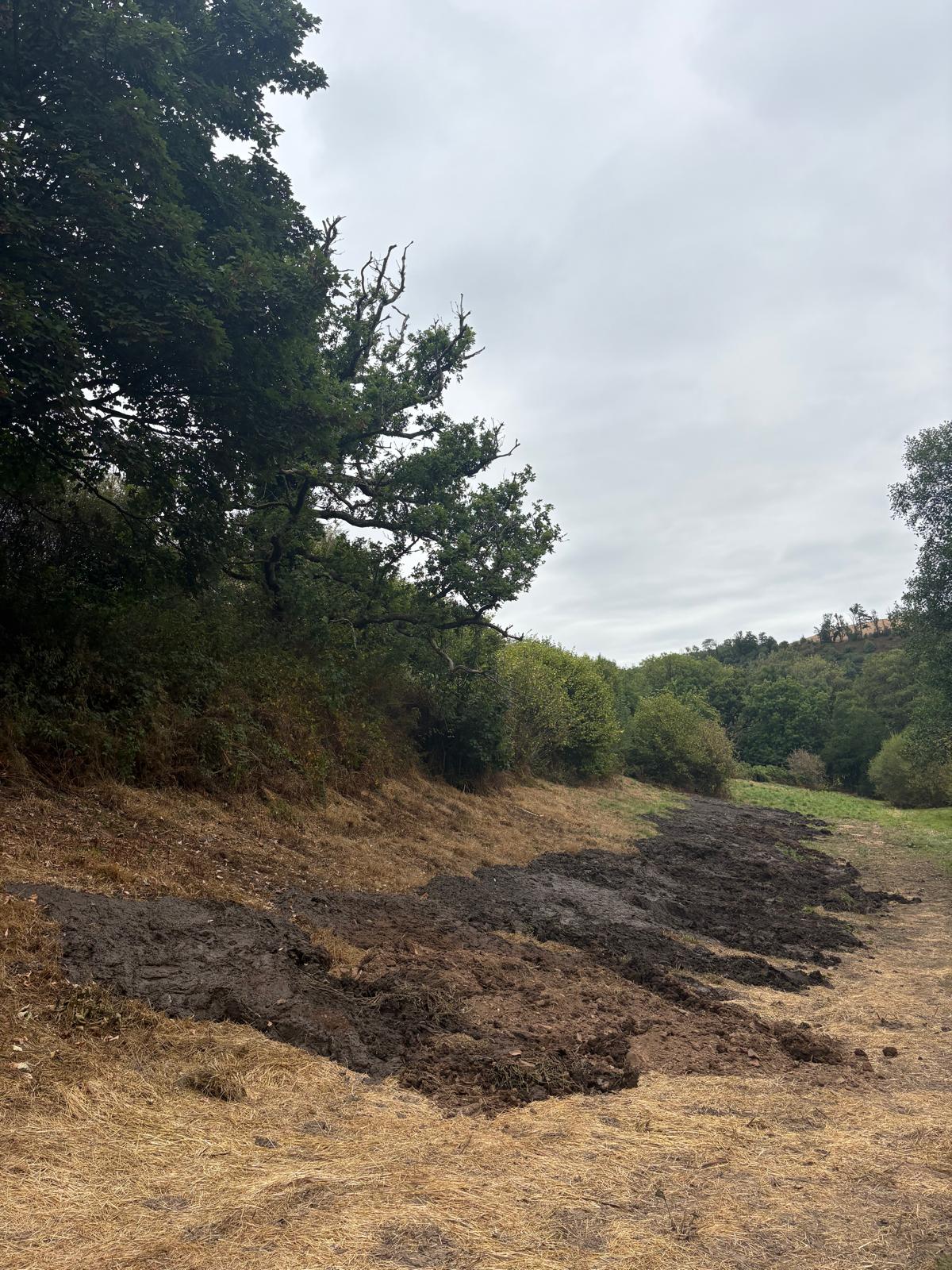
Excavation is only one stage. Wet material needs a suitable destination, a usable transport route and room for handling. Check turning, loading and tipping areas, not just the excavator position.
If another landowner’s field is involved, permission and access arrangements need settling before mobilisation. Clear obstructions only after agreeing what can be removed and what habitat must remain. See our guide to pond silt testing, reuse and disposal; keeping material on site does not automatically make every location suitable.
5. Choose a workable window
Autumn is not automatically suitable for machinery-led restoration. Wet access may make work impractical even when pond management would otherwise be timely. Drier conditions may improve access, but wildlife, water supply and other constraints still need checking.
Where access is marginal, use the assessment to compare targeted work, phased restoration, another method or postponement. Do not force an unsuitable machine onto the site simply because it is booked.
What to send before a desilting assessment
- Location and wide photographs of the pond.
- Approximate pond dimensions and known water and silt depths, clearly distinguished.
- Measured clear widths, turns, slopes and photographs along the full route.
- Possible unloading, working and silt-handling areas.
- Known services, crossings, access permissions and seasonal ground problems.
Our pond and lake desilting service considers access alongside water management and habitat. For budget factors, read what affects pond restoration cost.
Planning desilting in Devon or Cornwall? Send your pond and access details through our ServiceM8 enquiry form. We will review the information and advise whether a site assessment is needed before pricing or booking plant.