Pond Overflow Problems: How to Fix Outlets, Spillways and High Water Levels
A pond overflow is not just a pipe at the edge of the water. It controls the normal water level, gives storm water a safe route and protects the bank from being cut through. When it fails, the symptoms can look like a liner leak, poor drainage or simply “too much rain”. The repair depends on which part of the system is actually wrong.
First decide whether it is overflowing or leaking
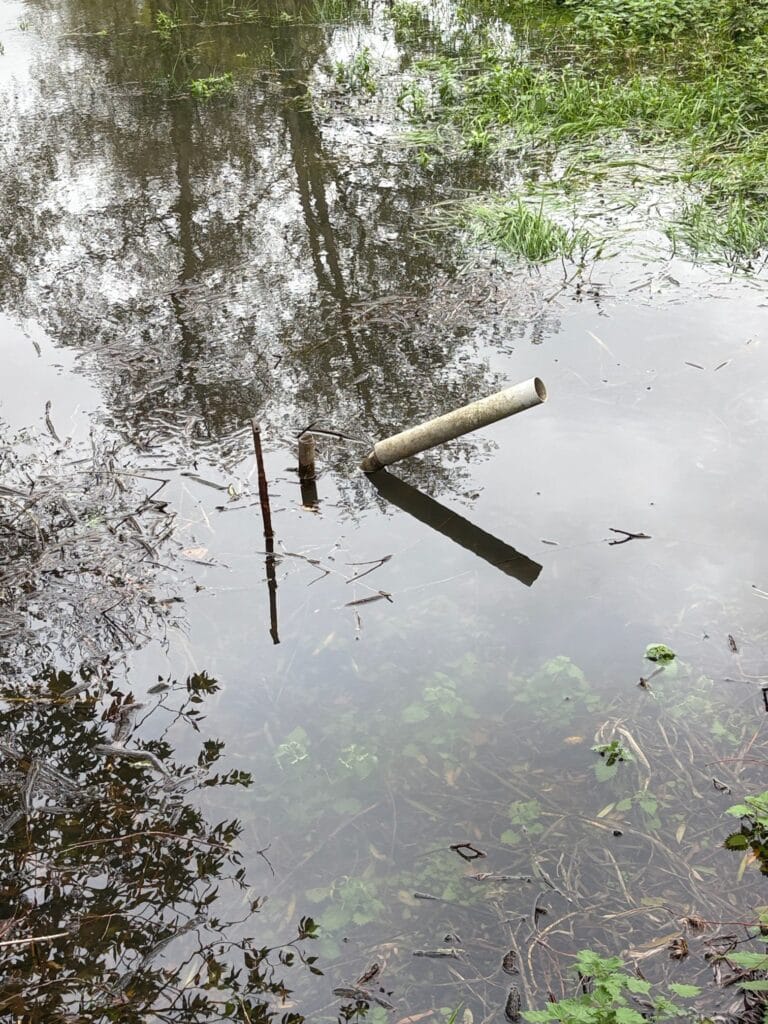
If the pond rises to the outlet and water leaves by the intended route, the overflow may be working normally. Problems begin when the level stays below the outlet, water escapes around a joint, the discharge scours the bank, or the pond overtops somewhere unintended.
A rapidly rising, muddy pond usually points towards surface runoff entering from the surrounding land. A steady level loss below the outlet may indicate leakage through the outlet assembly, pipework, bank, bed or lining. Our pond leak or evaporation test explains how to record water-level change before assuming the cause.
Common pond overflow problems
- Loose joints or failed seals: water escapes around elbows, standpipes or push-fit connections.
- Cracked or displaced pipework: movement in the bank can open a route alongside or through the outlet.
- Blocked outlets: leaves, roots, silt and debris reduce capacity just when rainfall is highest.
- Incorrect outlet level: an outlet set too low limits pond depth; one set too high can remove essential freeboard.
- Unprotected discharge: concentrated water cuts into soil below the outlet and can work back towards the pond.
- Uncontrolled inflow: field drains, tracks, roofs or steep ground deliver more water and sediment than the outlet can handle.
We see these patterns on garden ponds, farm ponds and larger restoration sites. The visible overflow is often only one part of the problem.
Do not simply raise the outlet
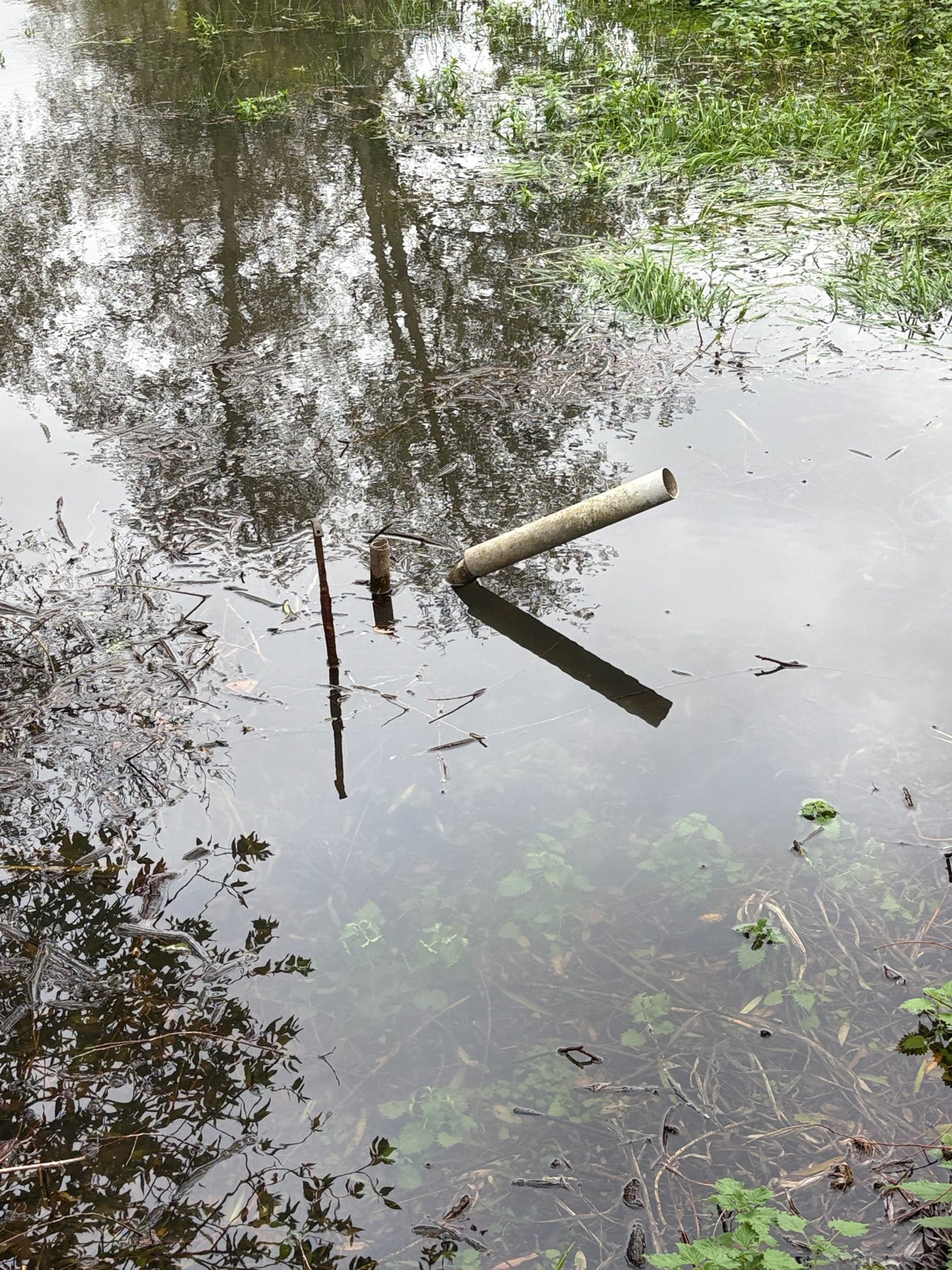
Raising an elbow or standpipe can restore depth where the outlet is genuinely too low. It can also push the water above a liner termination, reduce the bank’s safety margin or redirect flooding onto access routes and neighbouring land.
Before changing the level, establish the existing overflow invert, the highest safe water level, the emergency route during exceptional rain and where the water eventually discharges. Connected ditches, culverts and watercourses also need checking rather than being treated as an unlimited drain.
How to assess the system properly
- Mark the water level against a fixed reference and photograph it over several days.
- Record the pond in dry weather and, where safe, during or just after heavy rain.
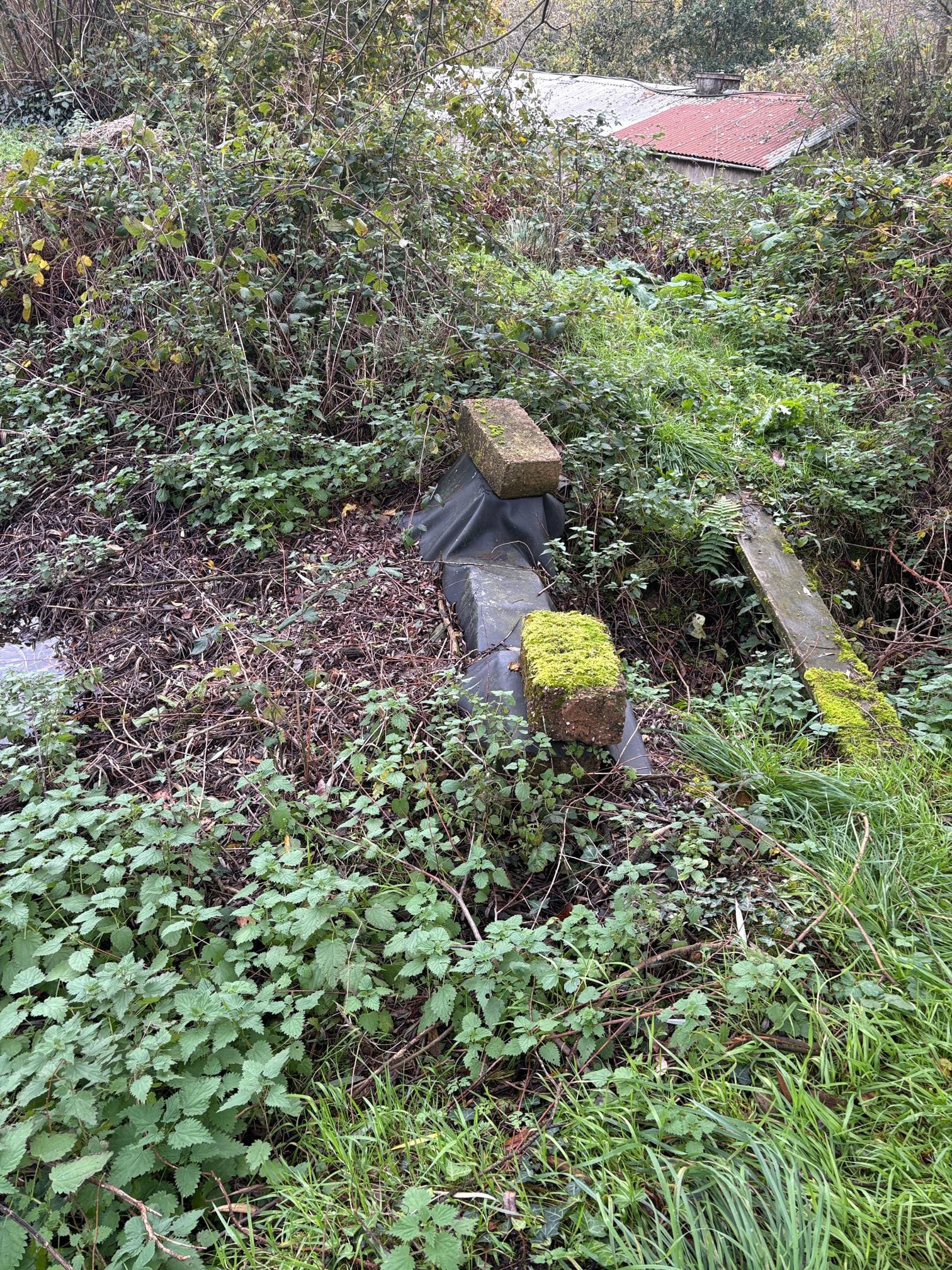
- Inspect joints, seals, pipe entries, headwalls and the bank around the outlet.
- Trace the complete discharge route and look for blockage, scour or backing-up.
- Identify every inflow, including land drains and runoff routes that only appear in wet weather.
Our guide to reading springs, seepage and surface runoff explains why one wet-weather visit rarely tells the full story.
Match the repair to the cause
Loose outlet components may be dismantled, cleaned, resealed or renewed. Damaged pipework or headwalls may require excavation and reconstruction. An eroding overflow may need a stable spillway and protected downstream route. Dirty runoff may be better slowed and filtered before it reaches the pond, rather than dealt with at the outlet alone.
Do not specify a full reline until the outlet, pipe route and surrounding ground have been tested. Equally, repairing a visible joint does not prove that the rest of an older pond is sound.
Keep habitat in the repair plan
A good outlet repair should leave stable banks, varied shallow margins and a maintainable discharge route. It should not create a steep trench through useful habitat or send silt and nutrients straight downstream. On rural sites, the pond, ditches and surrounding runoff routes need to work as one system; see our guide to improving farm ditches for wildlife.
Pond overflow assessment in Devon and Cornwall
For larger ponds, farm and estate ponds, or sites connected to drains and watercourses, SAS Aquatics can assess water levels, outlet condition, inflows, overflow capacity and the downstream route before recommending repairs. This can be combined with wider lake and large pond restoration planning where silt, vegetation, banks or habitat also need attention.
Send photographs of the pond, outlet and downstream route
Include the location, approximate pond size, the normal and highest observed water levels, when the problem occurs and any known drains or watercourses.