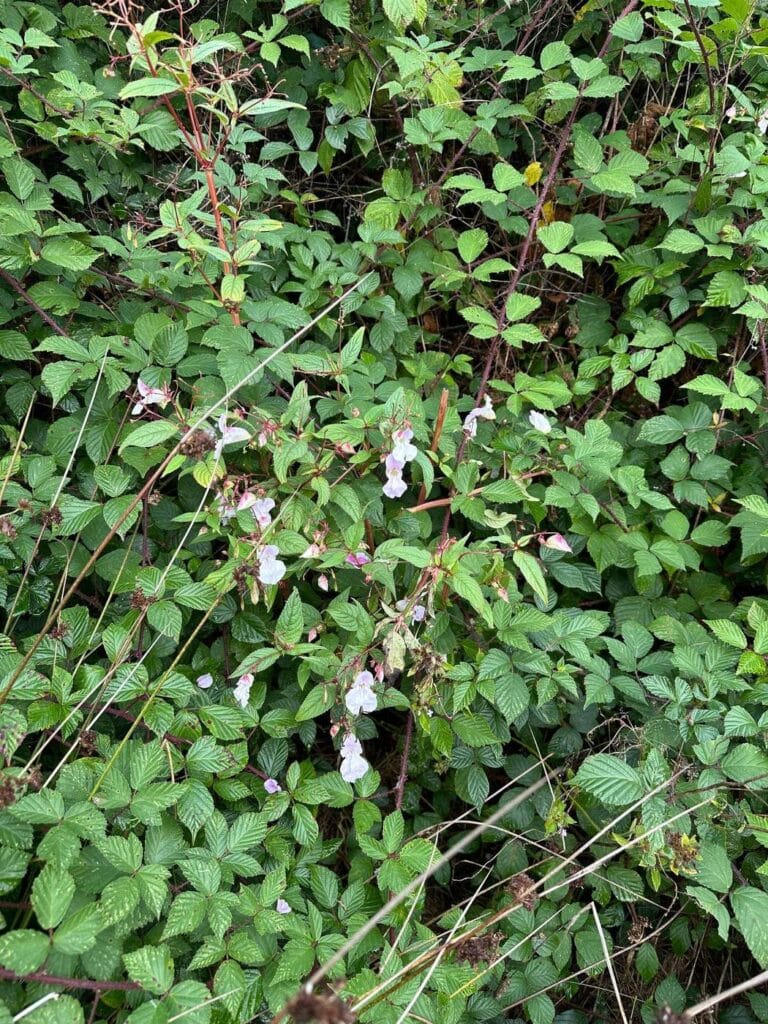
Himalayan Balsam Near Ponds and Watercourses: A Practical Control Plan
Himalayan balsam can spread quickly along ponds, ditches, wet ground and watercourses. Pulling a few plants may help, but a dependable result needs the right identification, timing, containment and follow-up. The aim is to stop seed production without spreading material into clean areas or leaving a damaged bank behind.
Confirm the plant before starting
Do not treat every tall bankside plant as Himalayan balsam. Clear photographs should show the whole plant, stem, leaves and flowers, together with wider views of the infestation and its connection to water.
Map the full extent before work begins. Check upstream boundaries, adjoining ditches, track edges and wet hollows. If an untreated source remains nearby, cleared ground can be recolonised and the same work repeated.
Control it before seed dispersal
The practical objective is to prevent flowering plants from producing mature seed. Hand-pulling or cutting can work on accessible infestations, but it must be completed early enough and followed by checks for missed or regrowing plants.
Once seed pods have developed, careless handling can scatter seed onto clothing, machinery, paths and previously unaffected ground. Work routes, tools and removed material therefore need planning as carefully as the cutting itself.
Choose the method for the site
- Hand-pulling: suitable for smaller, accessible patches where plants can be removed without excessive trampling or bank disturbance.
- Cutting: useful for larger stands where plants can be cut low enough to prevent recovery, with repeat checks afterwards.
- Herbicide: potentially appropriate where physical control is unsafe or impractical, but only with the correct product, permissions and qualified application.
- Combined control: often the realistic option across a mixed pond, ditch or wetland site.
A one-off clearance should not be described as eradication. Missed plants and existing seed can produce new growth, so the site needs a planned monitoring period and repeat control where necessary.
Connected water needs a wider plan
Where balsam follows a ditch or watercourse, treating one visible patch may have little lasting value if seed continues arriving from adjoining land. The control area should follow the infestation and water connection, not just a convenient ownership boundary. Access agreements and coordination with neighbours may therefore be part of the job.
Extra care is required beside water
Government guidance states that approved herbicides must be used by, or under the supervision of, someone holding the appropriate certificate of competence. Environment Agency agreement is required for herbicide use in or near water, and protected sites may also require permission from Natural England.
Mechanical or hand control still needs containment. Plant material should not be moved through clean habitat or allowed to enter flowing water. If material leaves the site, the waste route must meet the applicable rules; government guidance on invasive plant material notes that most invasive non-native plants should not be put through ordinary composting.
Protect the habitat after clearance
Himalayan balsam can leave ground exposed when it dies back. Removing a dense stand without considering the bank, soil and replacement vegetation may increase erosion or create space for another vigorous plant.
The follow-up plan should retain stable native vegetation, minimise bare soil and re-establish an appropriate plant community where needed. On larger sites, control may also need to address nutrient-rich runoff, disturbed banks or poor ditch management. See our guides to improving farm ditches for wildlife and wetland creation and restoration.
Use the dormant season to plan
When growth has died back, use photographs from the flowering season to map the infestation, agree access, check the waste route and secure any permissions. Confirm identification again when new growth is visible, then programme control early enough to prevent mature seed.
Himalayan balsam control in Devon and Cornwall
SAS Aquatics can assess the infestation, define the control area, plan containment and disposal, coordinate qualified operatives where required, and build follow-up habitat restoration into the work. Our invasive aquatic and wetland plant control service covers ponds, ditches, riverbanks and wet ground across Devon and Cornwall.
Send clear photographs before disturbing the plants
Include close photographs for identification, wider views of the affected area, the location, approximate extent, access and any connection to a pond, ditch or watercourse.