Historic Pond Desilting & Structural Repairs in North Devon
Pond desilting & structural repairs · North Devon
Historic pond desilting and structural repairs in North Devon
A paid technical site assessment turned a heavily silted, leaking pond into a controlled Phase 1 programme—then the full silt removal and additional repairs were completed within the agreed budget.
The project
A beautiful historic pond with two connected problems
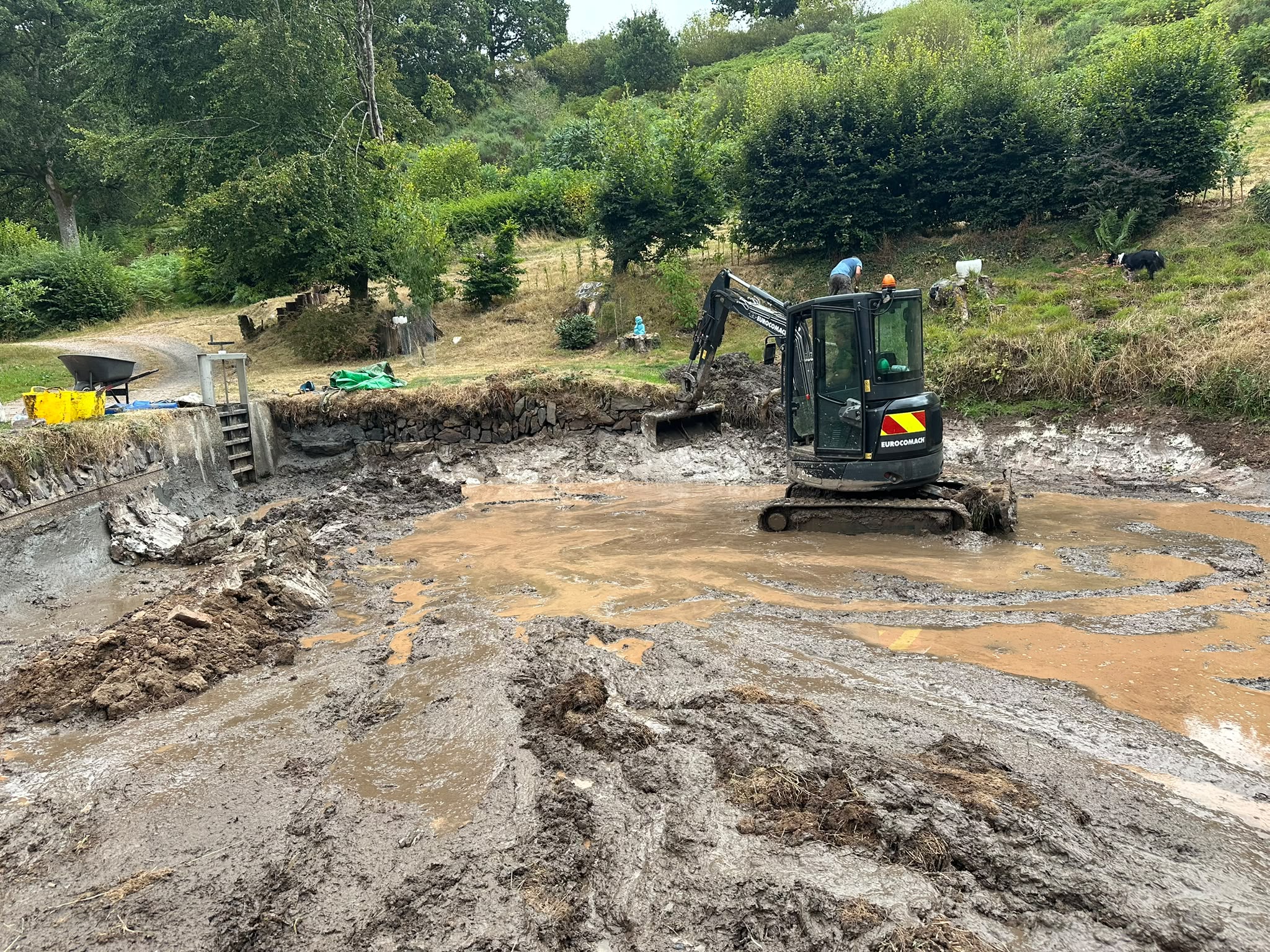
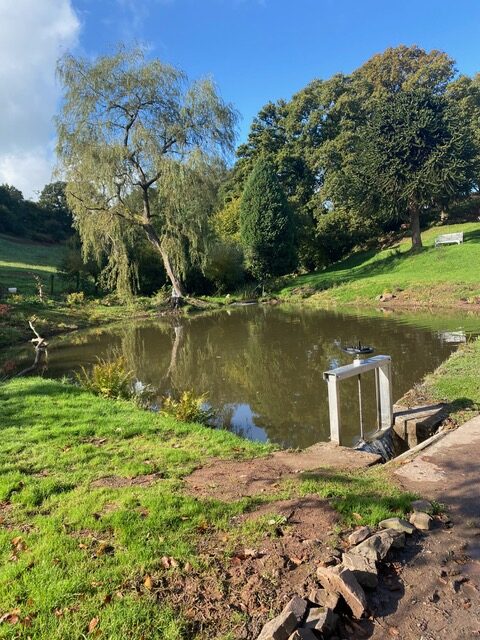
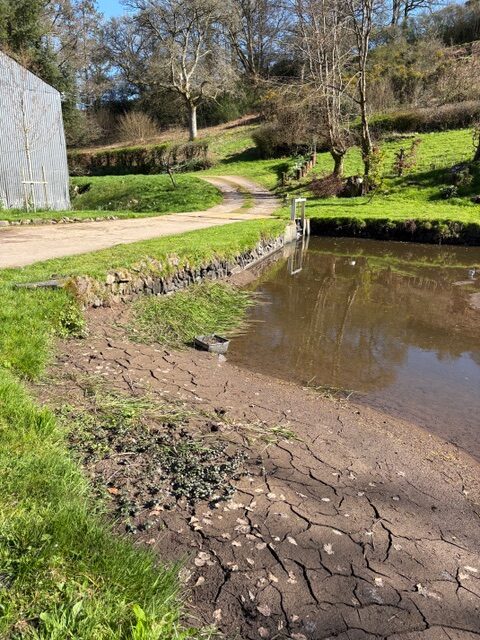
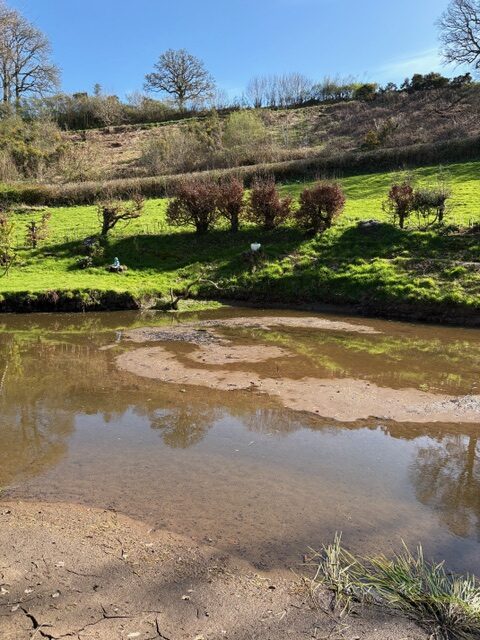
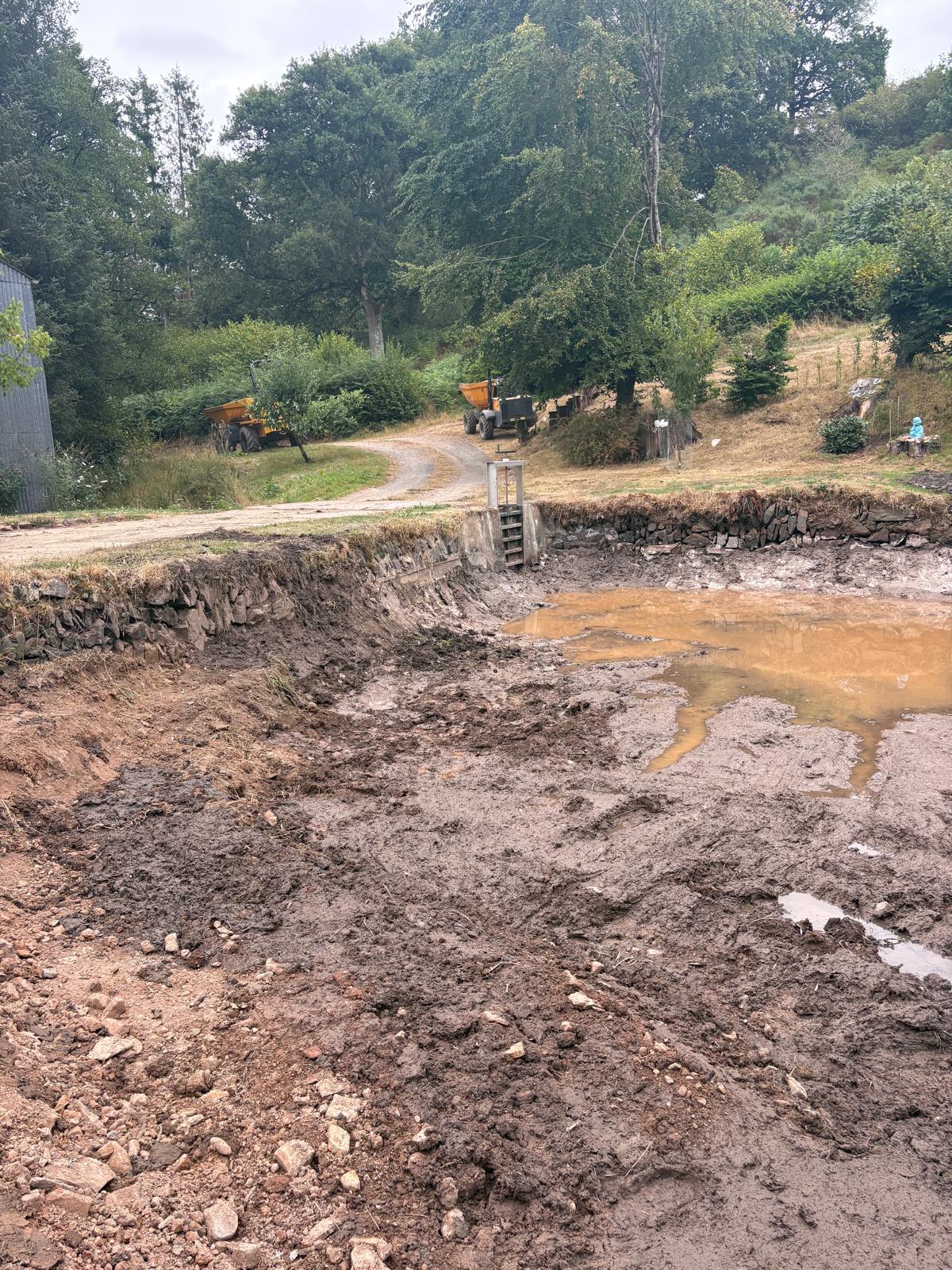
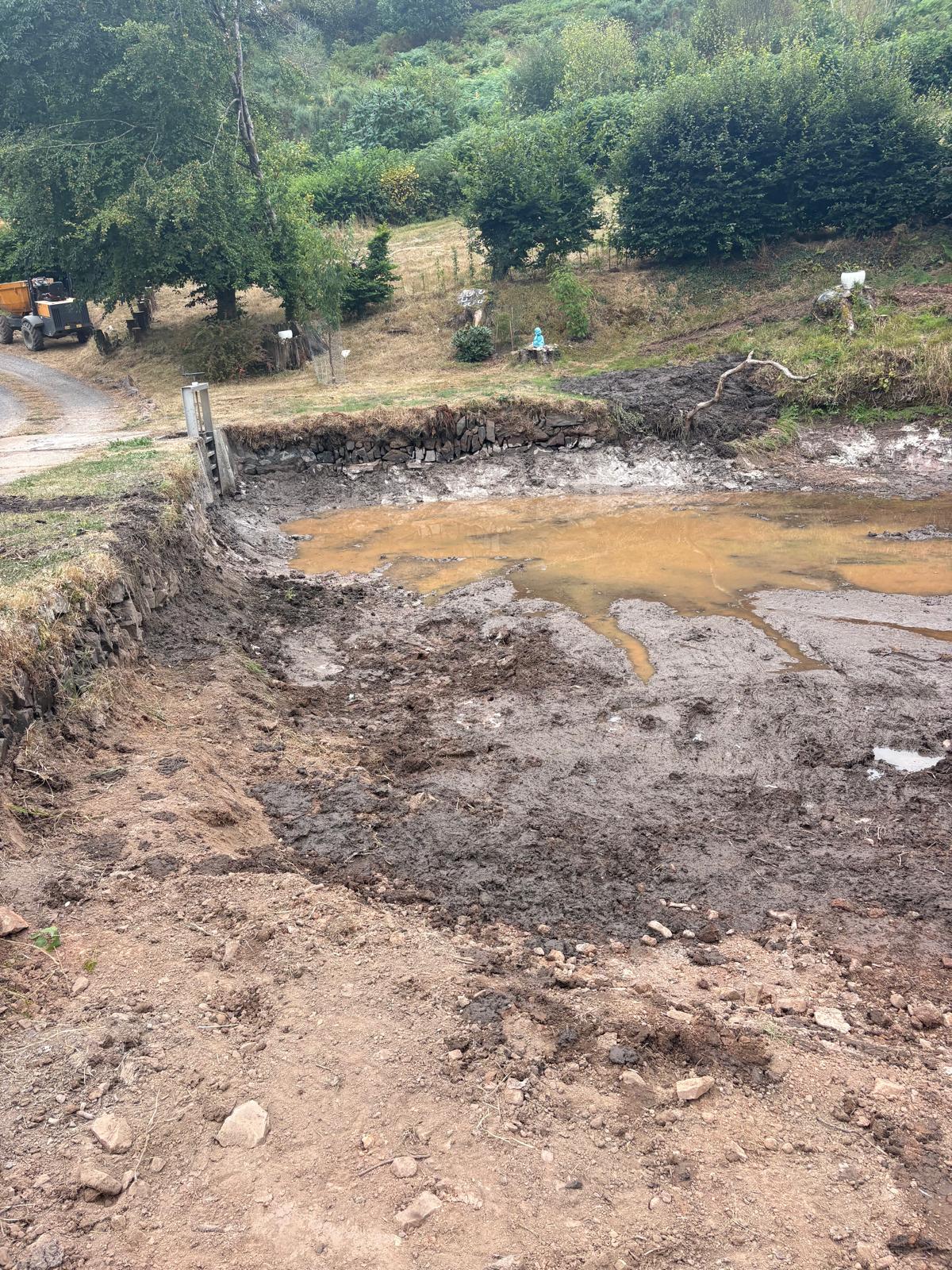
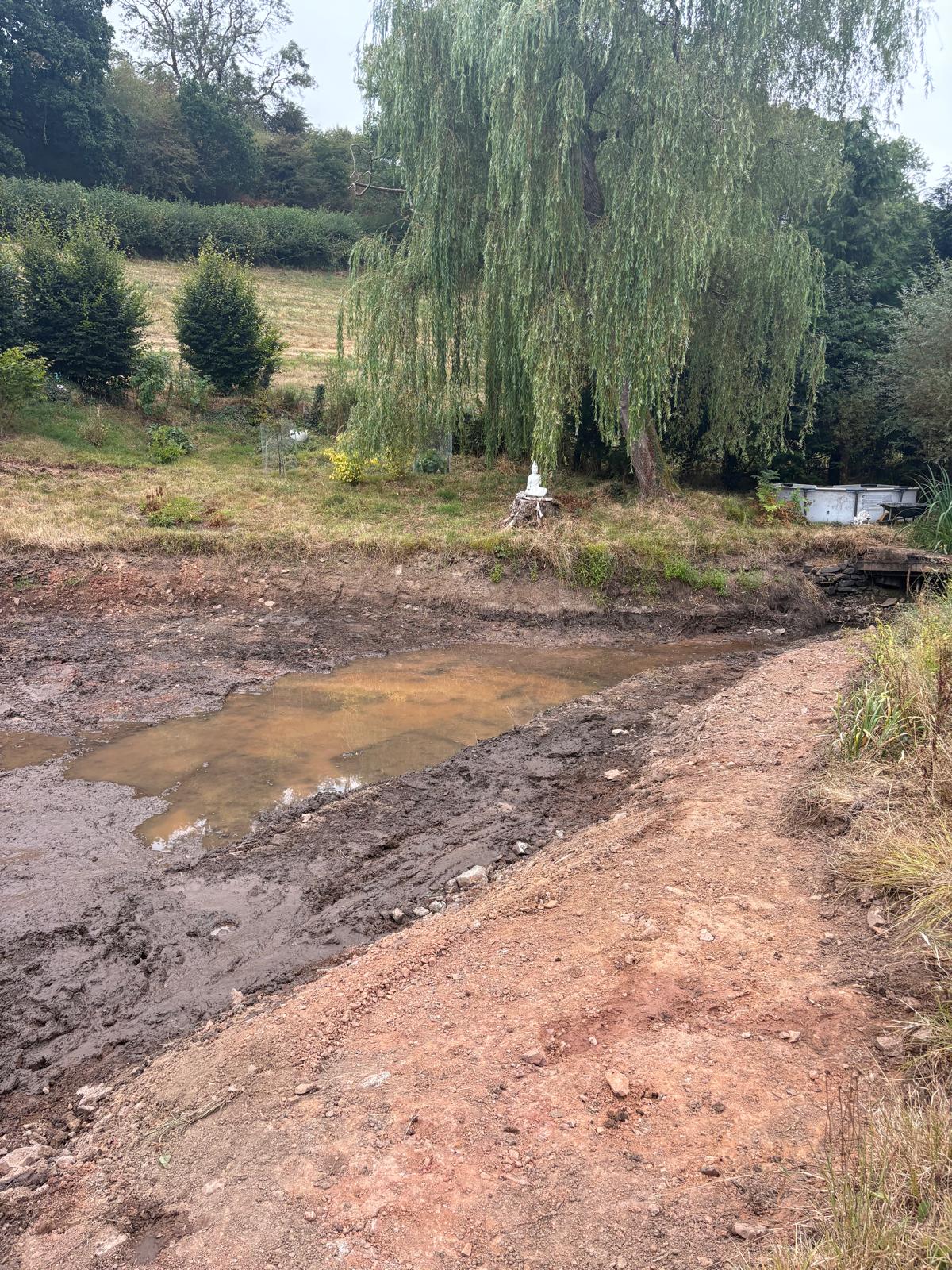
This stream-fed pond on a private North Devon estate was constructed around 1870 and remains an important landscape and wildlife feature. Measuring approximately 22 metres by 12 metres, its water level had fallen around 900–1,200mm below the intended level while incoming sediment was steadily filling the clay-lined basin.
The client had previously removed silt, but the problem returned. Leakage through the historic retaining structure, around the bridge and sluice, also made it difficult for the pond to retain water. A lasting solution needed to address both the accumulated silt and the defects hidden beneath it.
Why the paid site visit mattered
Diagnosis gave the project a workable scope
This was not a job that could be responsibly priced from photographs alone. Silt concealed the base of the retaining structure, the route of the leaks and the condition of the clay bed. A paid, two-person technical assessment allowed us to examine the inlet, outlet, sluice, masonry and surrounding ground before setting out a written phased proposal.
The assessment concluded that the modern steel sluice itself was serviceable. The main water loss was through failed historic masonry beside and beneath it, with washout channels carrying water around the impounding structure. The clay lining could need local repairs once exposed, but it was not considered the primary failure.
- A clear separation between urgent Phase 1 work and longer-term improvements
- A realistic method for controlling the stream and accessing the silted basin
- Allowance to repair defects as the structure was progressively exposed
- The consultancy fee was credited against the commissioned Phase 1 works
Phase 1 delivery
Desilt, expose, repair and protect
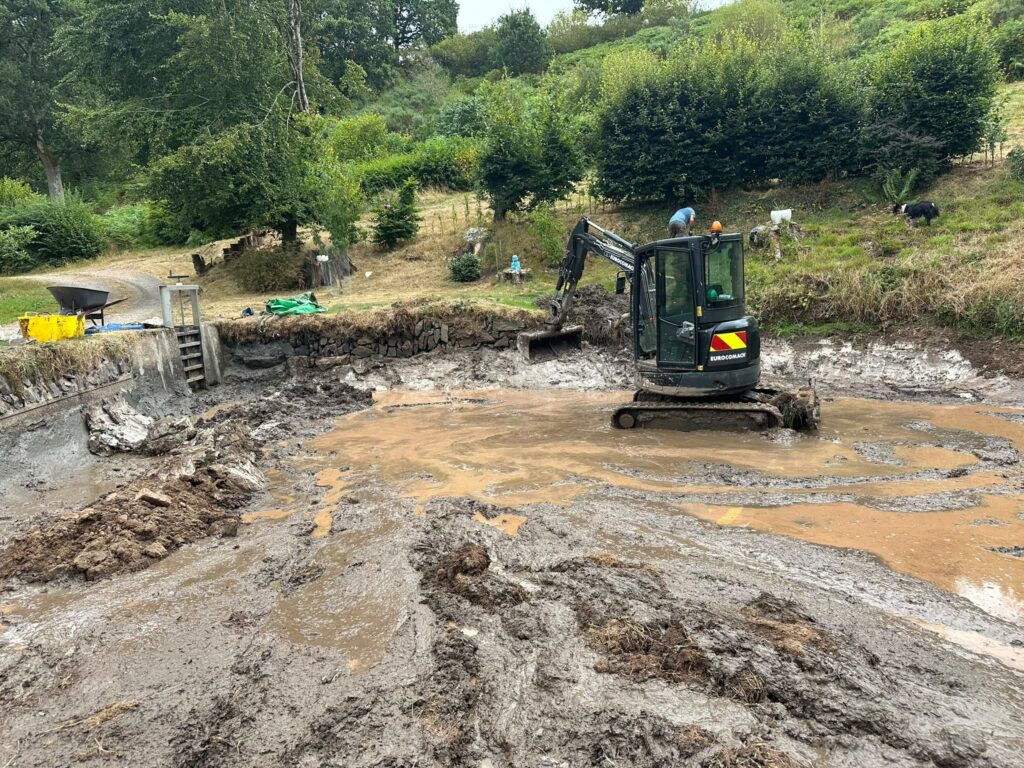
With the scope agreed, the work moved through a controlled sequence so that excavation and repair informed one another. The entire silt volume was removed—not just the area immediately around the sluice—and the newly revealed defects were dealt with as part of the same Phase 1 programme.
Control the water
Manage the incoming stream and working water so excavation could proceed safely and the downstream watercourse remained protected.
Remove the silt
Use an excavator, dumper and ground-protection measures to clear the full basin, with spoil placed in agreed locations on site.
Expose and rebuild
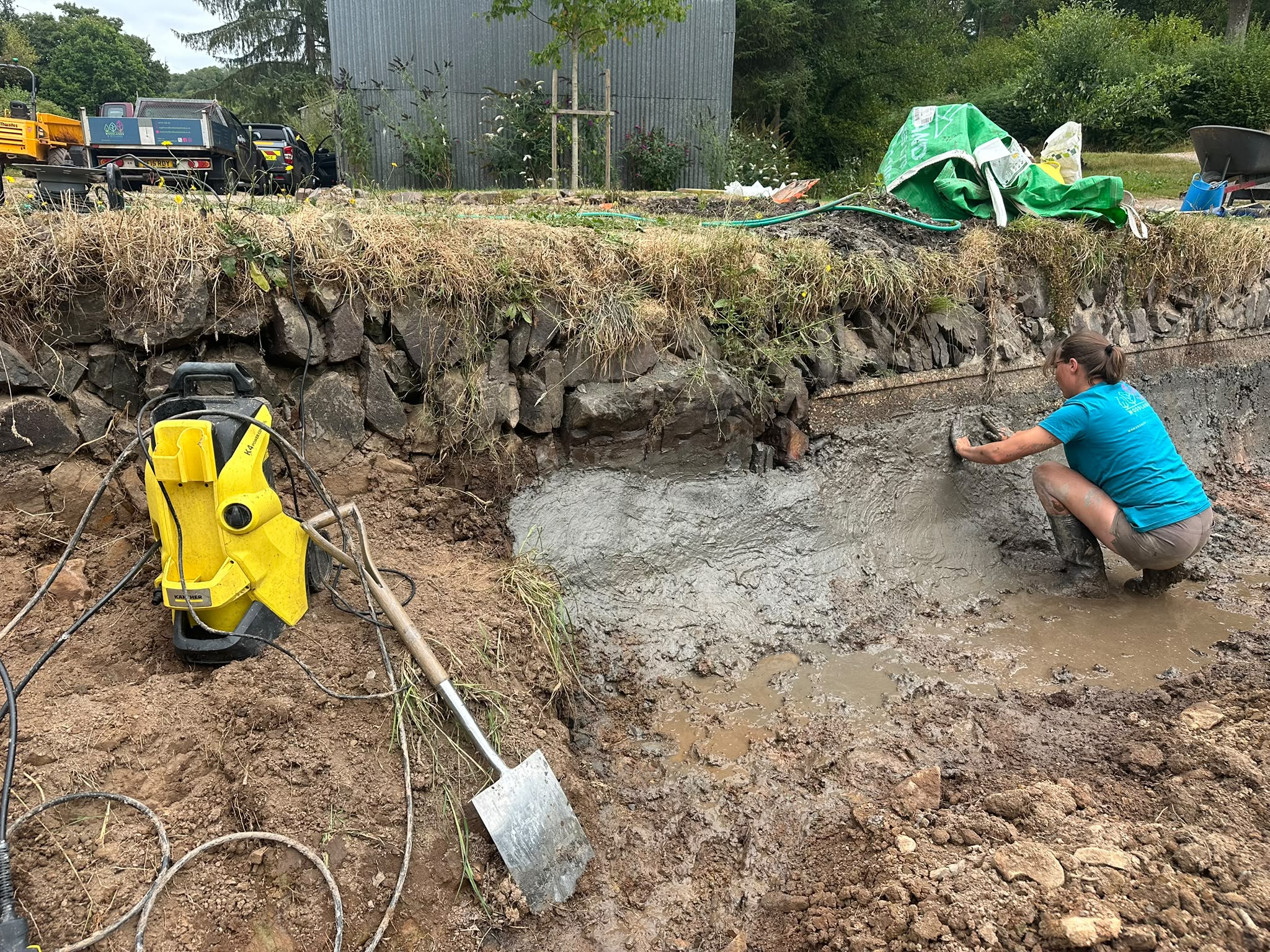
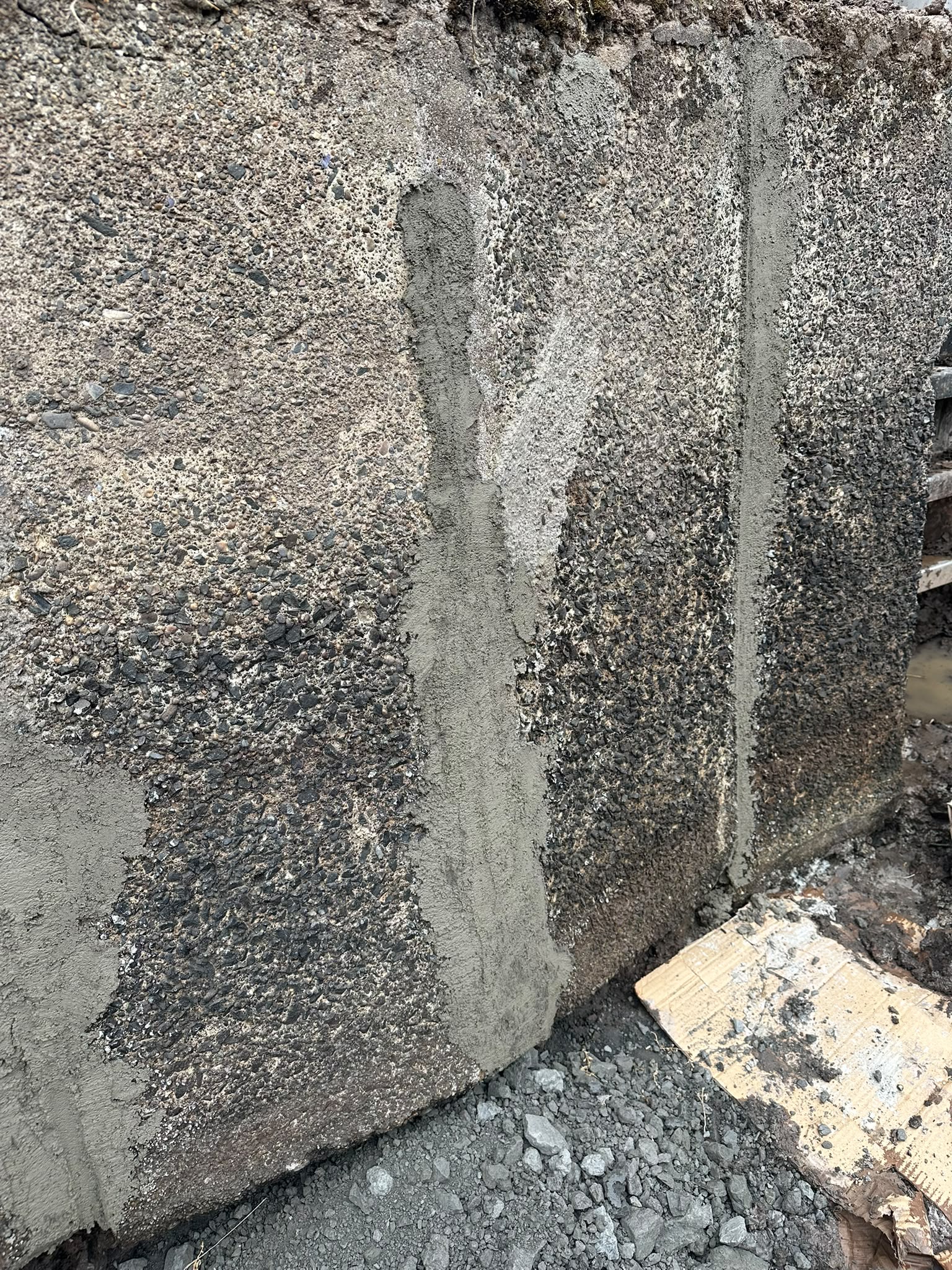
Remove failed material, rebuild masonry and close washout routes using engineering clay and cementitious repair materials.
Complete revealed repairs
Address the additional defects that only became visible after desilting, without exceeding the agreed Phase 1 budget.
The Phase 1 result
More completed, without moving the budget
The planned work around the sluice and retaining structure was completed, the full pond basin was cleared, and additional repair areas exposed during excavation were dealt with in the same mobilisation.
Completing the desilting and the extra repairs together avoided leaving known defects for a later phase and gave the client a clean, accessible basin ready for refilling, observation and future maintenance.
- Full silt removal across the historic pond basin
- Repairs to masonry, voids and local clay-lined areas
- Additional defects completed as they were revealed
- All delivered within the agreed Phase 1 budget
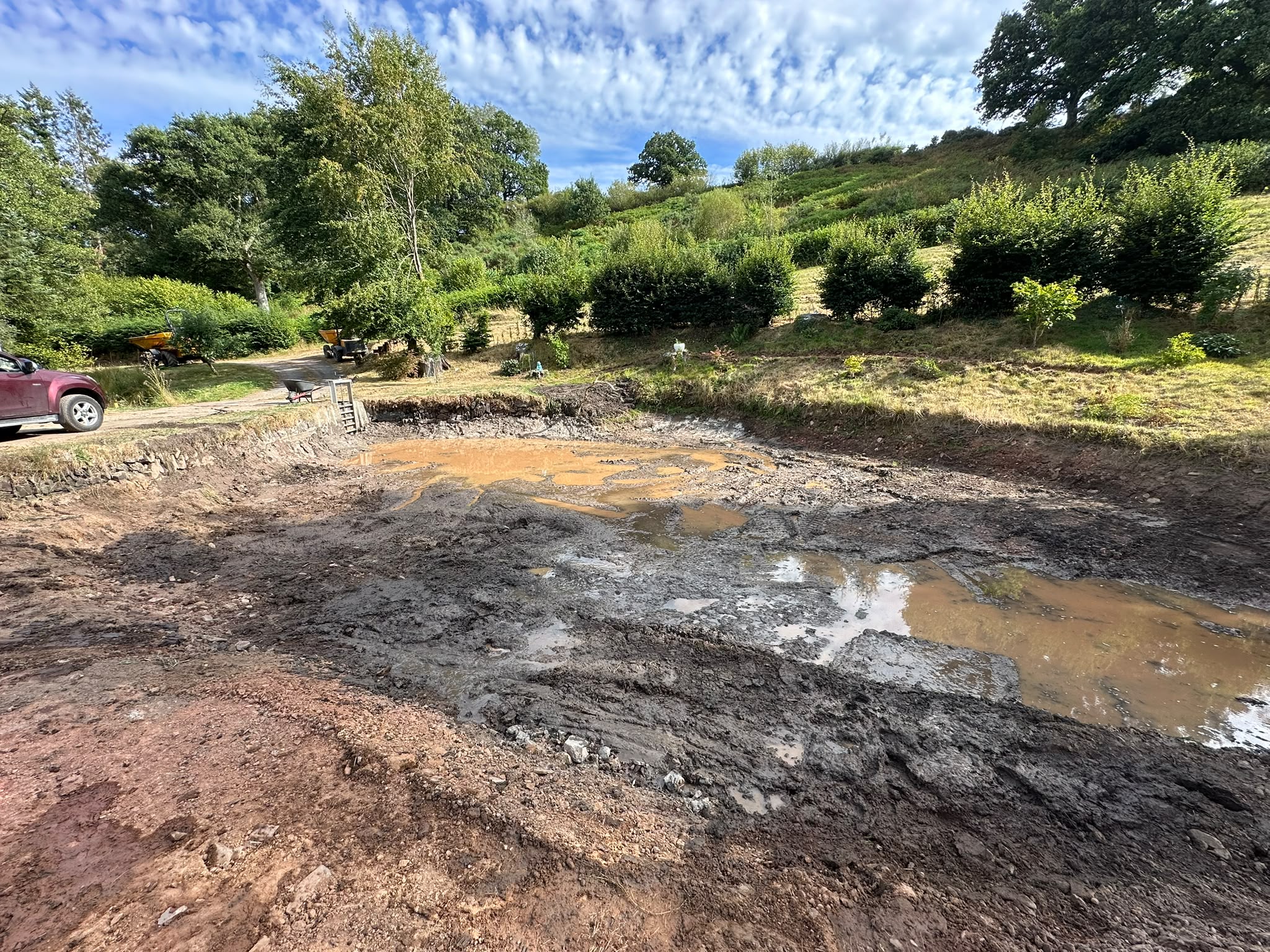
Full silt removal and the additional repairs were completed within the agreed Phase 1 budget.
Silt handling
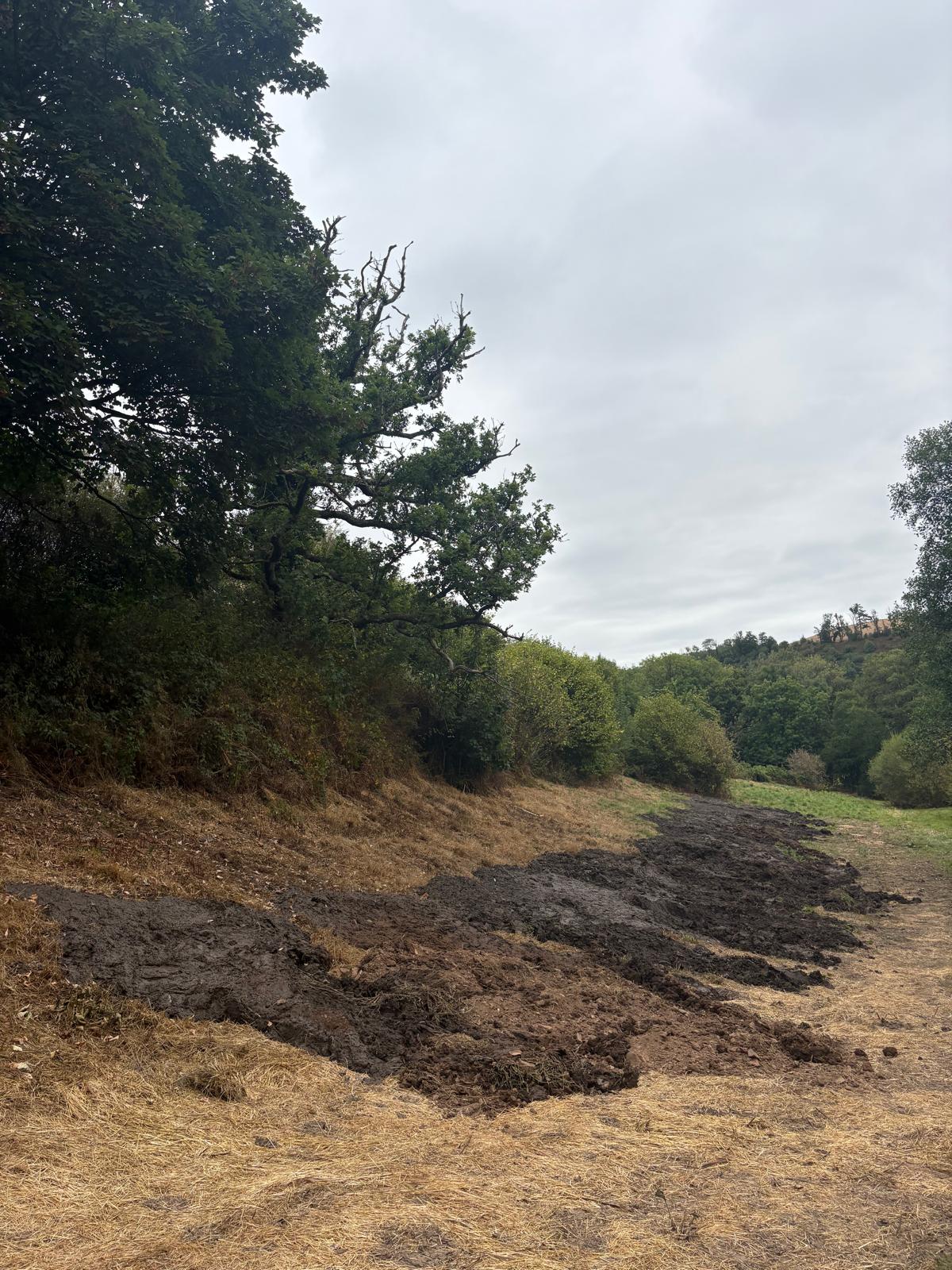
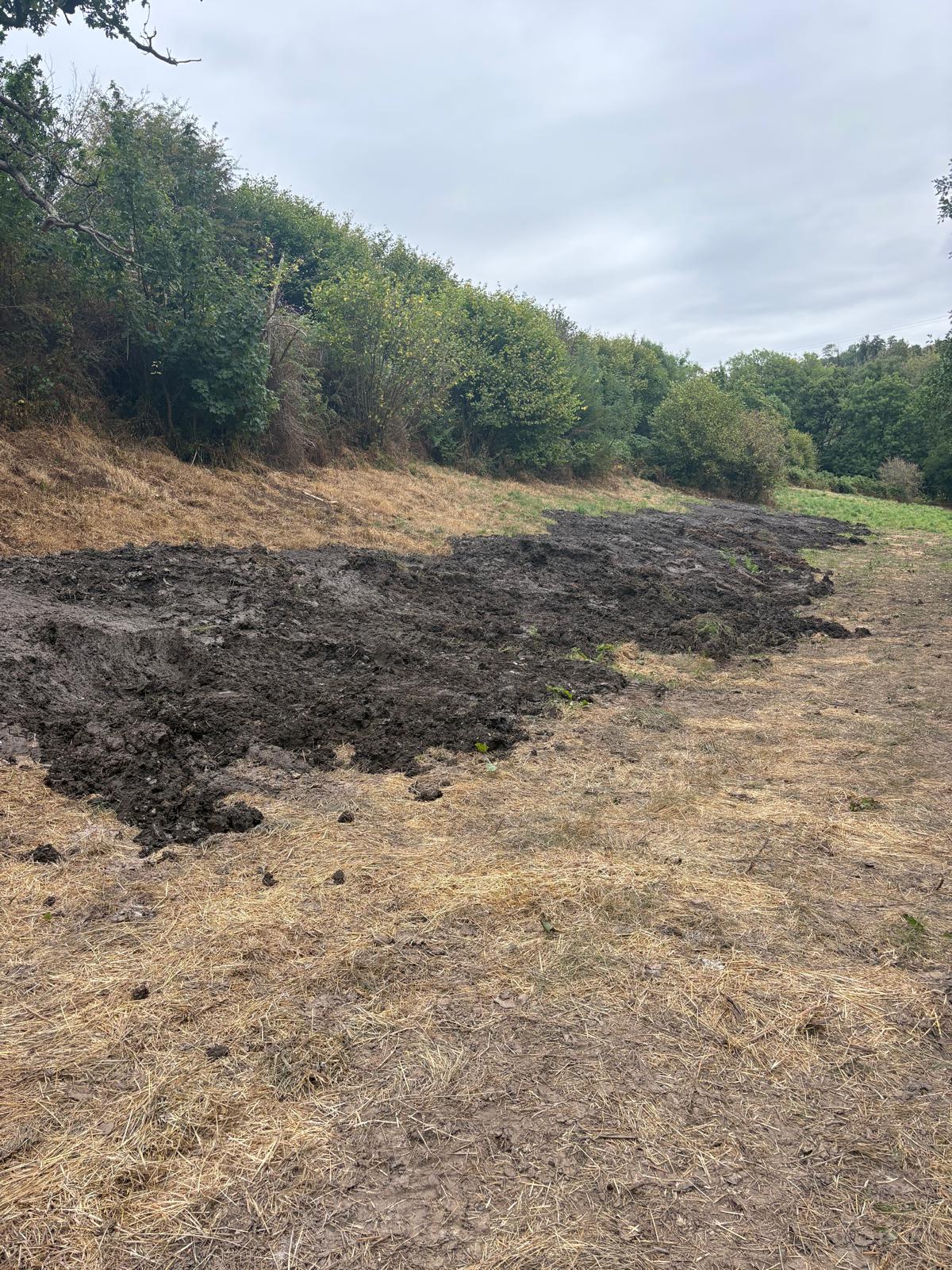
The removed material stayed on the estate
For this project, the excavated pond silt was placed in locations agreed with the landowner. The area was selected away from the stream to reduce the risk of sediment-laden runoff. Its existing nettle-dominated vegetation was consistent with already nutrient-rich ground, while the established trees and surrounding vegetation could potentially benefit as the organic material dried and weathered in.
Planning that route before excavation kept the machinery sequence efficient and avoided treating the spoil as an afterthought.
This was a site-specific solution. Before silt is retained, spread, reused or taken away, its condition, contamination risk, destination and the relevant environmental requirements need to be considered. Our guide explains the main pond-silt testing, reuse and disposal routes.
Silt and pollution prevention
Runoff protection now, with future silt control planned
Because the pond is fed by a permanent stream, desilting alone cannot remove the source of the problem. The assessment therefore recommended upstream settlement features or leaky dams as a longer-term strategy to slow incoming water and trap sediment before it reaches the main pond.
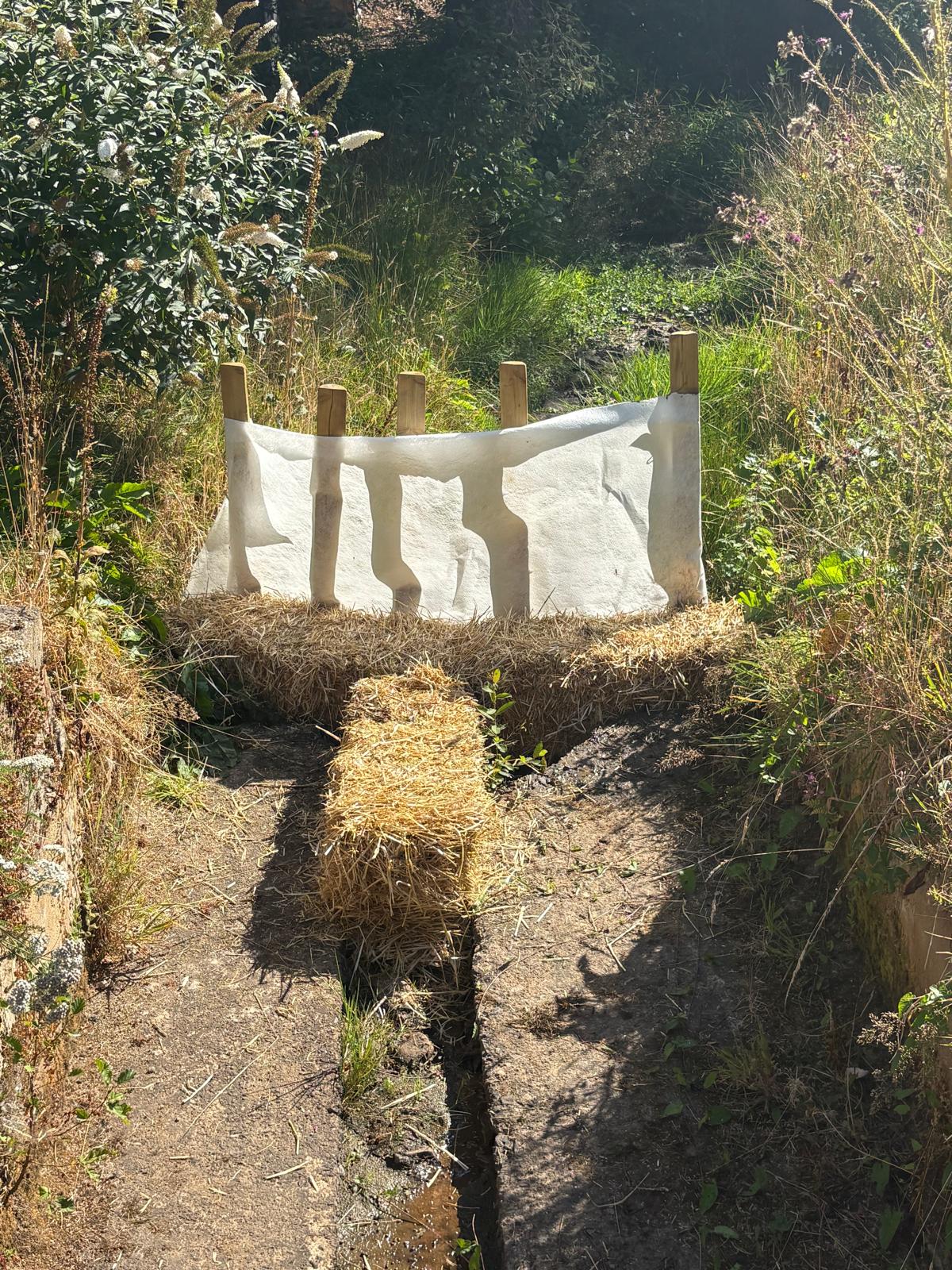
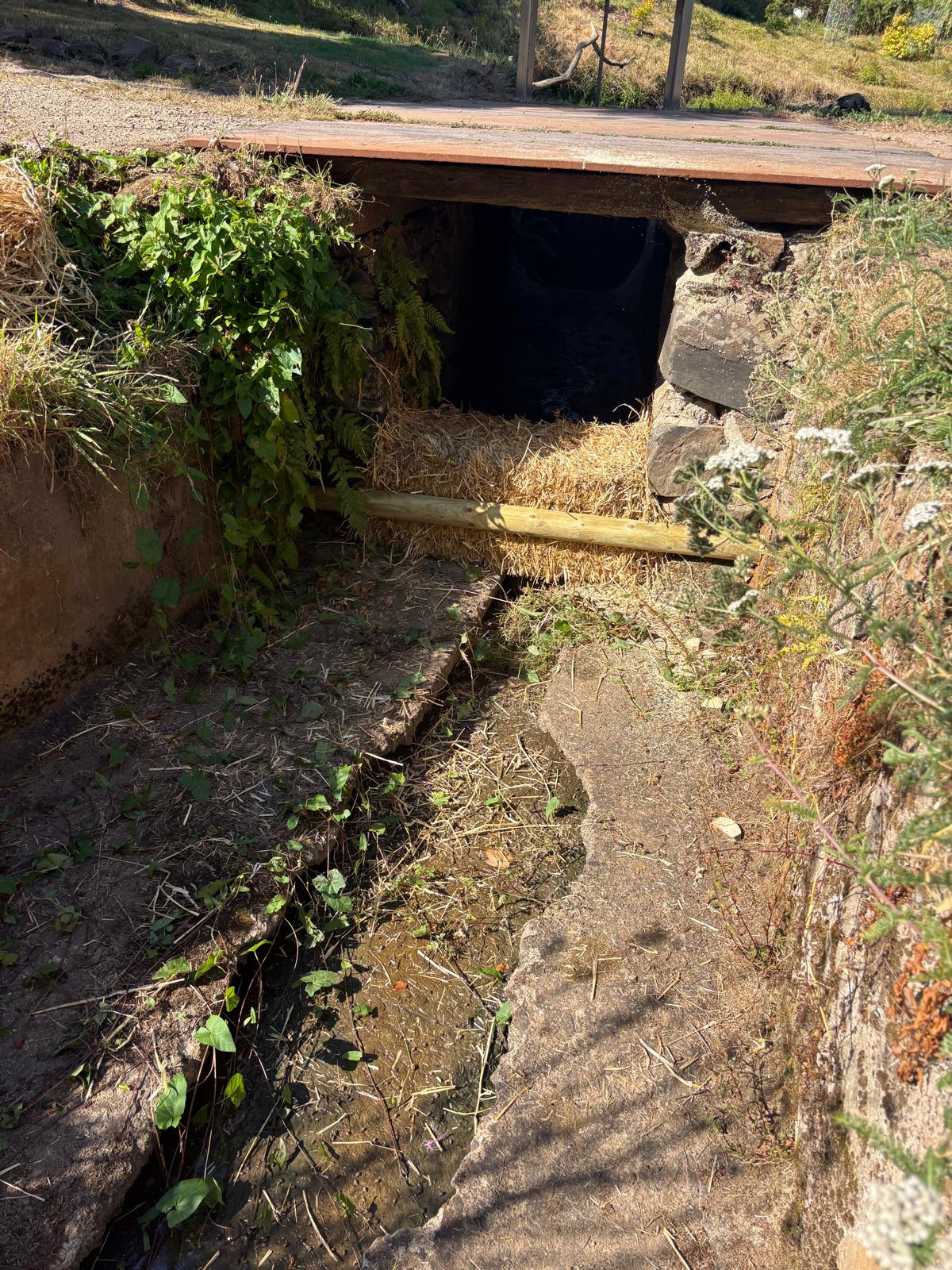
During the confirmed Phase 1 works, temporary straw-bale and filter-fabric controls were installed to intercept sediment-laden runoff and protect the connected watercourse.
Planning a complex pond or lake project?
Start with diagnosis, not a guess
Professional site assessments start from £500 + VAT. For this project, the paid assessment created the scope, reduced uncertainty and its fee was credited against the commissioned Phase 1 work.