Wildlife Pond & Stream Creation in Woodbury, Devon
A Linked Wildlife Pond System Designed for Long-Term Habitat Value
This project involved the creation of a natural wildlife pond and stream system near Woodbury in Devon.
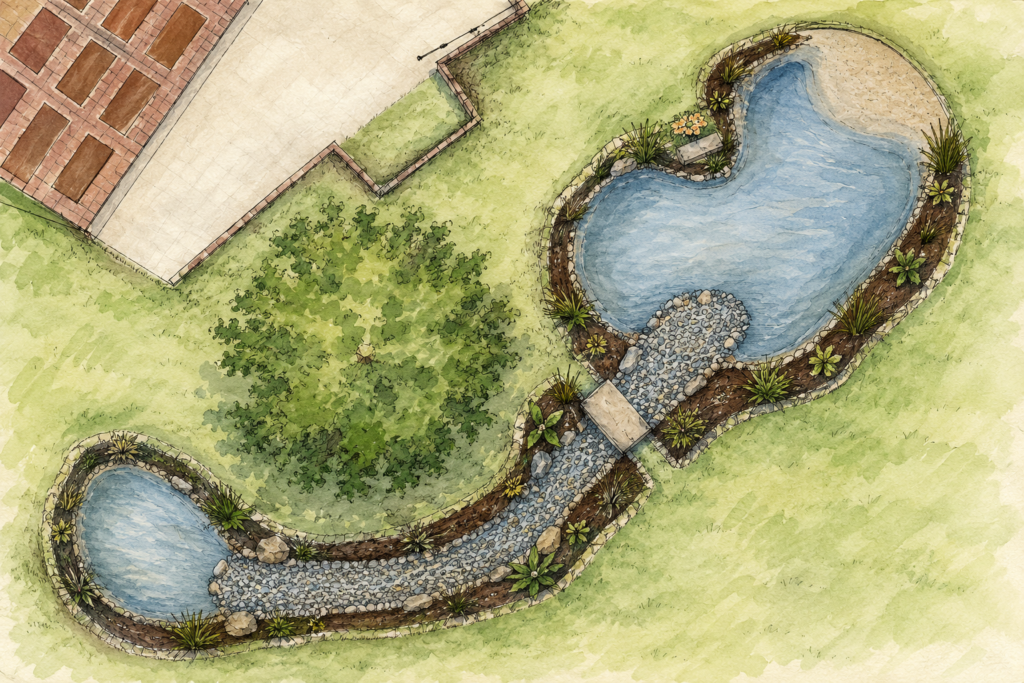
Rather than a single isolated pond, the design included a larger upper pond, a smaller lower pond and a connecting stream running between them. The aim was to create a more varied and natural watercourse, with different depths, flow, planting zones and habitat features to support wildlife throughout the year.
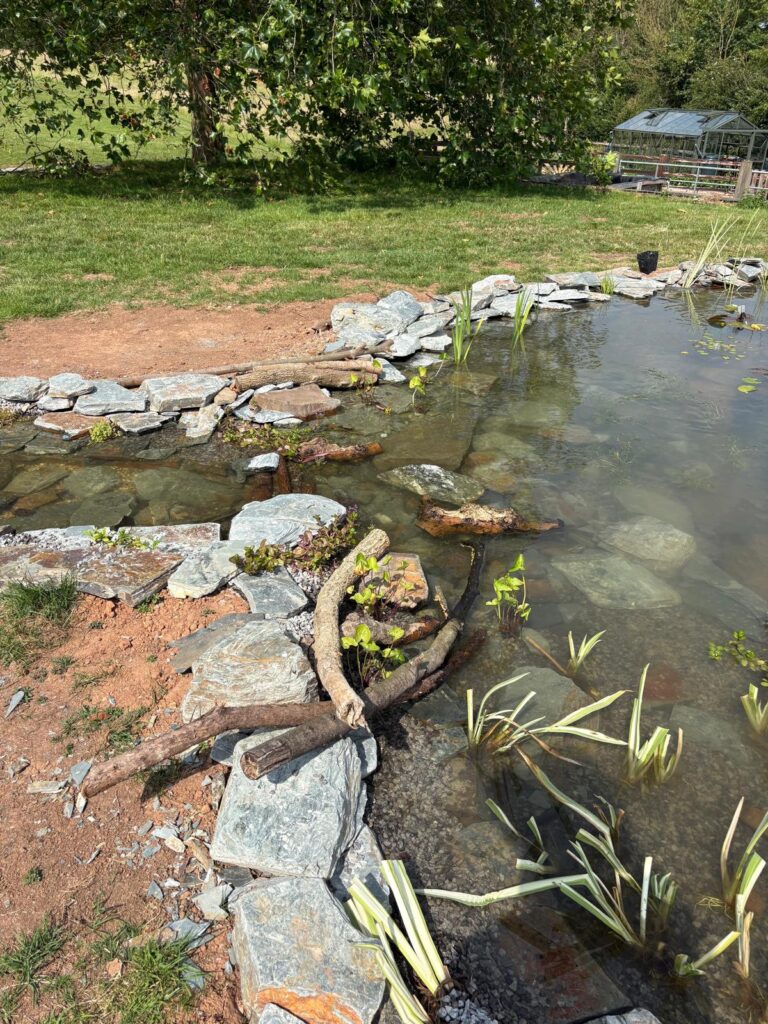
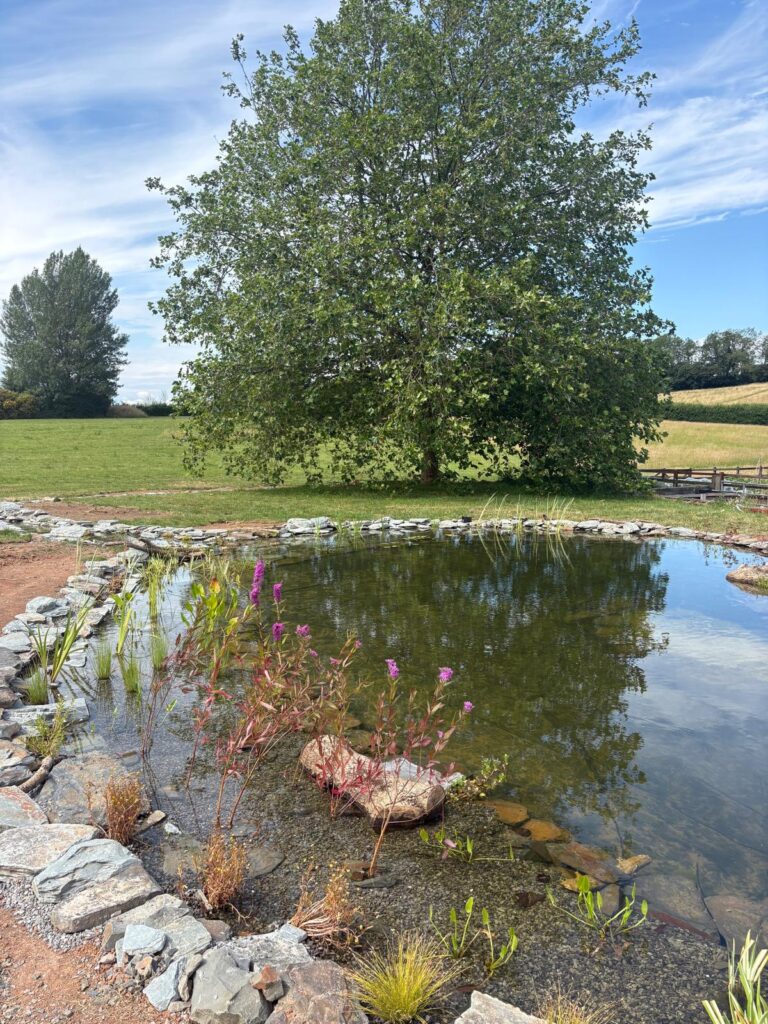
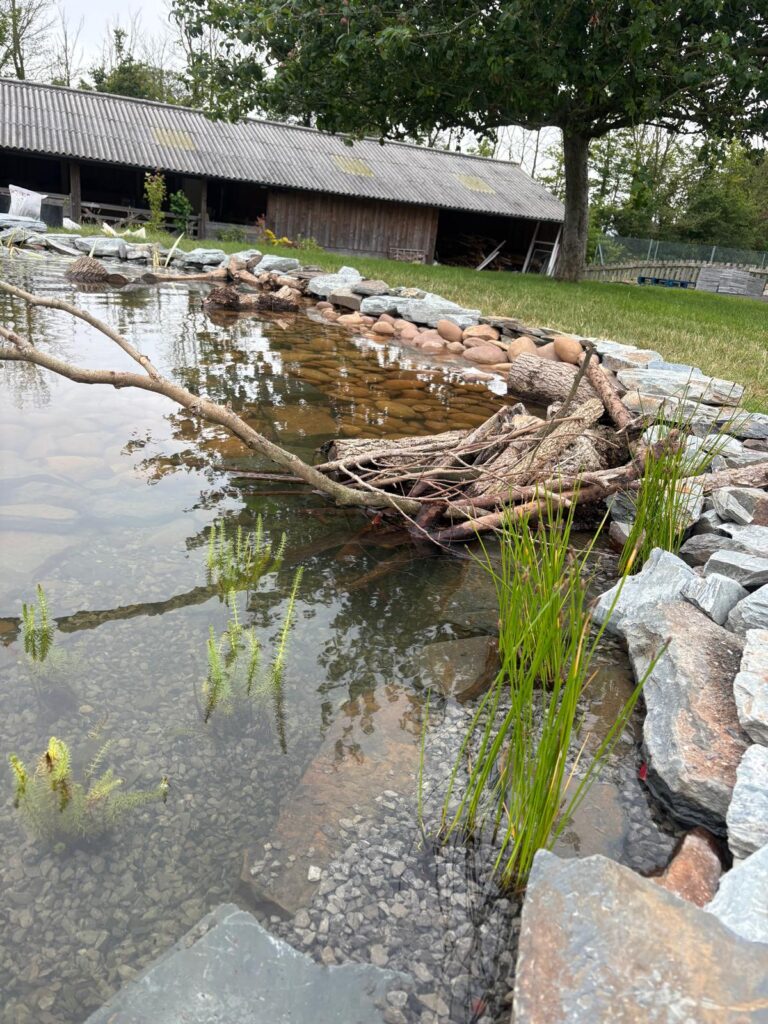
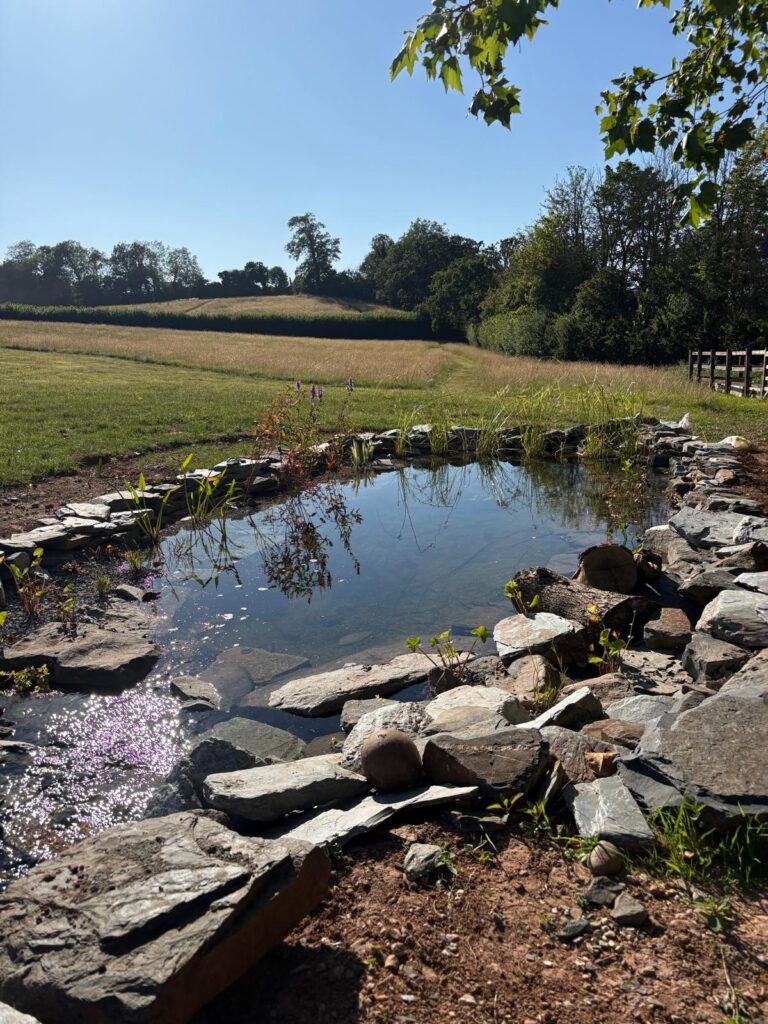
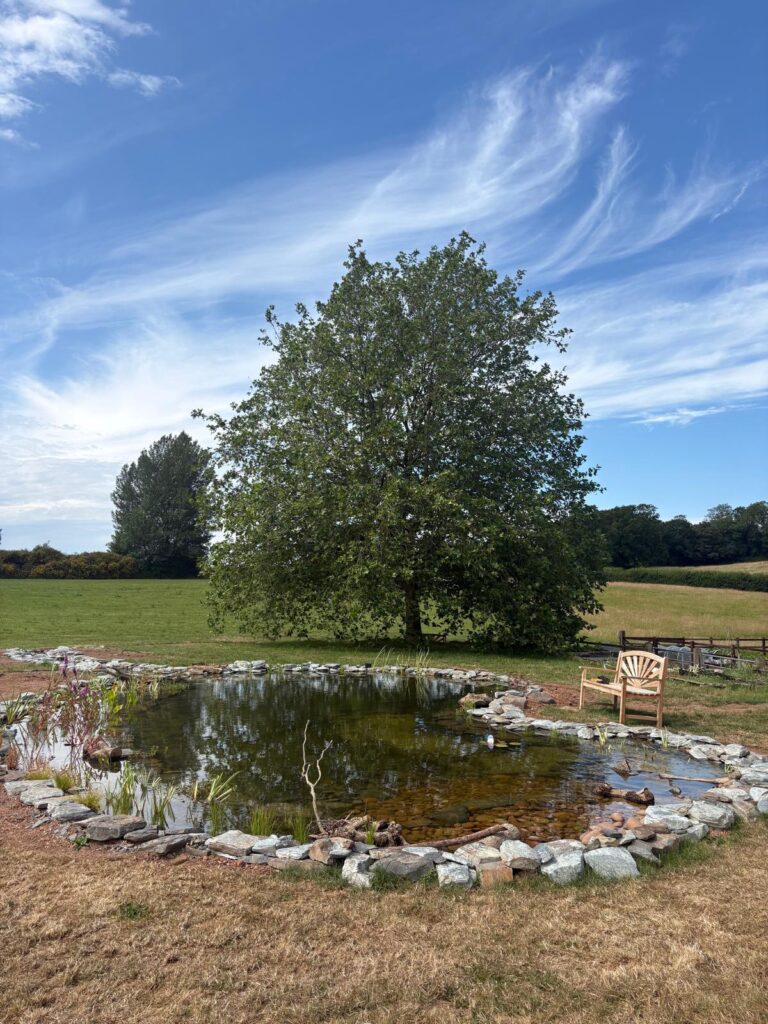
The finished system combines open water, shallow planted margins, natural stone edging, cobbled stream sections, deadwood habitat and a soft landscape finish to help the ponds settle naturally into the site.
Project Overview
The project included:
- A larger upper wildlife pond, approximately 9m x 13m
- A smaller lower pond, approximately 3.5m x 7m
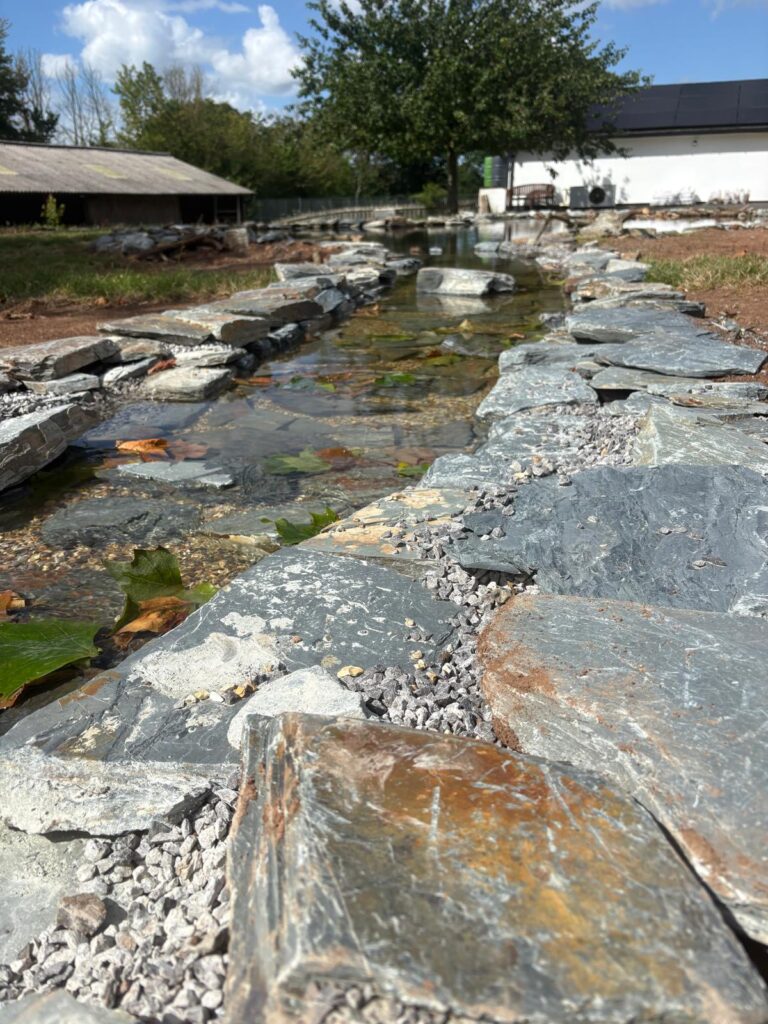
- A connecting stream of approximately 30m
- A durable liner system
- Natural stone and cobble edging
- Shallow shelves and marginal planting zones
- Regrading and reshaping around the ponds
- Habitat features including deadwood and natural stone
- Aquatic planting
The Brief
The client wanted a natural-looking wildlife pond system that would provide a strong boost to biodiversity while also creating an attractive feature within the wider garden and landscape.
The design needed to feel informal and established, rather than like a formal ornamental pond. It also needed to make use of the site levels, work around the existing tree and surrounding ground, and create a natural journey of water from the upper pond down through the stream to the lower pond.
Design and Layout
The system was designed around a sequence of connected water bodies rather than one single pond. This gives the project much more ecological value, as each part of the system offers a slightly different habitat.
The upper pond provides the largest area of open water, with planted margins and shallows around the edge. From there, water moves through the stream section, creating movement, sound and a different type of habitat before reaching the lower pond.
The use of a stream also helps the whole project feel more natural within the landscape, creating a sense that the ponds belong together rather than being separate features.
Excavation and Shaping
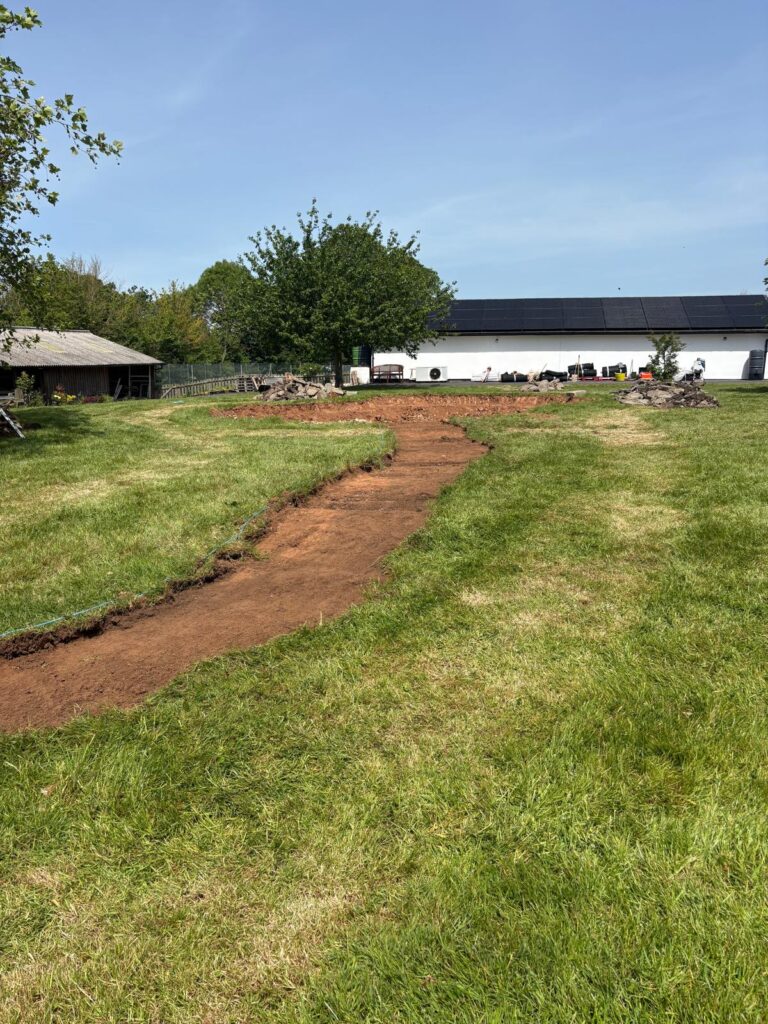
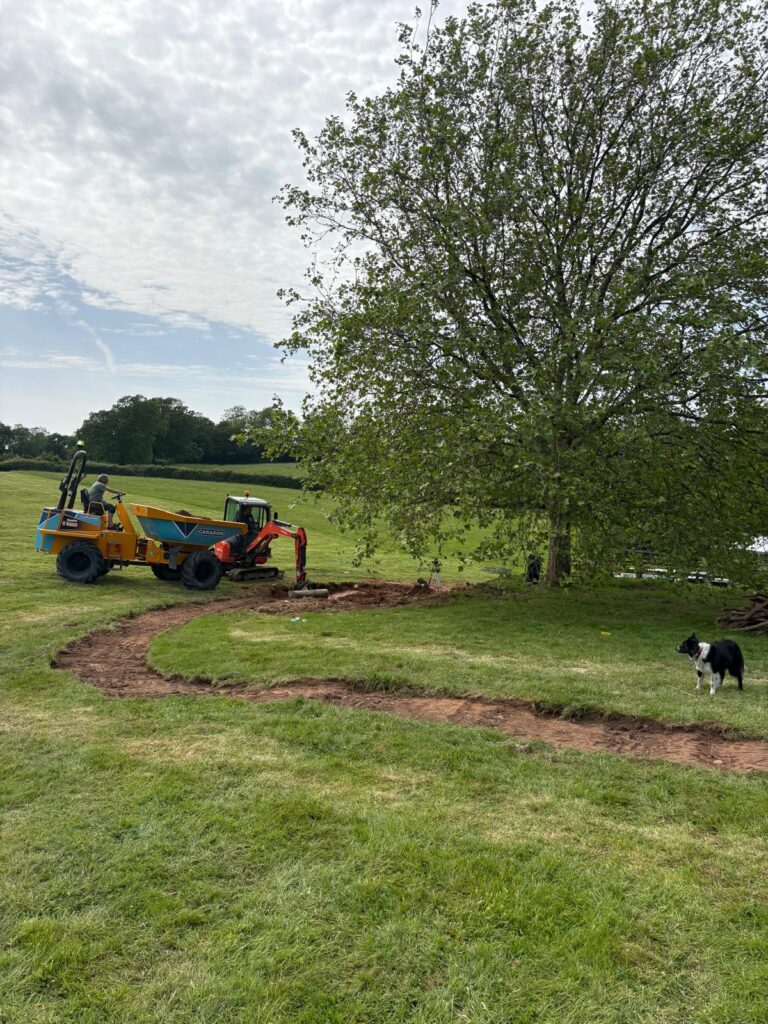
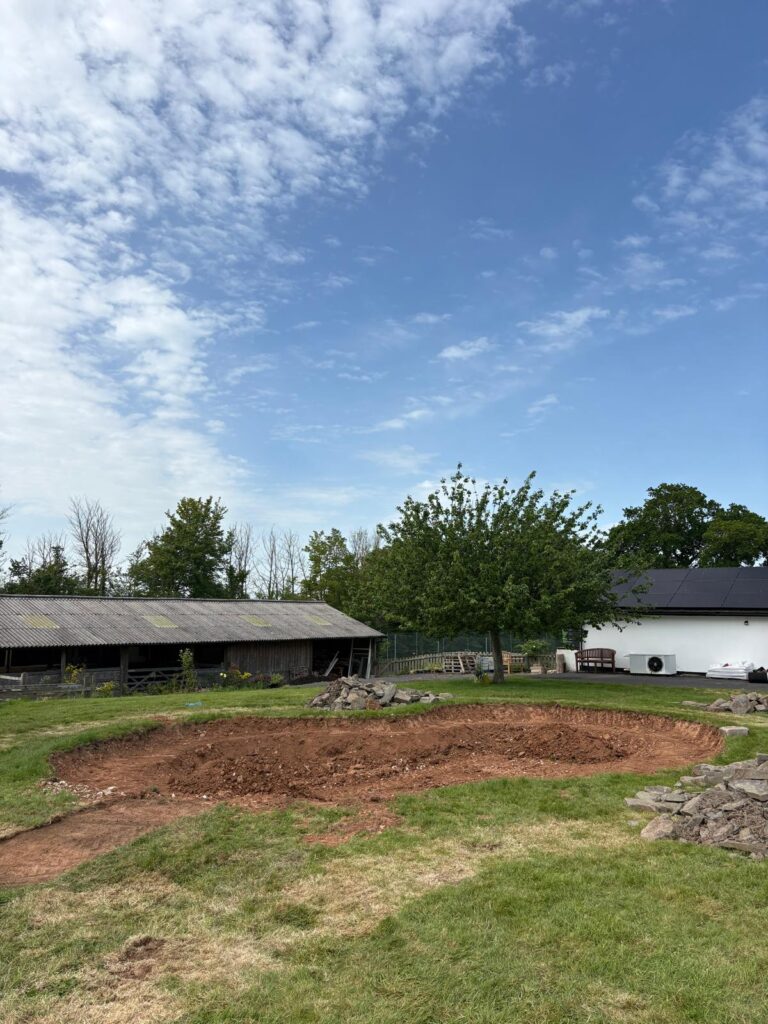
The ponds and stream were excavated and shaped to create a varied profile, with deeper areas, shallows, shelves and gently graded margins.
Good wildlife pond construction is not just about digging a hole and holding water. The shape of the pond is one of the most important parts of the project. Shallow margins allow plants to establish and provide access for amphibians, insects, birds and small mammals, while deeper areas help give the pond stability through warmer and colder periods.
The surrounding ground was also regraded and reshaped so the finished ponds sat more naturally within the site.
Unexpected Ground Conditions
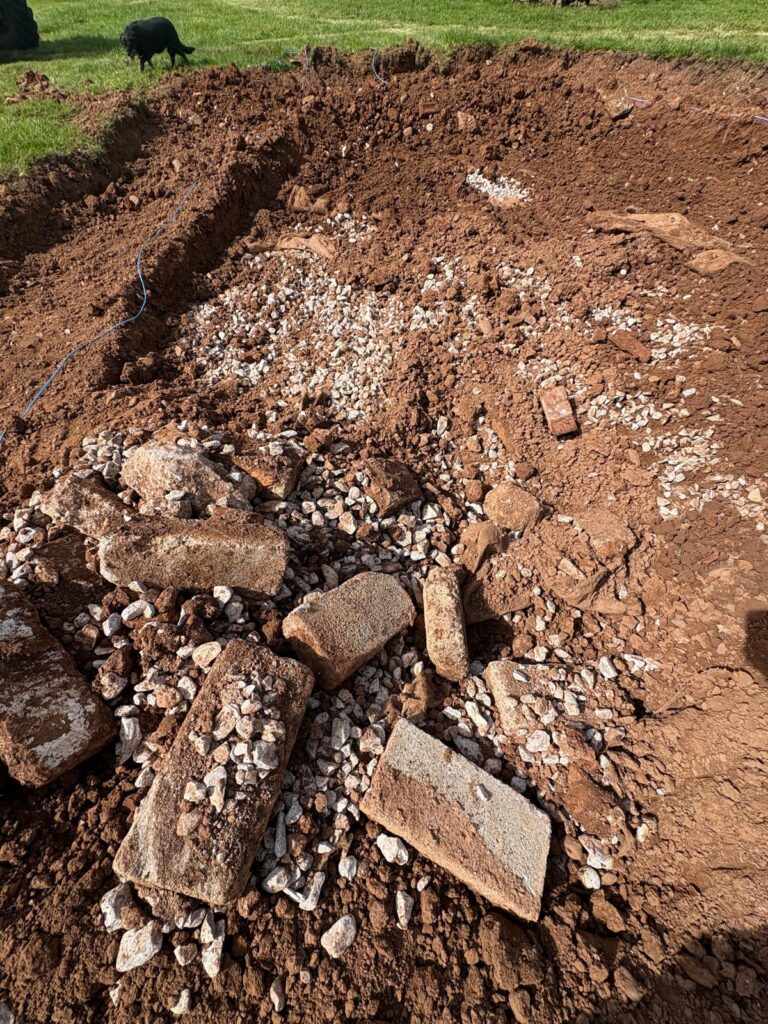
During excavation, we discovered that the lawn area had previously been heavily engineered to keep it flat and well drained. Beneath the grass was a large soakaway system, with stone, rubble and drainage material spread through much of the pond area. The lawn had also been fitted with irrigation, creating a landscape that was being both drained and watered to maintain a formal grass finish.
From a habitat point of view, this was almost the opposite of what we were trying to create. Instead of moving water away as quickly as possible, the new pond system was designed to hold water, create wet margins and provide valuable habitat for amphibians, insects, birds and other wildlife.
This discovery added extra work to the project, as the hardcore and drainage material had to be removed, managed and worked around before the pond could be properly shaped. Once cleared, we were able to regrade the area, form the pond and stream profiles correctly, and continue with the liner, stonework and planting.
The result is a much more wildlife-friendly use of the space, turning a heavily drained lawn into a connected pond and stream system with long-term biodiversity value.
Liner Installation and Stonework
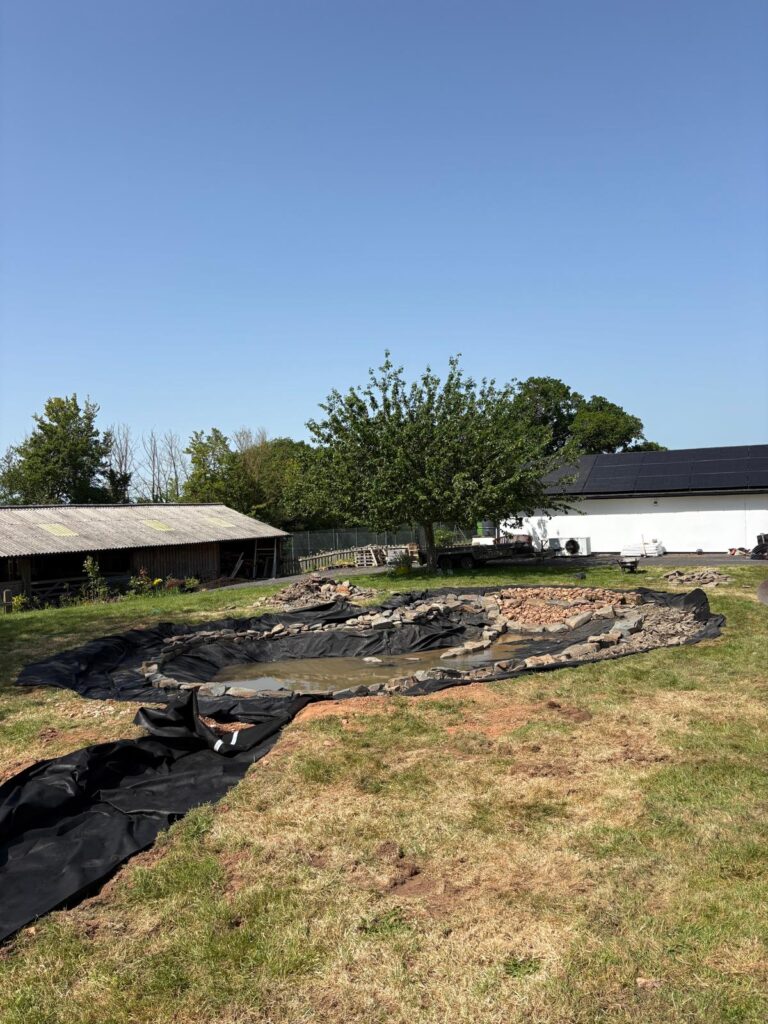
A durable liner system was installed to provide reliable water retention across the ponds and stream.
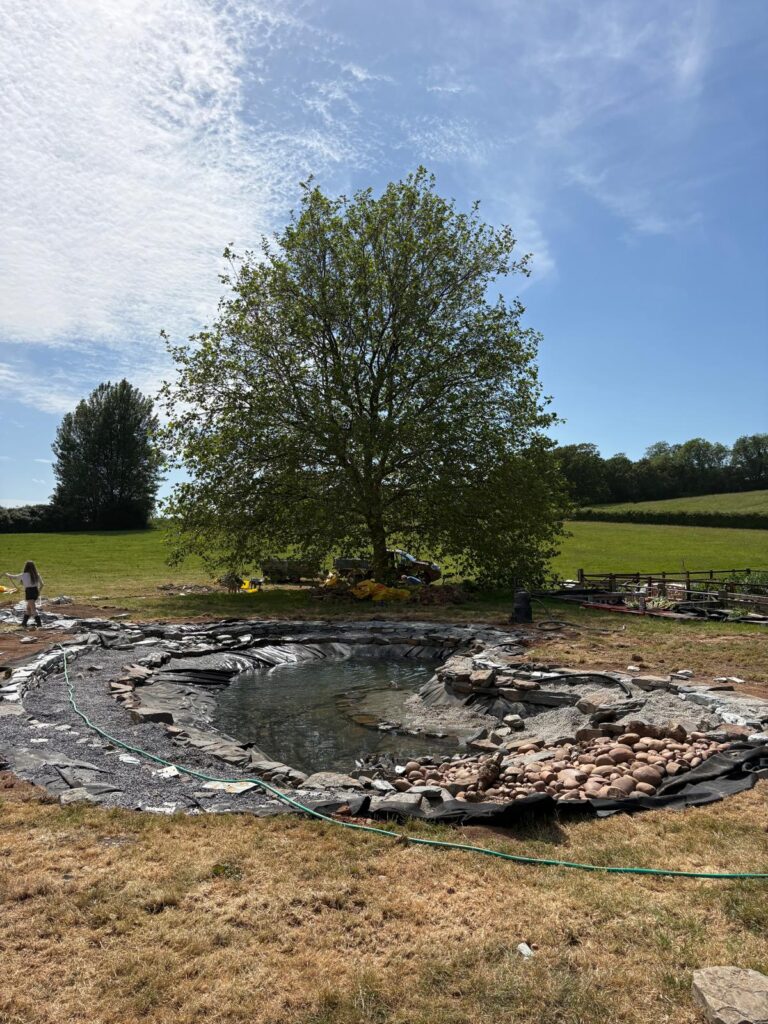
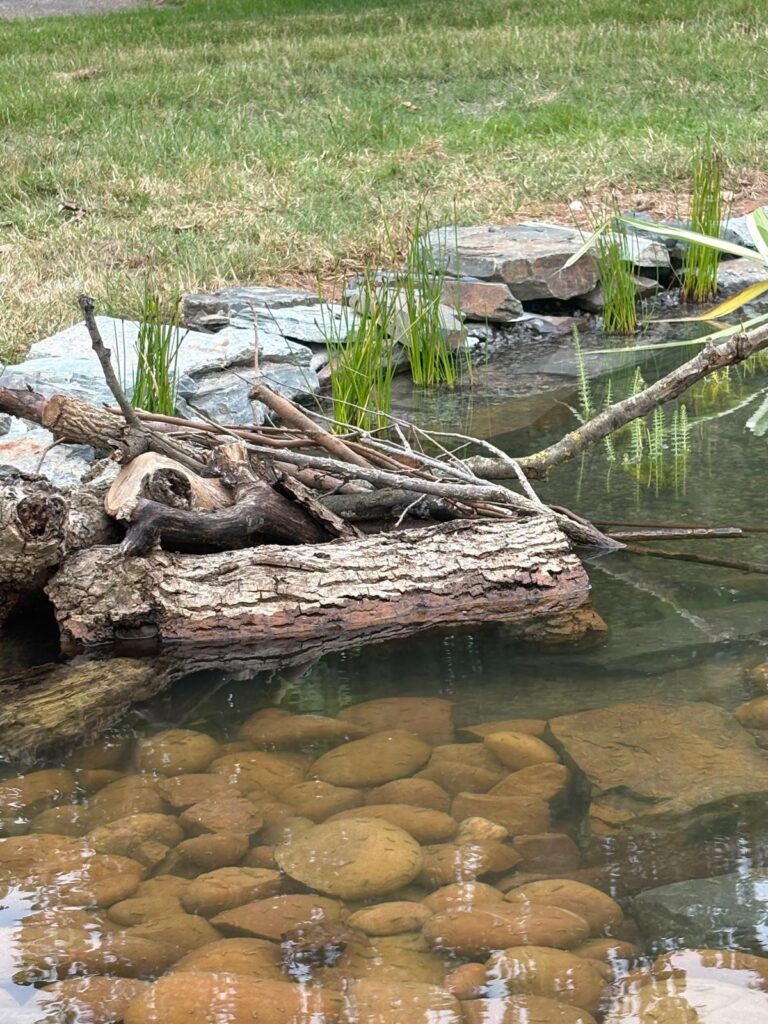
The edges were then dressed with natural stone, cobbles and soil to hide the construction details and create a softer, more natural appearance. Larger stone was used to form structure around the pond edges, while cobbles and smaller stone helped create shallow habitat areas and a natural stream bed.
Care was taken to avoid a hard, overly formal edge. The aim was for the stone, planting and waterline to blend together as the pond matures.
Planting and Habitat
Aquatic and marginal planting was added throughout the system to provide structure, cover and seasonal interest.
The planting will become more important as the project establishes. Over time it will soften the stonework, improve habitat value and provide cover for amphibians, insects and other wildlife.
Deadwood and natural material were also included around the ponds and stream. These features are valuable for wildlife, offering shelter, perching points, egg-laying surfaces and protection for smaller species.
The Finished Result
The completed project is a natural wildlife pond and stream system that adds both visual interest and genuine habitat value to the site.
As the planting establishes and the edges soften, the ponds will continue to improve year after year. The mix of open water, shallow margins, flowing stream, stonework, cobbles, planting and deadwood creates a much richer environment than a standard garden pond.
This project is a strong example of how a wildlife pond can be expanded into a more complete habitat system, using levels, water movement and natural materials to create something that feels settled within the landscape.
Wildlife Using the Pond Straight Away
One of the best signs that a wildlife pond is working is how quickly life begins to find it.
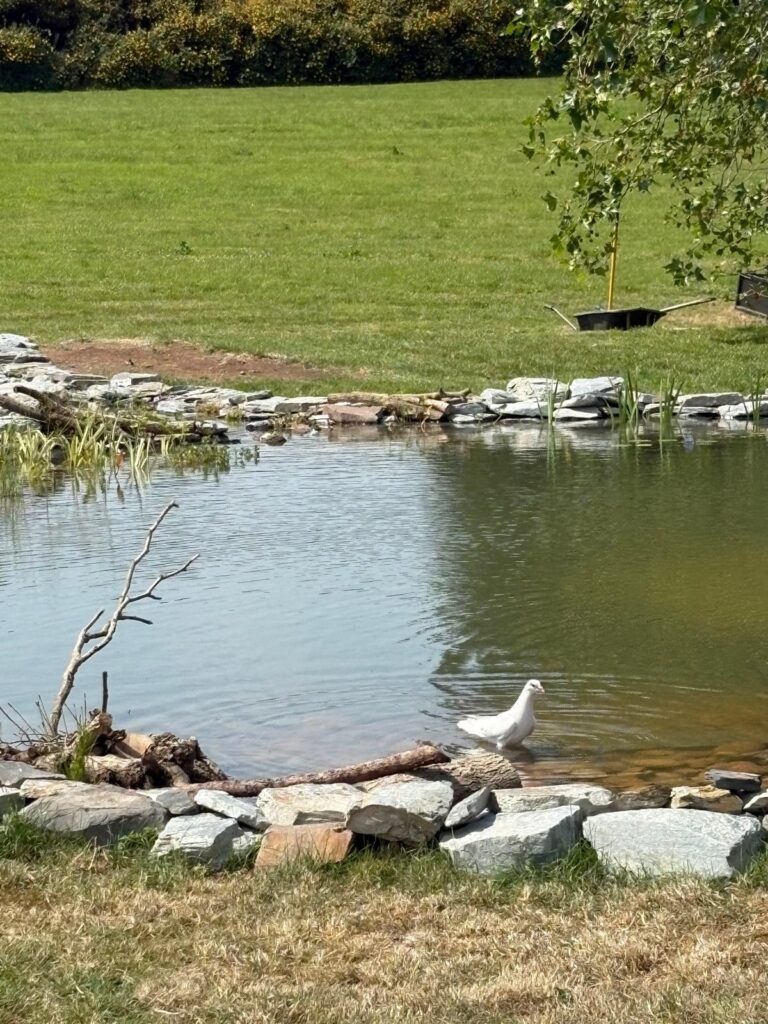
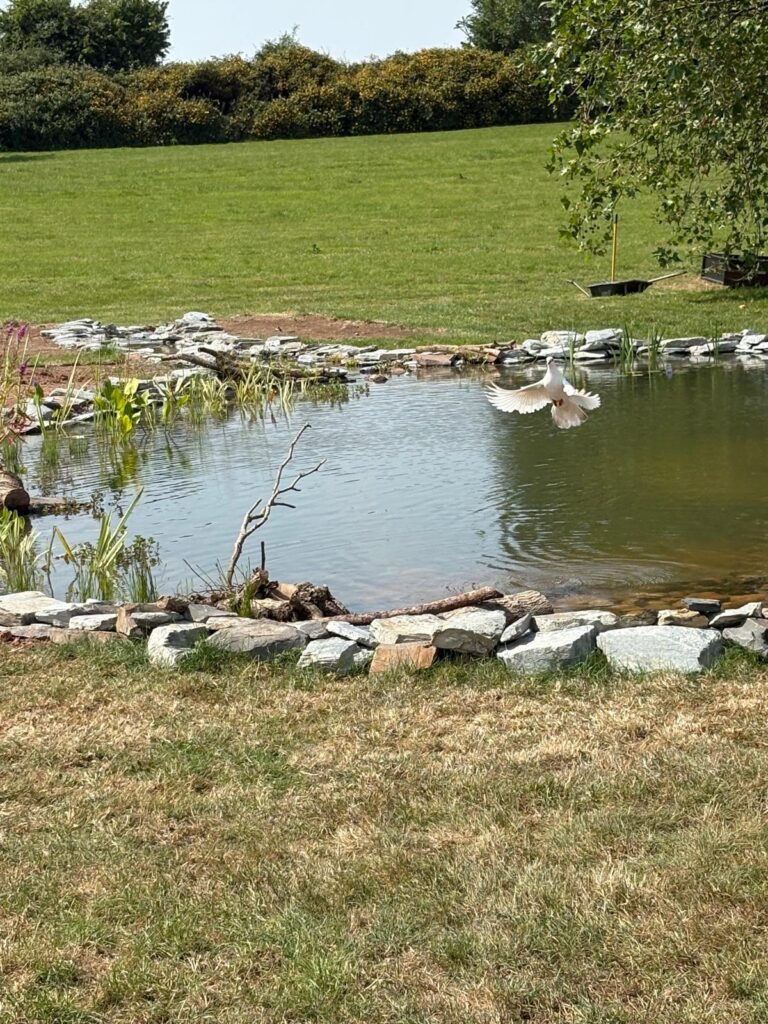
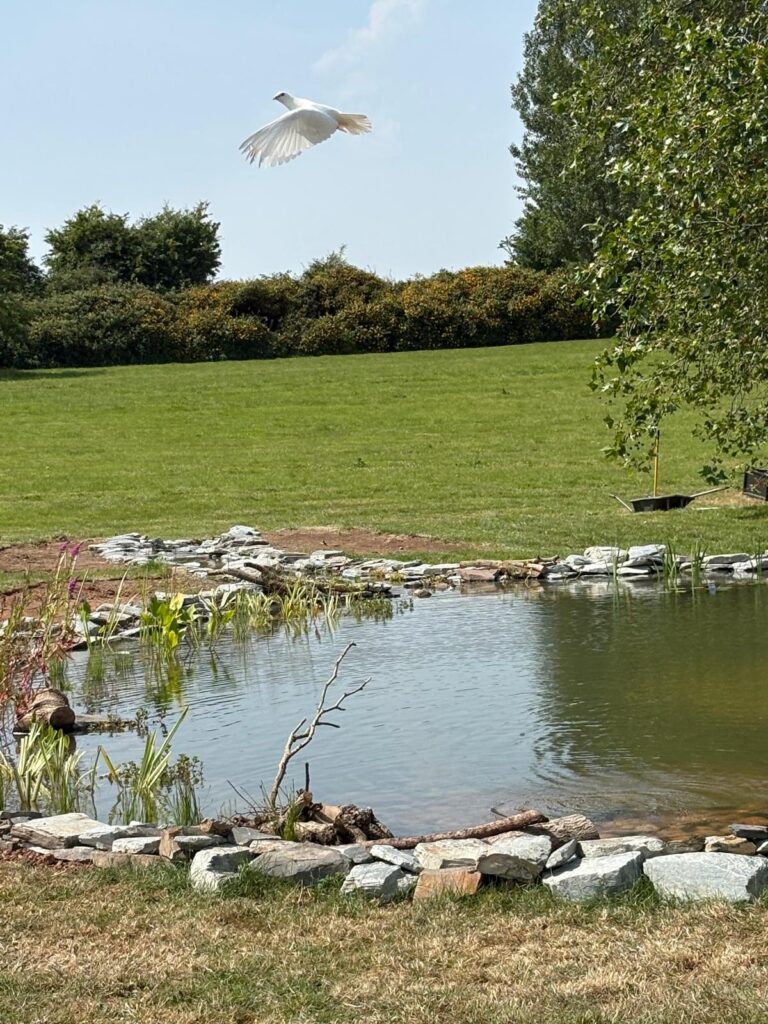
Soon after the pond was completed, a white dove settled into the new pond area, using the shallow margins for drinking, bathing and foraging. The natural stone edges, gentle access points and planted shallows made it easy for the bird to move in and out of the water, while the deadwood and marginal planting gave the pond immediate structure and shelter.
Within just a few days, small aquatic invertebrates were also beginning to establish. These are easy to overlook, but they are the foundation of a healthy pond ecosystem. Water beetles, pond skaters, midge larvae, snails, water boatmen and other small organisms are often some of the first to arrive, and they quickly begin turning a new pond from a body of water into a functioning habitat.
This early invertebrate life is what supports everything else. It provides food for birds, amphibians, dragonfly larvae and other wildlife, while also helping the pond develop naturally over time. As the planting matures, the pond will support more cover, more feeding areas and a wider range of species.
Seeing birds and invertebrates using the pond so quickly was a strong sign that the design was already doing what it was meant to do: replacing a heavily drained lawn with a living, productive habitat.
Project Details
Project type: Wildlife pond and stream creation
Location: Woodbury, Devon
Project size: Upper pond, lower pond and approximately 30m stream
Focus: Wildlife habitat, naturalistic design, planted margins and water movement
Features: Linked ponds, stream, liner system, natural stone edging, cobble shallows, deadwood habitat and aquatic planting
Thinking About Creating a Wildlife Pond?
We design and build wildlife ponds, streams and habitat-rich water features across Devon and Cornwall.
From small garden wildlife ponds to larger pond and wetland creation projects, we can help shape a design that suits the site, holds water reliably and provides long-term value for wildlife.
Planning something similar?
Send the location, photographs, approximate dimensions and what you want the water to achieve. We review the information first and will explain the most useful next step. Where a site or design needs to be understood before useful advice or a credible quotation can be given, professional site assessments start from £500 + VAT.
Start a wildlife pond enquiry