Wildlife Pond and Hibernaculum in East Devon
Project case study · East Devon · November 2026
A wildlife pond with habitat beyond the water
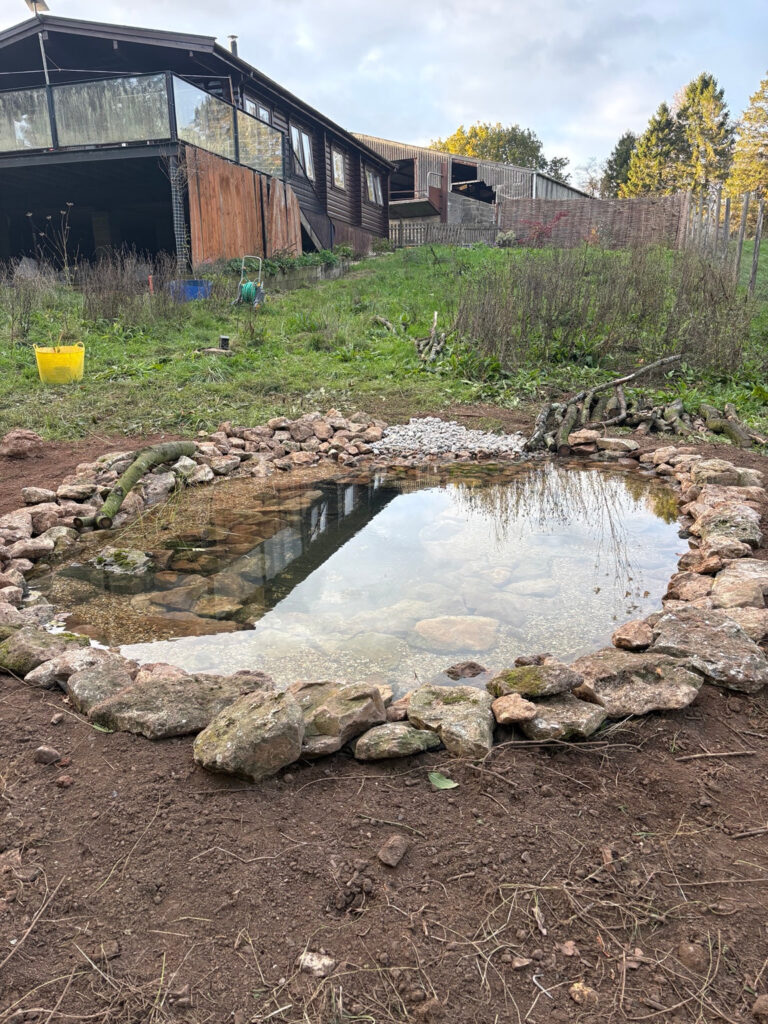
A compact pond created in rough grass, with shallow planted margins, a pebble beach and an excavated hibernaculum beside the water.
This East Devon wildlife pond project brought together pond construction and habitat creation in a small, sloping space. Natural stone, planting and deadwood soften the edges, while the adjoining hibernaculum provides a separate sheltered refuge on land.
- The brief: a naturalistic, fish-free wildlife pond.
- The work: excavation, EPDM lining, stone edging and planting.
- The finish: shallow access to the water and a stone-and-wood hibernaculum.
Designing the pond around the site
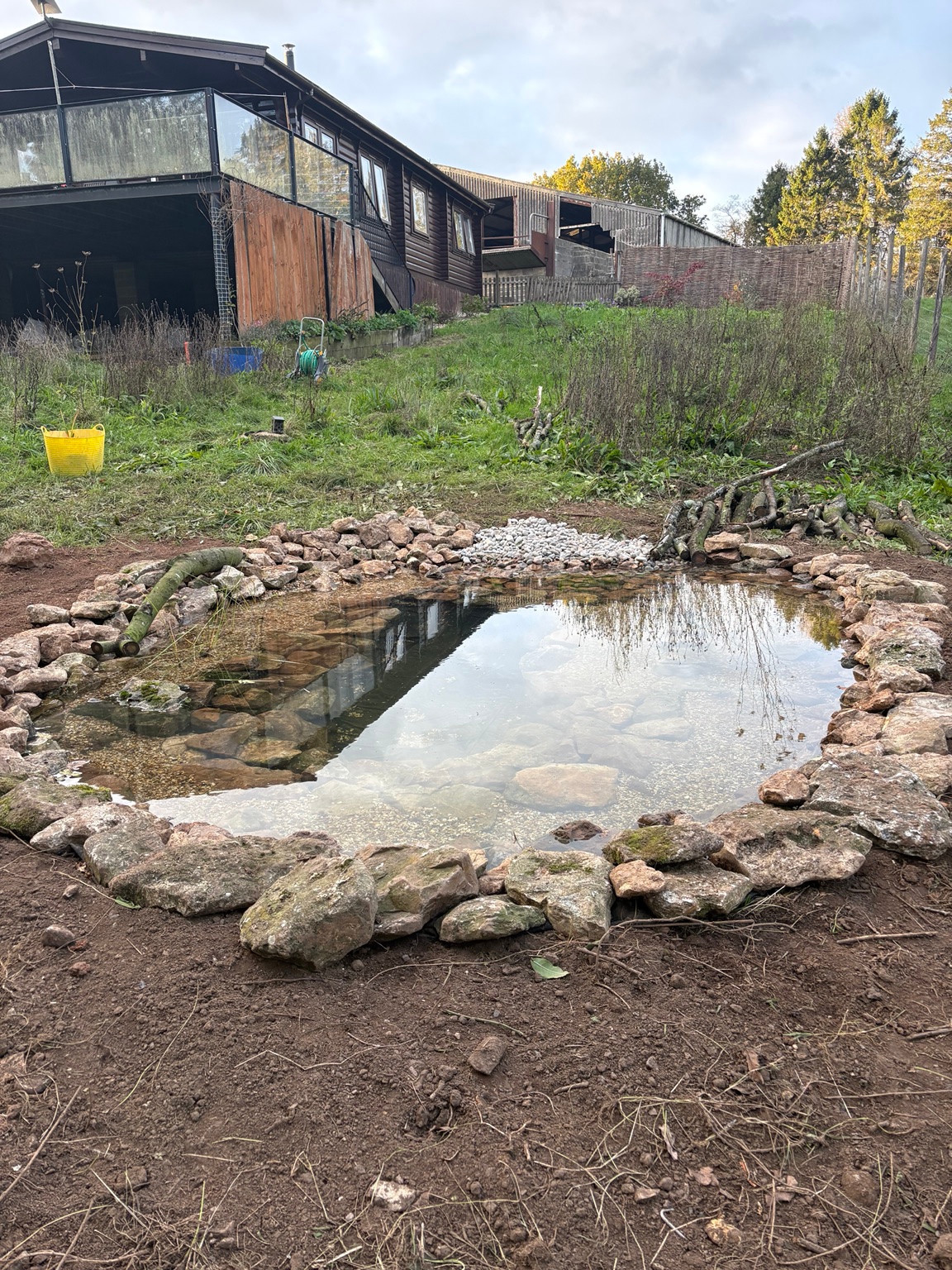
The brief called for open water, varied depths and space for aquatic and marginal plants, without fish, a pump, filtration or a cascade. The shape and water level needed to work with the slope and the available ground.
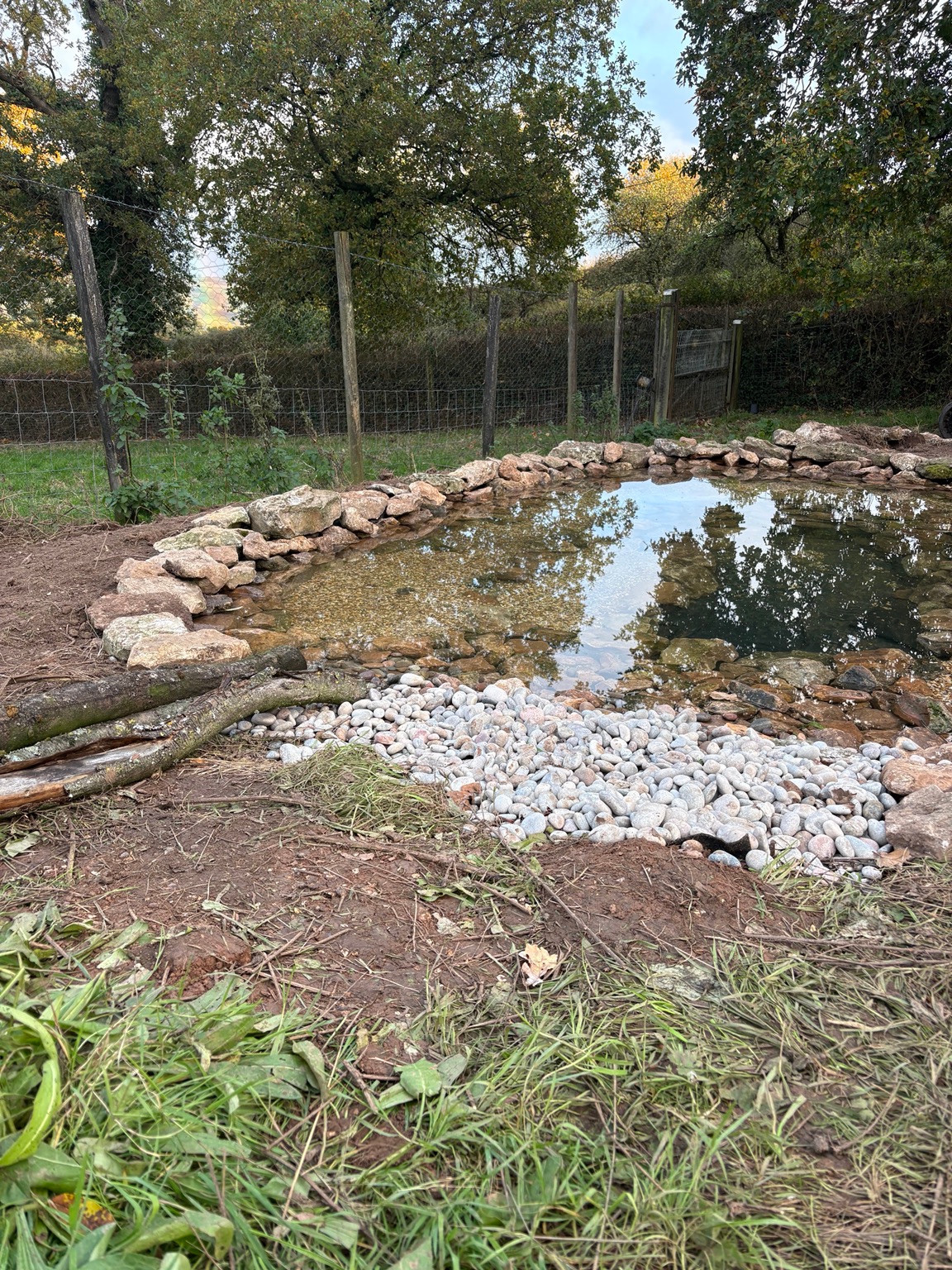
Setting out before excavation helped fit those elements into the site. A gentle pebble-and-gravel beach forms the transition from bank to water, with shallower planted areas around the pond.
From excavation to planting
We excavated and shaped the pond, installed protective underlay and an EPDM liner, then completed the stone edging and planting. Most of the construction was completed in one day, followed by a half-day return to finish the edging and planting.
Construction footage followed by completion photographs of the pond and its log-covered hibernaculum.
An excavated hibernaculum beside the pond
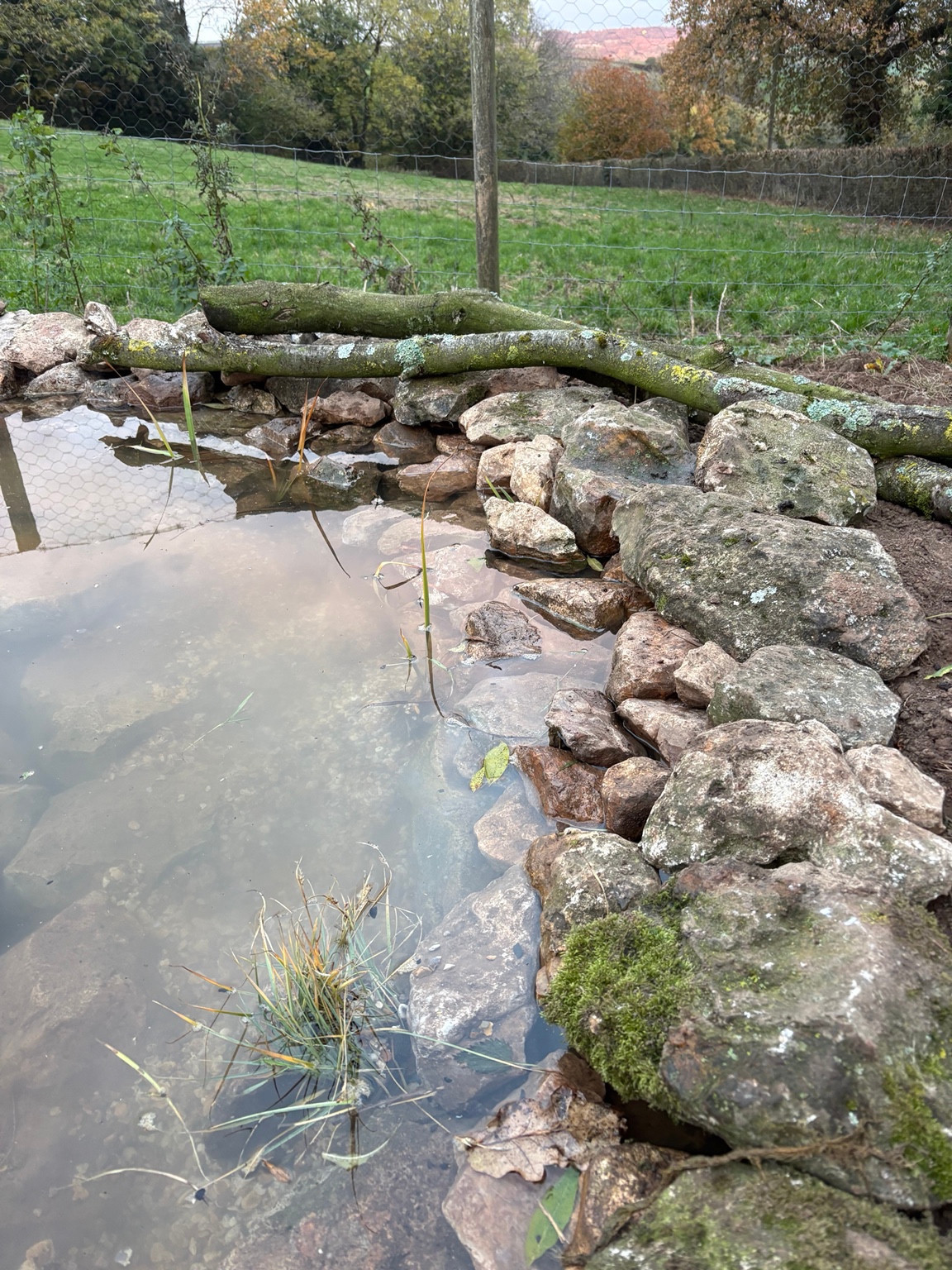
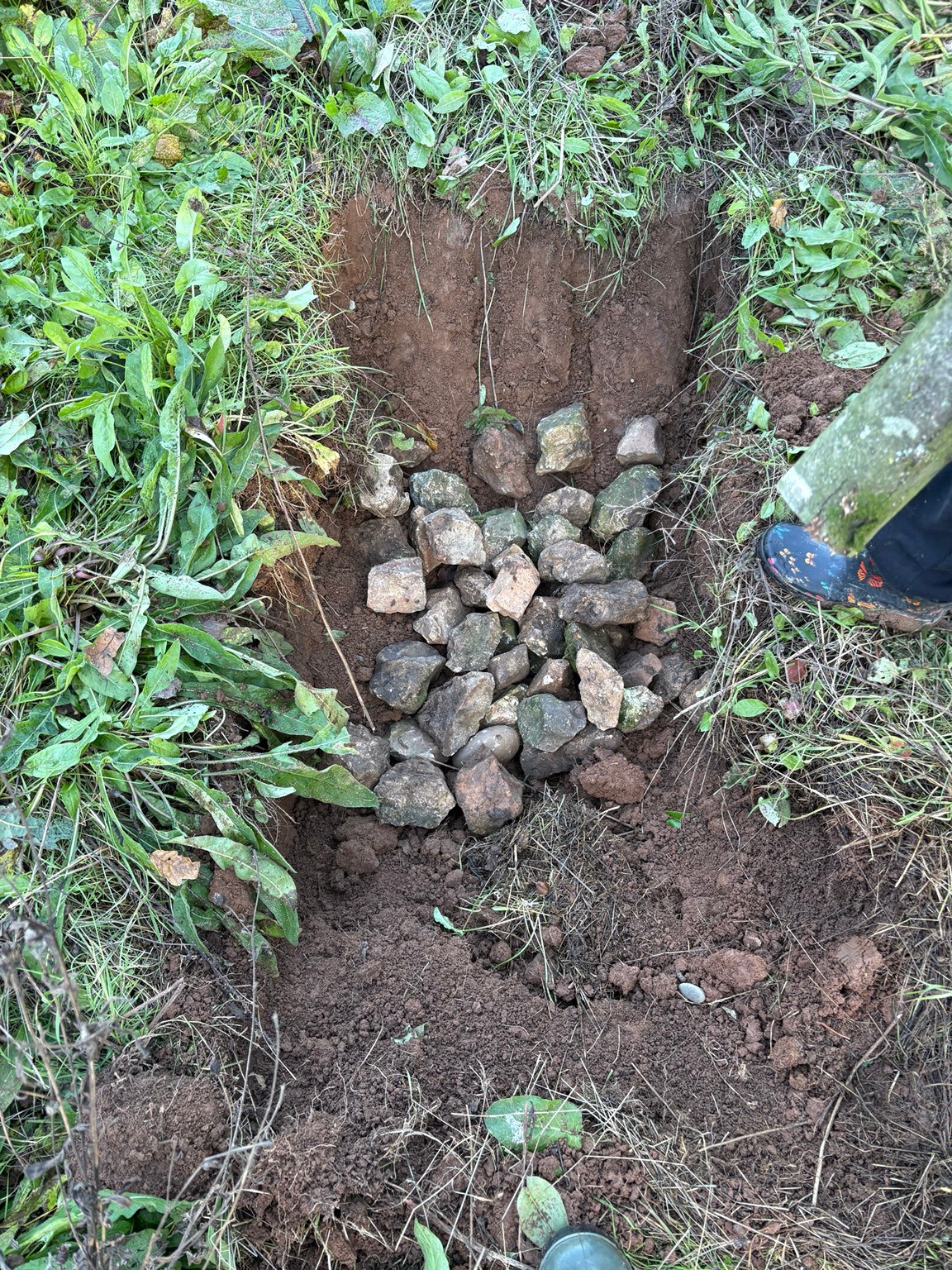
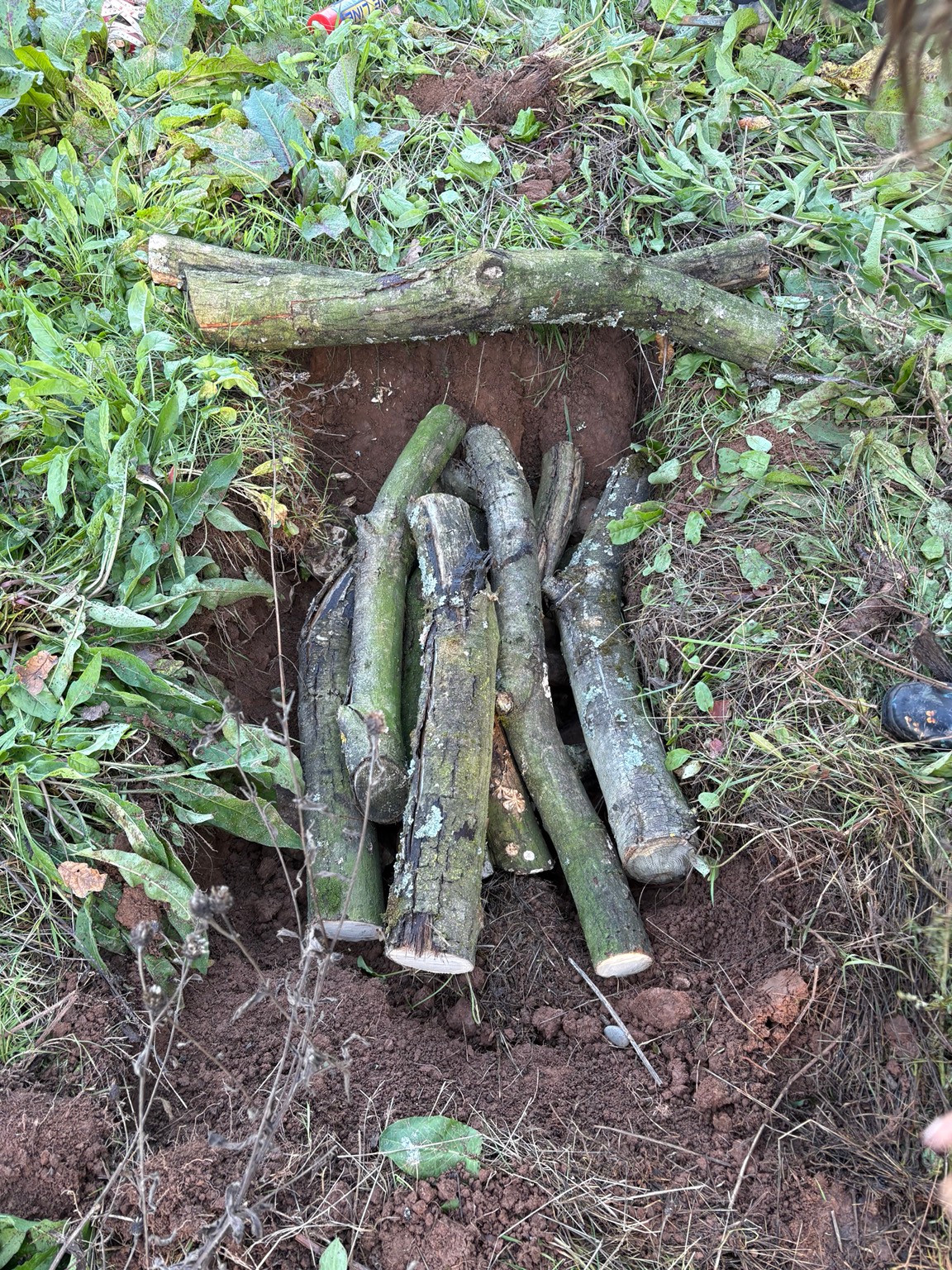
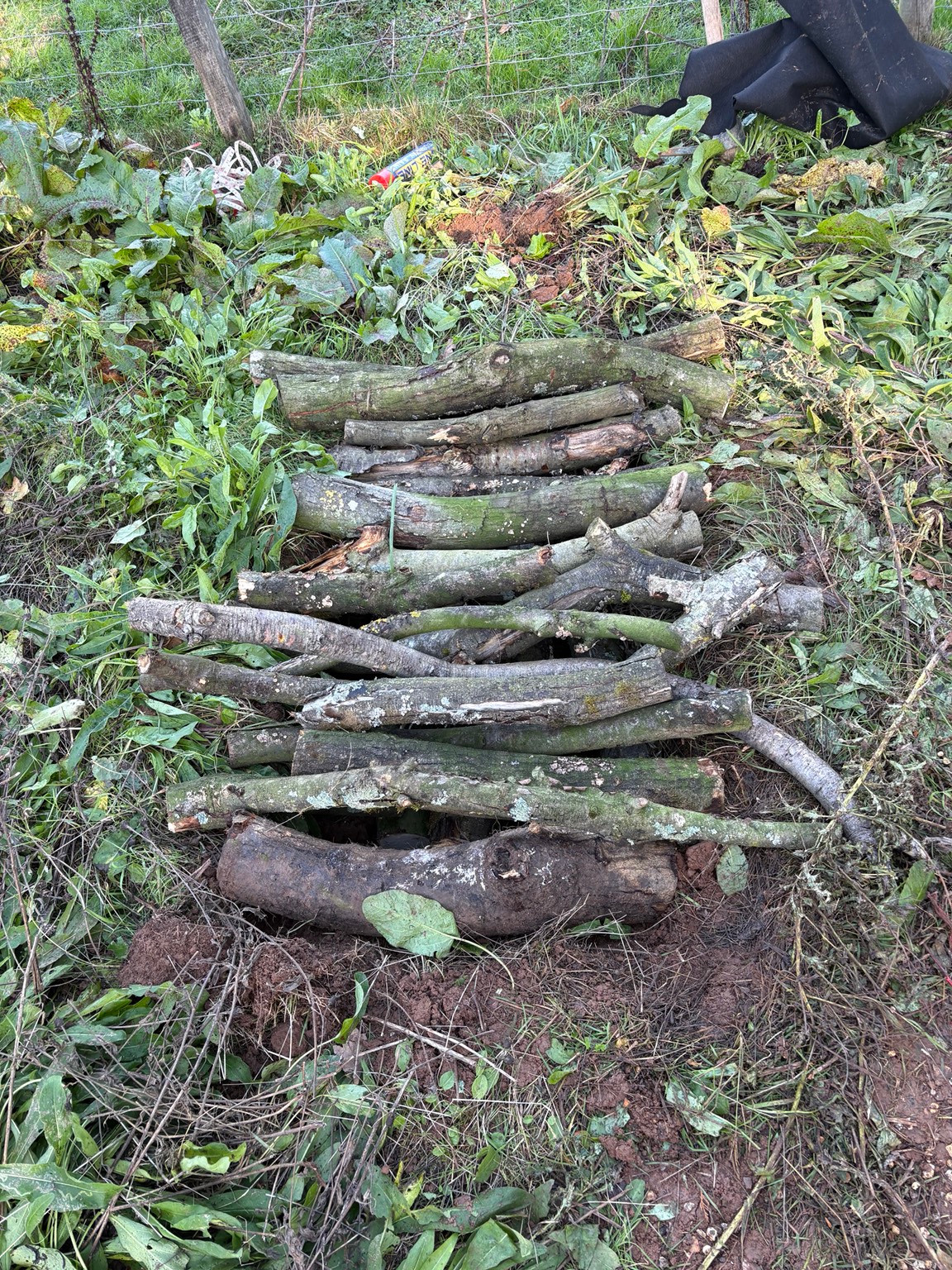
We dug the hibernaculum into the ground, placed stones within the excavation and covered the stone structure with wood. Its below-ground construction is an important part of the feature.
A hibernaculum is a purpose-built refuge intended to offer sheltered spaces for wildlife. Including one alongside the pond extends the habitat work beyond the water and planted margins.
Find out more about hibernacula for wildlife ponds.
A closer look at the finished pond
A walk around the completed pond, showing the shallow stone beach, planted margins and log habitat beside the water.
Planning a wildlife pond in Devon?
Send us a few photographs and details of your site and what you would like to achieve. We can help identify the practical next step for a new pond or wider habitat improvements.