Wildlife Pond & Wildflower Meadow Creation in Devon
Pond and meadow habitat · Devon
From mown grass to connected wildlife habitat
A new wildlife pond, planted margins and wildflower meadow were designed as one landscape—creating water, shelter and seasonal food across the site.

One project, several connected habitats
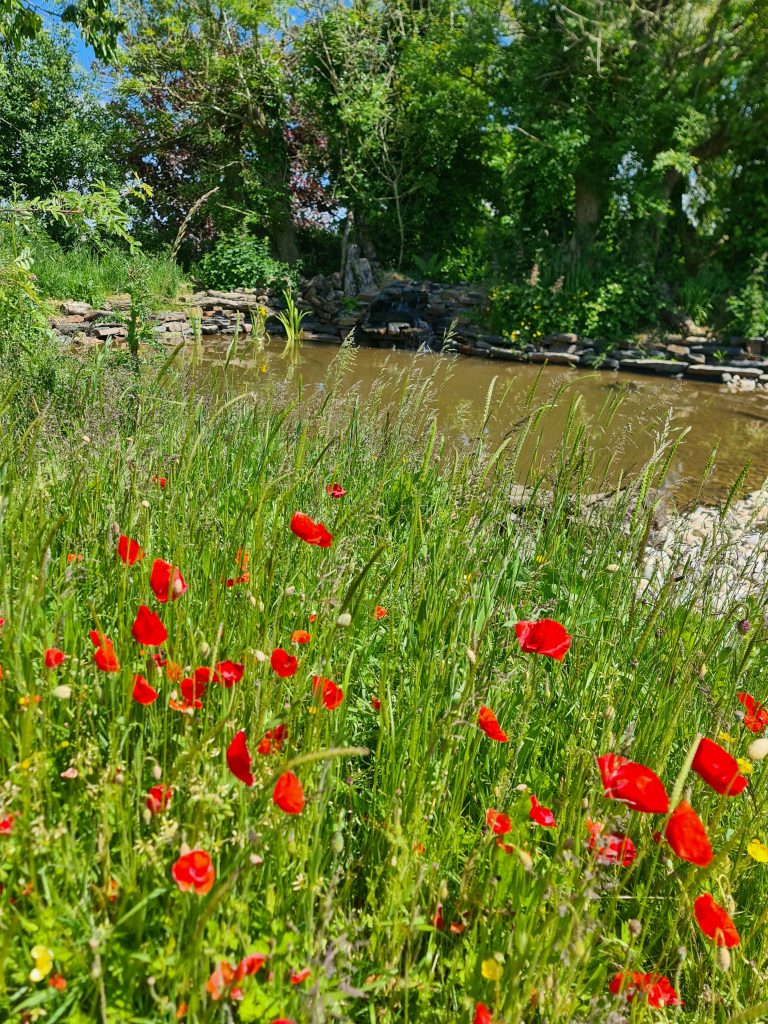
Open water, shallow margins, stone, aquatic planting and meadow each support different parts of the site’s wildlife.
Project overview
A blank lawn became a more varied and useful landscape
The site began as an open grassy area. The client wanted a substantial wildlife pond and surrounding meadow that would support amphibians, aquatic invertebrates, pollinators and birds while creating a strong natural feature within the wider landscape.
Rather than treating the pond and meadow as separate additions, the project was shaped around how water, planted margins, stone, soil and flowering habitat could work together.
← View all projectsThe brief
Build a landscape that offered more than open water
The available space allowed the pond profile and the surrounding terrestrial habitat to be planned together.
- Varied pond depths and broad planting shelves
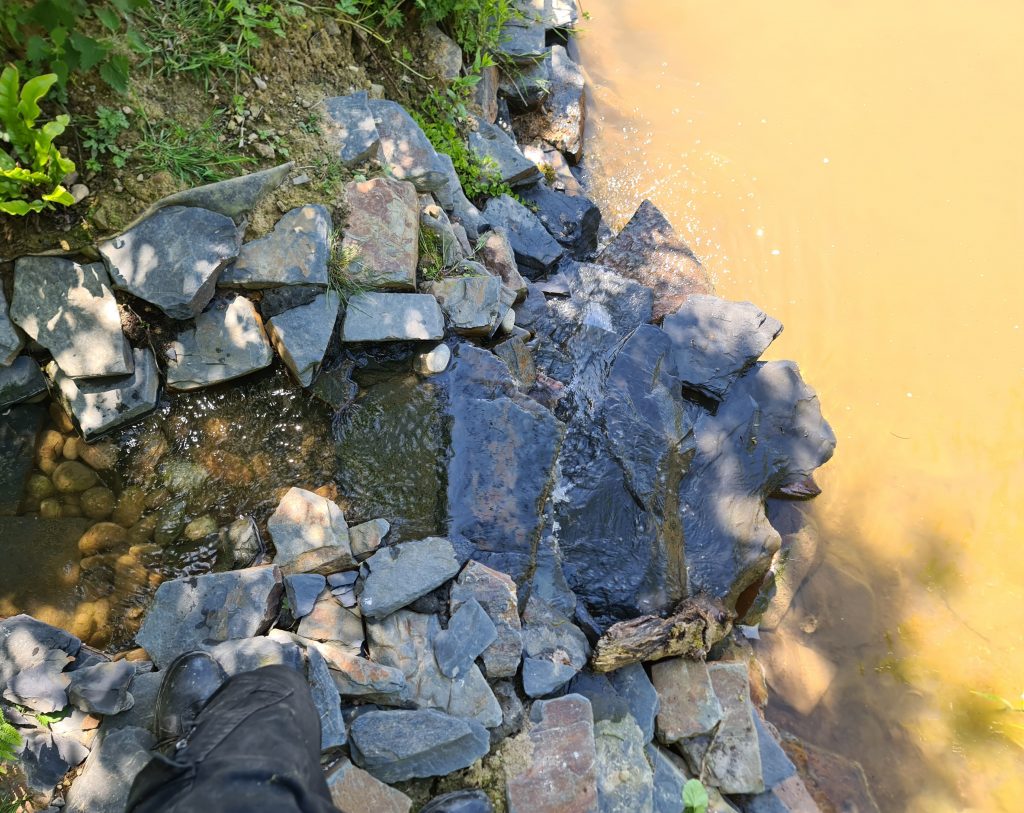
- A gently graded pebble access point for wildlife
- Natural stone edges and a flowing water feature
- Raised marginal planting beds using excavated material
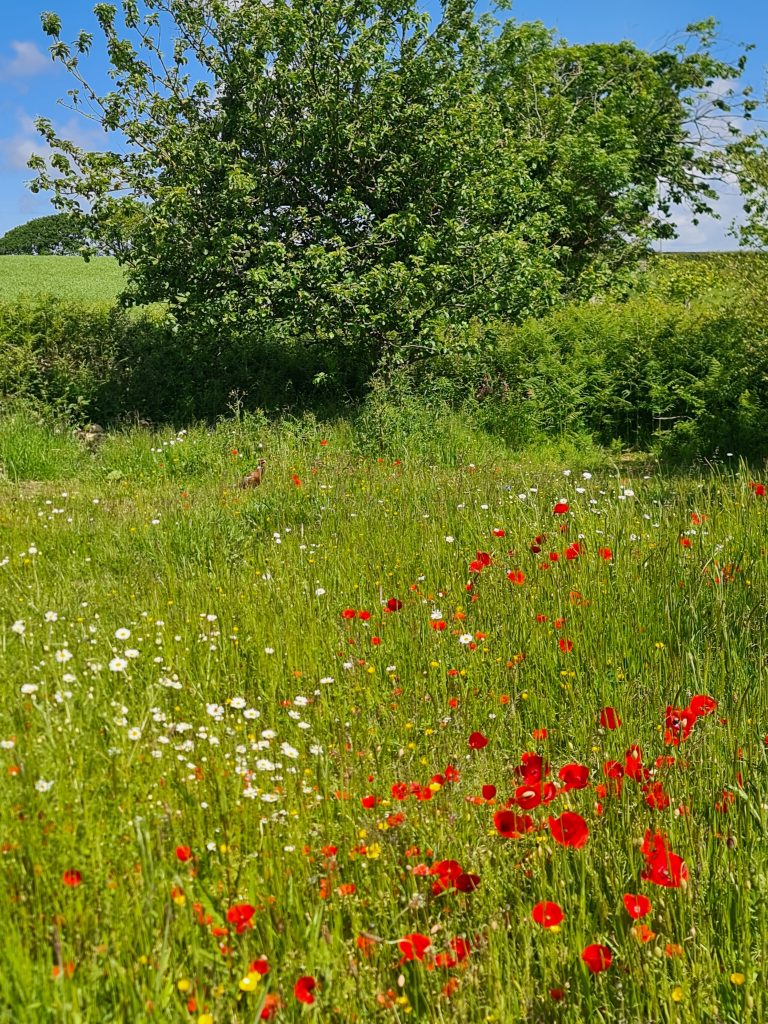
- A wildflower meadow supporting pollinators around the pond


Construction and establishment
Use the site’s levels, soil and stone to create variety
The basin and surrounding land were shaped to create distinct aquatic and terrestrial zones, with construction decisions supporting both habitat value and a natural connection to the setting.
Depth and shallow access
The basin included deeper water, broad shelves and gently graded access for wildlife.
Local slate and water movement
More than seven tonnes of local slate formed naturalistic edges and the flowing feature.
Soil became habitat
Excavated material helped form raised beds and transitions into the surrounding meadow.
Aquatic and meadow planting
Marginal plants and a wildflower mix were introduced to create cover, nectar and seasonal structure.
The result
Wildlife began using the new habitat as it established
On a return visit, newts were present, dragonflies were breeding and pollinators were working across the emerging wildflowers. The site had become a connected water-and-meadow habitat rather than a single isolated feature.
- Permanent open water and varied marginal habitat
- Breeding and feeding opportunities for amphibians and invertebrates
- Seasonal nectar and shelter through the wildflower meadow
- Improved water retention within a more varied landscape
- A natural space that continues to mature over time
Habitat response
Early colonisation showed the value of joined-up design
Newts, breeding dragonflies and pollinators were already using the pond-and-meadow habitat during establishment.
Planning a pond, wetland or wider habitat scheme?
Start with the land and what you want it to achieve
Share the location, approximate area, photographs and any plans or funding information already available. We will help identify the most useful next step.