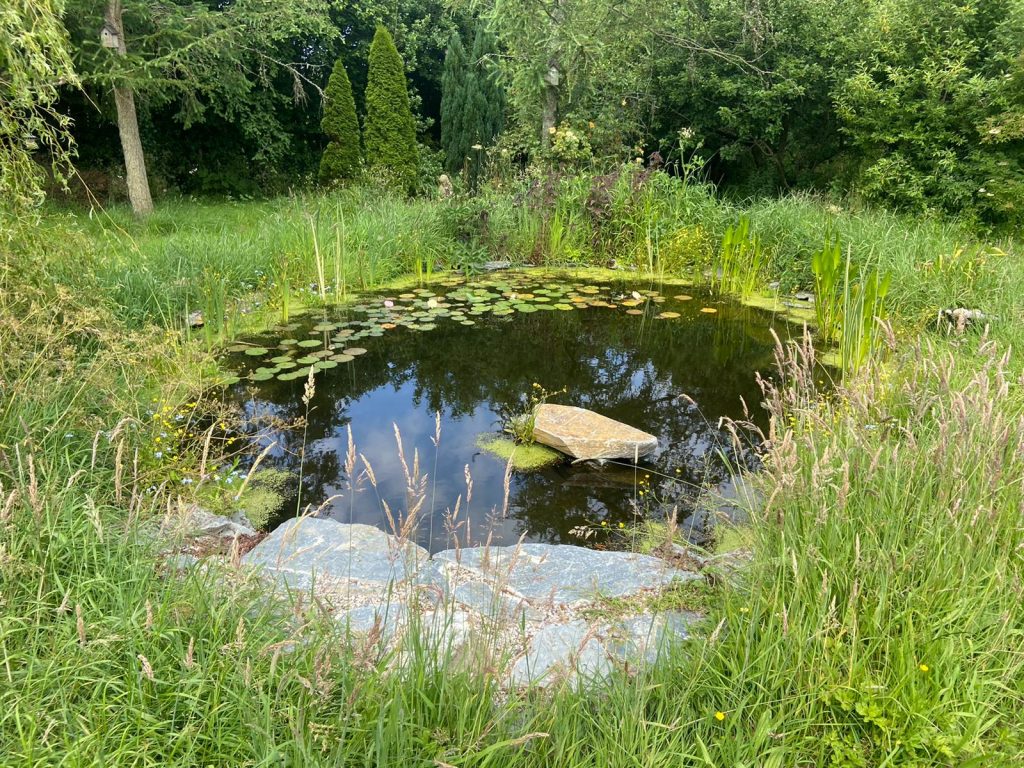
Wildlife Ponds for Small Gardens: A Practical DIY Guide
You do not need a large garden to create useful freshwater habitat. A carefully placed small pond can support insects, birds and amphibians while adding movement and seasonal interest to the garden.
This is a practical guide for straightforward DIY wildlife ponds. If access, drainage, structures or detailed landscaping make the project more complex, see our guide to professional small-garden pond design.
Choose a suitable position
- Aim for a place with some sun but not relentless full-day heat.
- Avoid digging through major tree roots or directly beneath heavy leaf fall.
- Keep dirty driveway, yard or field runoff out of the pond.
- Check for buried cables, pipes and drains before excavation.
- Decide where overflow can travel safely during intense rain.
Use a varied profile
Mark the shape with a hose or rope before digging. Include broad shallow margins, at least one gently sloping exit and a deeper central area. Avoid a neat bowl with steep sides: it offers less habitat, makes edging harder and can be unsafe for animals.
In a very small pond, depth is less important than variation and reliable water retention. Keep the finished level low enough that overflow does not run towards buildings or neighbouring property.
Protect the liner properly
Remove sharp stone, roots and construction debris. Use suitable underlay beneath a pond-grade liner and leave generous material around the edge until the pond has filled and settled. Do not trim the liner too early.
Hide and protect the edge with turf, soil, gravel or stone without allowing surrounding soil to wick water out. Keep heavy rocks supported so they cannot slide into the pond or puncture the liner.
Add water and plants carefully
Rainwater is useful where it can be collected cleanly. If tap water is used, allow the pond to settle before adding plants and avoid unnecessary chemical treatments.
Choose plants for the actual water depths available. A few well-placed marginals and submerged plants are more useful than crowding every shelf. Do not add fish if wildlife is the priority, and allow frogs, newts and insects to colonise naturally.
Include habitat outside the water
Rough grass, low planting, logs, stone and a small hibernaculum help wildlife move between the pond and the wider garden. Avoid surrounding the entire pond with hard paving or close-cut lawn.
Common mistakes
- Making every edge steep.
- Allowing nutrient-rich runoff or lawn fertiliser to enter.
- Using invasive aquatic plants.
- Adding fish to a pond intended mainly for amphibians and invertebrates.
- Expecting instantly clear water or repeatedly emptying a new pond before it settles.
- Failing to plan a safe overflow.
Maintenance
Remove excessive leaves and thin vigorous plants in stages rather than stripping the pond bare. Leave removed vegetation beside the pond briefly so small animals can return, then compost it safely away from the water. Top up only when necessary and investigate persistent water loss rather than assuming evaporation.
Planning a wildlife pond?
Send the location, photographs, approximate dimensions and access information. We will review the site details and explain the most useful next step.