Wildlife Pond Creation For Homes
We design and build natural wildlife ponds for gardens and landowners including farms, estates, schools, community spaces and rewilding projects across Devon, Dartmoor and Cornwall.
A well designed wildlife pond can quickly become one of the most valuable habitats on a site. It can support frogs, newts, dragonflies, birds, bats, pollinators and a wide range of aquatic invertebrates, while also creating a beautiful natural feature that feels settled within the landscape.
At SAS Aquatics, we create wildlife ponds that are practical to build, easy to care for and designed around long term habitat value. Every pond is shaped around the site, the soil, the water source, the intended use and the wider landscape around it.
Whether you want a small garden wildlife pond, a larger natural pond, a farm pond, a rewilding pond or a wetland style habitat feature, we can help from initial advice through to excavation, lining, planting and aftercare.
Natural ponds designed for wildlife
Wildlife ponds are different from ornamental ponds. The aim is not just to hold water, but to create a balanced living habitat.
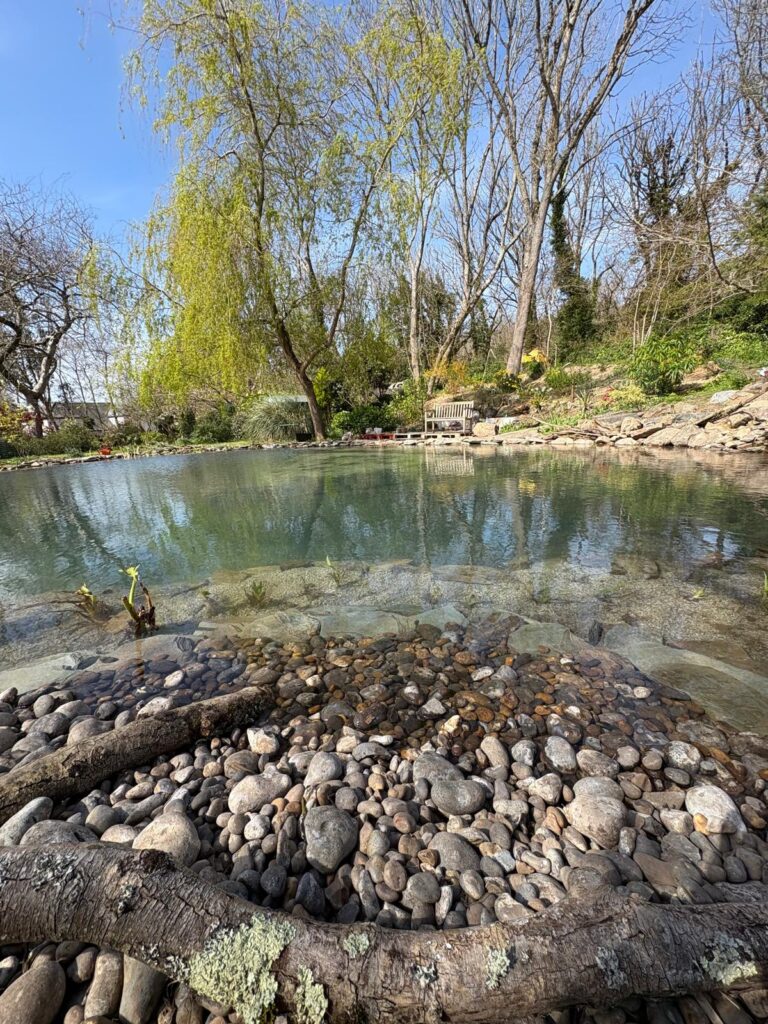
A good wildlife pond usually includes shallow margins, varied depths, planted shelves, gently sloping edges, native aquatic plants, stone, deadwood and safe access points for wildlife. These details are what allow the pond to become useful to amphibians, insects, birds and mammals.
We design ponds to look natural from the start, but also to improve with time as plants establish and wildlife moves in.
Our wildlife pond creation work can include:
• Pond design and layout
• Excavation and shaping
• Wildlife friendly shelves and margins
• EPDM, GCL or clay based lining options
• Native aquatic and marginal planting
• Stone, gravel and deadwood habitat features
• Overflow and water level considerations
• Planting support and aftercare
• Seasonal maintenance where needed
Wildlife ponds for gardens
A garden wildlife pond can transform a space. Even a relatively small pond can bring in frogs, newts, dragonflies, birds and beneficial insects when it is designed properly.
For residential gardens, we focus on creating ponds that look beautiful, feel natural and are manageable long term. This may include a small natural pond, a larger feature pond, a pond and wildflower area, or the restoration of an existing tired pond into something more wildlife rich.
Garden wildlife ponds can be designed with or without pumps, depending on the style of pond, water volume, planting, sunlight, fish presence (though best avoided) and the level of water clarity expected.
Where a pond is intended primarily for wildlife, we normally favour a plant led system with good margins, plenty of habitat structure and minimal disturbance.


Wildlife ponds for landowners, farms and estates
Landowner wildlife pond projects may include:
• New wildlife ponds in pasture or wet fields
• Rewilding ponds
• Seasonal ponds and scrapes
• Farm ponds
• Pond and wetland mosaics
• Water retention features
• Habitat restoration around existing ponds
• Ponds linked with wider biodiversity plans
• Support for grant, planning or habitat creation documents
For larger sites, the best result often comes from looking at the wider landform, natural drainage, soil conditions and existing wet areas before deciding where a pond should go.
Choosing the right liner or sealing method
Not every wildlife pond should be built the same way. The right lining method depends on the soil, water table, pond size, budget, ground conditions and ecological aims.
Common options include:
EPDM pond liner
EPDM is often a practical choice for smaller garden wildlife ponds, especially where the ground is free draining and a reliable flexible liner is needed.
It can work very well when protected properly and covered with suitable edging, planting zones, stone, gravel or soil.
Geosynthetic clay liner
Geosynthetic clay liner, often called GCL, can be a strong option for larger wildlife ponds, wetlands and rewilding projects where a more natural clay based sealing system is preferred.
GCL uses bentonite clay within a geotextile layer. When hydrated and correctly installed with enough cover material, the clay swells and forms a low permeability barrier.
This can be particularly useful for larger ponds above the water table, where a standard rubber liner may be more visually intrusive or more vulnerable if left exposed.
Bentonite and clay based sealing
On some sites, clay based sealing may be appropriate. This can include compacted clay or bentonite clay methods, depending on the soil and project requirements.
Clay based options can suit naturalistic ponds, farm ponds and rewilding projects, but they need suitable ground conditions, careful installation and realistic expectations.
We will advise on the most appropriate option for your site rather than pushing one standard system for every pond.
Wildlife pond planting
Planting is one of the most important parts of a successful wildlife pond.
The right mix of aquatic and marginal plants helps support wildlife, stabilise edges, soften the appearance of the pond and improve natural balance. Planting also helps reduce excess nutrients and provides cover, egg laying sites and nectar sources.
Wildlife pond planting may include:
• Marginal plants for shallow shelves
• Oxygenating plants
• Floating leaved plants
• Wetland edge plants
• Native or wildlife friendly species
• Planting for pollinators
• Planting to soften liner edges
• Planting to connect the pond with the surrounding landscape
We can supply and plant suitable aquatic and marginal plants as part of a new pond build, pond refurbishment or separate planting visit.
Wildlife features and natural details
Small design details make a big difference to how well a pond works for wildlife.
Depending on the project, we may include:
• Shallow beach areas for wildlife access
• Gently sloping margins
• Varied depths
• Stone piles and crevices
• Deadwood and logs
• Gravel and cobble edges
• Planted shelves
• Boggy margins
• Nearby wildflower areas
• Safe exit routes for mammals and amphibians
The aim is to create a pond that does not look dropped into the landscape, but feels as though it belongs there.
Do wildlife ponds need pumps or filters?
Many wildlife ponds do not need pumps or filters if they are designed correctly, stocked appropriately and planted well.
However, every pond is different.
Some garden ponds, fish ponds or mixed use ponds may benefit from discreet circulation, a pump, a UV unit, a skimmer or filtration equipment, especially where the customer wants clearer water or where fish are present.
For true wildlife ponds, we usually try to keep systems as simple and natural as possible. If equipment is needed, we aim to specify it carefully so it supports the pond without dominating it.
Electrical supplies must always be installed by a qualified electrician.
How much does a wildlife pond cost?
Wildlife pond costs vary depending on size, depth, access, spoil handling, liner choice, stone, planting, machinery, water source, ground conditions and finishing detail.
As a guide:
• Small garden wildlife ponds often start from around £5,000
• Larger garden wildlife ponds commonly start from around £15,000 -£30,000
• Larger landowner, farm, estate or rewilding ponds can range from around £10,000 to much larger project budgets depending on scale and complexity
We provide clear estimates once we understand the site, access, size, finish and design aims.
For larger or more complex projects, a site visit is usually the best way to assess what is realistically needed.
Our wildlife pond creation process
1. Initial enquiry
We start by understanding what you want to create, where the pond will go and what matters most to you. Photos, videos, measurements and a rough idea of budget are very useful at this stage.
2. Site visit or remote review
For smaller projects, we may be able to give early guidance from photos and measurements. For larger ponds, difficult access, planning sensitive sites or landowner projects, a site visit is normally recommended.
We look at access, levels, ground conditions, water source, drainage, spoil movement, planting opportunities and how the pond will sit in the landscape.
3. Design and estimate
We then shape a practical design approach and provide an estimate or quote. This may include size, depth, liner method, planting, machinery, materials and expected timescale.
4. Excavation and shaping
The pond is excavated and shaped with the correct shelves, margins, slopes and depths. This stage is important because the final form of the pond affects both appearance and habitat value.
5. Lining or sealing
The chosen liner or sealing method is installed according to the site and specification. This may be EPDM, GCL, clay based sealing or another appropriate method.
6. Edging and habitat structure
We then build in the edges, shelves, stone, gravel, deadwood and other natural details that help the pond blend into the site and support wildlife.
7. Planting
Aquatic and marginal plants are added to begin the process of establishing a balanced habitat.
8. Aftercare
New wildlife ponds change a lot during the first year. We can provide advice, planting support and maintenance if needed while the pond settles and matures.
Wildlife pond restoration
If you already have an existing pond, restoration may be better than starting again.
We can restore tired, leaking, overgrown or poorly designed ponds by improving the shape, edges, liner, planting, water quality and habitat structure.
Wildlife pond restoration may include:
• Pond clearance
• Desilting
• Liner repair or replacement
• Re shaping shelves and margins
• Removing poor edging
• Replanting
• Improving wildlife access
• Adding stone, gravel or deadwood
• Reducing nutrient build up
• Equipment checks or upgrades where appropriate
If your current pond has good structure or existing wildlife value, restoration can often be the most sensitive and cost effective option.
Planning, grants and larger habitat projects
Most small garden wildlife ponds do not need planning permission, but larger ponds, engineering works, ponds near protected habitats, watercourses, public rights of way or designated landscapes may need more care.
We can support pond and wetland projects with practical information, including satellite based location images, project descriptions, ecological purpose, landscape integration, water source context and supporting wording for low impact habitat creation projects.
Technical drawings are not included unless separately arranged.
For landowners, farms, estates and community projects, we can also support grant application wording and habitat focused project descriptions.
Why choose SAS Aquatics?
SAS Aquatics specialises in wildlife ponds, wetlands, natural swimming ponds and pond restoration across Devon and Cornwall.
We combine practical construction experience with a strong understanding of pond ecology, planting, water quality and long term pond care.
Clients choose us because:
• We specialise in nature based pond and wetland work
• We understand both construction and aquatic ecology
• We work across gardens, farms, estates and larger landscapes
• We can advise on liners, planting, water quality and maintenance
• We build ponds that are designed to improve with time
• We offer practical, honest advice rather than one size fits all solutions
• We are fully insured and VAT registered
Areas we cover
We are based near Dartmoor and work across Devon and Cornwall.
Common areas include:
• Dartmoor
• Exeter
• Plymouth
• Newton Abbot
• Bovey Tracey
• Moretonhampstead
• Tavistock
• Okehampton
• Totnes
• South Hams
• Mid Devon
• North Cornwall
• West Cornwall for suitable projects
For larger wildlife pond, wetland, natural swimming pond and rewilding projects, we may travel further by arrangement.
Start your wildlife pond project
If you are planning a wildlife pond, natural pond, pond restoration or larger habitat creation project, we can help you create something that works for both people and wildlife.
Contact SAS Aquatics to discuss your site, ideas and next steps.
Wildlife pond builder near me?
Find out how we can help you, by speaking to one of our pond specialists today.
How much does a wildlife pond cost to build?
Garden wildlife ponds often start from around £5,000 .Larger wildlife ponds, natural ponds and rewilding ponds commonly start from around £15,000 Final cost depends on size, access, liner type, planting, materials and spoil handling.
Do I need planning permission for a wildlife pond?
Many small garden wildlife ponds do not need planning permission, but larger ponds or projects near watercourses, public rights of way, protected habitats or sensitive landscapes may need advice. If in doubt, it is worth checking before work starts.
What is the best liner for a wildlife pond?
There is no single best liner for every pond. EPDM works well for garden ponds. Geosynthetic clay liner can suit larger wildlife ponds, wetlands and rewilding projects. The right choice depends on the site, soil, water table, pond size and intended finish.
Can you build a wildlife pond without a pump?
Yes. We work with homeowners, landowners, farms, estates, schools, community projects and organisations. Larger projects may include wildlife ponds, wetland features, scrapes, pond restoration and rewilding focused water bodies.
Can you restore an old pond instead of building a new one?
Yes. Pond restoration is a large part of our work. If an existing pond has good structure, historical value or wildlife value, refurbishment may be better than starting again.
Do wildlife ponds attract mosquitoes?
A healthy wildlife pond usually becomes self regulating. Dragonfly larvae, beetles, amphibians and other predators help control mosquito larvae naturally. Good planting and balanced design reduce the risk of stagnant, poor quality water.
What plants should a wildlife pond have?
A good wildlife pond usually includes a mix of marginal plants, oxygenating plants, floating leaved plants and surrounding damp ground or pollinator friendly planting. The exact mix depends on pond size, depth, sunlight and the type of habitat you want to create.
How long does a wildlife pond take to establish?
A new wildlife pond can attract wildlife quickly, sometimes within weeks. However, planting and ecological balance usually take a full growing season or more to settle properly. Most wildlife ponds improve significantly over the first one to three years.
Do you offer aftercare?
Yes. We can provide seasonal maintenance, planting support, pond checks, equipment checks and practical advice to help the pond establish and remain healthy.