How much does a professionally built pond cost in Devon & Cornwall?
The cost of a professionally built pond depends less on its surface area than many people expect. Access, excavation volume, ground conditions, water retention, spoil, stone, planting, filtration, levels and the way the finished pond connects to the wider site can all change the scope substantially.
Typical professional pond project budgets
| Project type | Typical budget guidance excluding VAT | What usually changes the figure |
|---|---|---|
| Small professionally built wildlife pond | £5,000–£12,000+ | Access, excavation, liner and underlay, edge materials, planting and reinstatement. Very simple or client-assisted projects can sometimes be less. |
| Larger garden or landscape wildlife pond | £12,000–£35,000+ | Excavation volume, rock and soil movement, stream or waterfall work, planting, access and finish. |
| Farm, estate or larger rural pond | £15,000–£75,000+ | Scale, machinery, water source, sealing system, overflow, spoil, access, habitat features and permissions. Large or difficult sites can exceed this range. |
| Wetland, scrape or connected habitat project | £10,000–£60,000+ | Hydrology, number of features, earthworks, water control, planting, specialist input and access. Smaller grant or community schemes may follow a more limited scope. |
| Pond refurbishment or leak repair | £5,000–£30,000+ | Whether the cause is known, drain-down, wildlife or fish handling, liner or structure, silt, edges, access and reinstatement. |
| Machinery-led desilting or larger-water restoration | £12,000–£50,000+ | Silt volume, dewatering, access, disposal or retention route, bank and inlet or outlet repairs, ecology and weather. Large lakes can cost considerably more. |
| Fully natural swimming pond | £40,000–£100,000+ | Swimming area, regeneration zone, excavation, structure, waterproofing, materials, planting and landscape integration. |
| Hybrid natural swimming pond or pool conversion | £60,000–£150,000+ | Structure, waterproof finish, circulation, filtration, pipework, electrics, access, existing-pool condition and landscaping. Complex or high-end schemes can reach £250,000+. |
Not sure which range applies? Send photographs, the location and approximate dimensions for a free initial review. Tell us about your site.
These ranges are deliberately broad. A pond that is easy to reach, uses suitable site-won material and has a straightforward retention solution can cost far less than a smaller pond requiring difficult excavation, imported stone, structural work, specialist filtration or off-site disposal.
What changes the scope in practice
Real projects show why useful budgets depend on more than surface area. These examples had very different combinations of access, water retention, earthworks, planting and finishing.
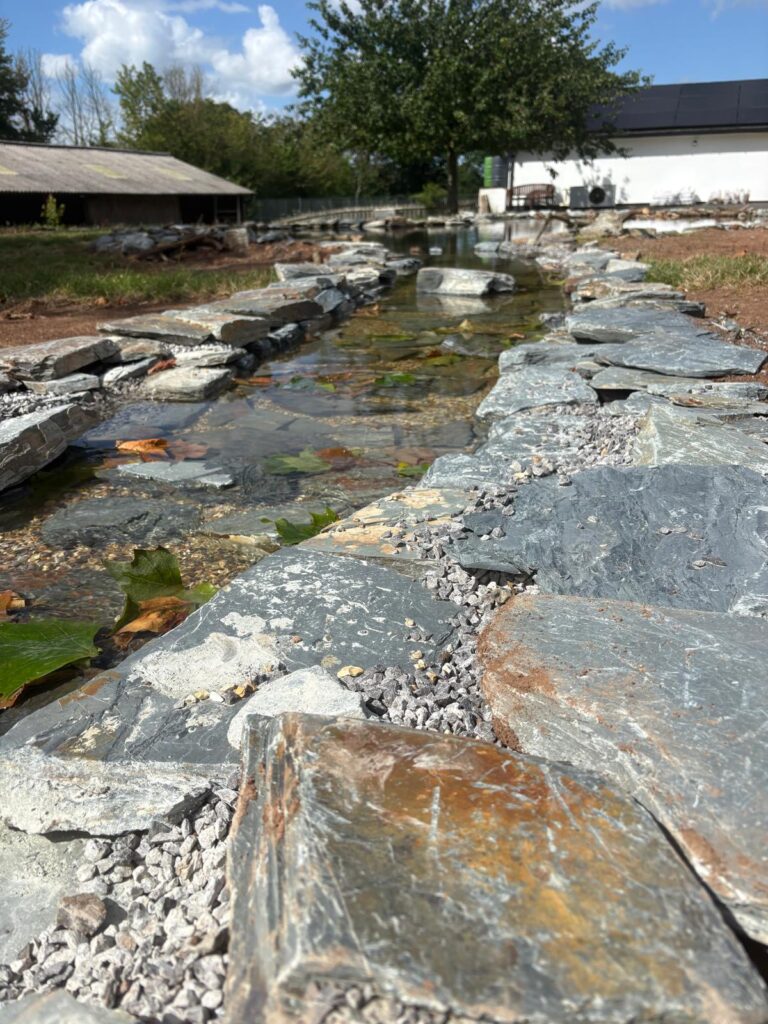
Wildlife pond and stream creation
A linked pond-and-stream system in Woodbury where shaping, levels, water movement and planted habitat all formed part of the work.
View the Woodbury project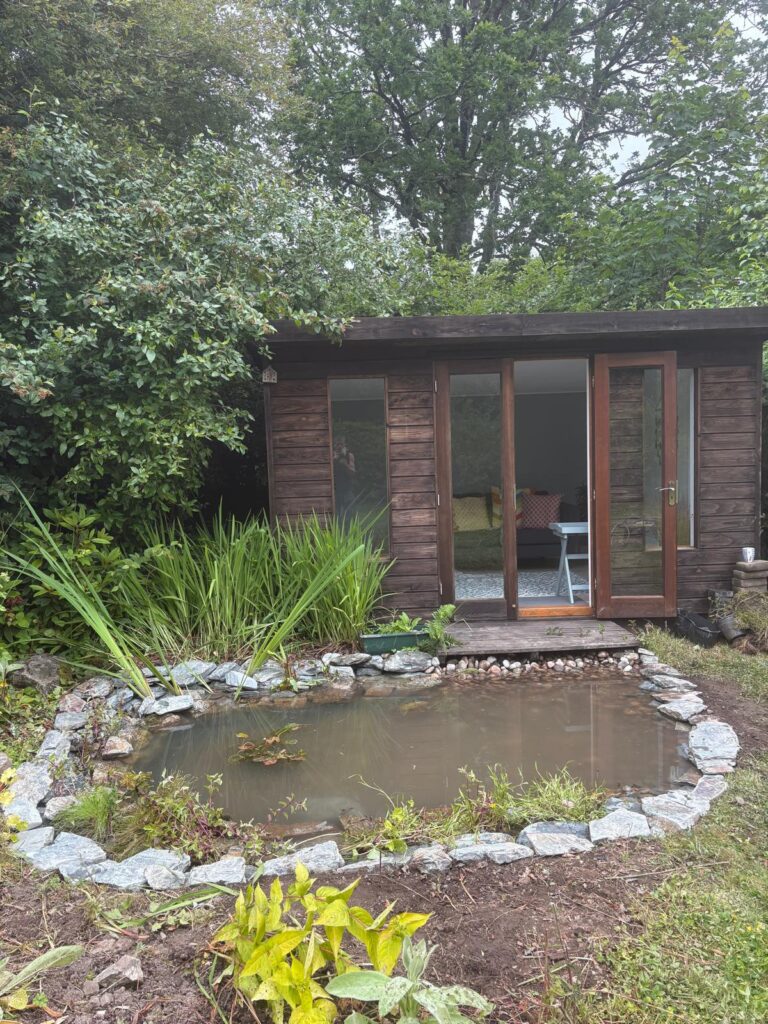
Leaking pond restoration
A heavily overgrown wildlife pond in Bovey Tracey restored through drain-down, relining, reshaping, edge work and planting.
View the Bovey Tracey project
Natural swimming pond
A substantial Cornwall project where the swimming area, planted regeneration, structure and water treatment shaped the overall investment.
View the Cornwall projectWhy pond prices vary
1. Access and mobilisation
The ability to get excavators, dumpers, stone, liners and other materials to the work area often matters as much as pond size. Narrow entrances, weak bridges, steep ground, long travel distances and protected surfaces increase handling and time.
2. Excavation and spoil
Depth increases volume quickly. The useful question is not only “How wide is the pond?” but “How much material must be excavated, separated, retained, shaped or removed?” Keeping suitable material on site is usually more economical than off-site disposal, but it must have a safe and lawful destination.
3. Ground and water retention
EPDM, GCL, bentonite, compacted clay and structural waterproofing have different preparation and protection requirements. The right method follows the soils, slopes, groundwater, intended water level and consequences of leakage.
4. Water, levels and overflow
Springs, runoff, drainage, groundwater, inlets and overflows can decide whether a pond works. Larger ponds and wetlands may need hydrology, levels, planning or environmental input before a build price is credible.
5. Edges, materials and planting
Stone, gravel, soil, planting zones, paths, beaches, decks and landscaping can form a substantial part of the finished cost. These details are also what make the pond look settled and function well over time.
6. Filtration, circulation and electrics
A wildlife pond may require no pump or filter. Koi ponds, ornamental ponds and hybrid natural swimming systems can require engineered circulation, filtration, pipework, controls and certified electrical work.
7. Existing pond problems
With restoration work, the liner, structure, buried services and full silt depth may remain hidden until the water is lowered. Sensible proposals state what is known, what will be investigated and how unforeseen work will be handled.
How the enquiry and assessment process works
Assessment credit: for qualifying construction or refurbishment work of at least £10,000 + VAT commissioned within six months, £250 + VAT of the standard assessment fee is credited against the project. This does not apply automatically to maintenance or smaller works.
Choosing a realistic budget
A useful early budget should include more than excavation and a liner. Depending on the project, allow for:
- Design, setting out and project management.
- Labour, contractors and machinery.
- Mobilisation, delivery, fuel, travel and accommodation.
- Liner, GCL, clay, underlay, pipework, pumps and filtration.
- Stone, gravel, soil, planting and habitat materials.
- Water management, pumping and temporary fish or wildlife arrangements.
- Silt, spoil and waste handling.
- Electrical, ecology, hydrology, planning or engineering input.
- Reinstatement, establishment and aftercare.
- Contingency for ground, weather and hidden conditions.
Frequently asked questions
Can you quote from photographs?
Photographs and dimensions are often enough to confirm whether a project is broadly suitable and to discuss a budget range. They are not always enough for a reliable construction quotation, particularly where ground, levels, leakage, access, silt or existing structures are uncertain.
Is a wildlife pond always cheaper than an ornamental pond?
Not necessarily. A simple wildlife pond may avoid pumps and filtration, but good profiling, varied margins, planting, stone and landscape integration still require skilled work and materials. A poorly built low-cost pond can be expensive to correct.
What is the cheapest sensible way to build a larger pond?
Use the site well: choose a location with workable access, understand the water source, minimise unnecessary excavation and keep suitable material on site where it can be safely used. Clay or unlined construction may be economical where the ground is genuinely suitable; it is not a shortcut where conditions are wrong.
Does the budget include VAT?
The ranges on this page exclude VAT. A formal estimate or quotation will show VAT clearly.
Do grants pay for pond and wetland work?
Some landowner, habitat and community projects may be eligible for funding, but schemes, criteria and deadlines change. Grant availability should be checked for the specific site and applicant rather than assumed. SAS Aquatics can provide project information or supporting documents where agreed.
Will you deduct the site assessment from the work?
For qualifying construction or refurbishment of at least £10,000 + VAT commissioned within six months, £250 + VAT of the standard assessment fee is credited against the project. Any different arrangement will be stated expressly in the proposal.
Get a site-specific view of your project
Send photographs, the location, approximate dimensions, access information and what you would like the pond, wetland or swimming pond to achieve. We will review the information and explain the most useful next step before you commit to a visit or design stage.
Tell us about your site