Garden Wildlife Pond Creation on Dartmoor
Garden wildlife pond · Dartmoor
A compact pond shaped around wildlife and the garden
Varied water depth, planted margins, local slate and a small stream-style waterfall turned a modest garden space into a useful new habitat.
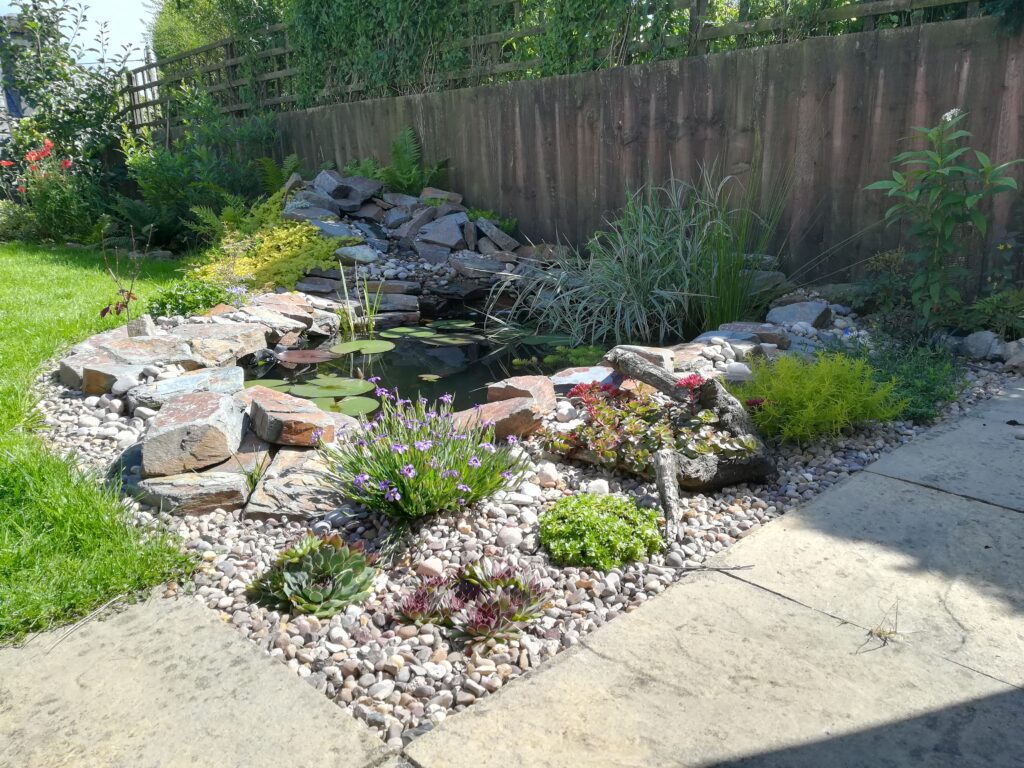
Wildlife arrived within the first season
Frogs, newts and pond insects were reported within twelve weeks of completion.
Project overview
Make a medium-sized garden feel richer, not busier
The client wanted a professionally built wildlife pond that looked natural within the existing Dartmoor garden. The available space was modest, so every level and edge needed to provide useful habitat without making the pond feel over-designed.
The solution combined a central deeper zone, shallow planted margins, local slate, a small stream-style waterfall and an alpine gravel area formed from the excavated soil.
← View all projectsDesign priorities
Use the available space carefully
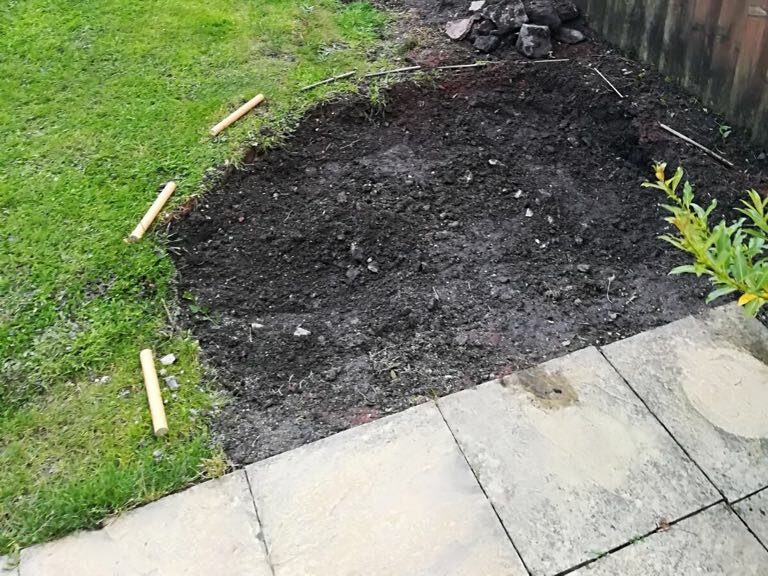
The pond position was chosen around views from the house, available light, nearby trees and how the new habitat would connect with the rest of the garden.
- A deeper central area providing more stable water
- Shallow shelves and gentle access for amphibians and birds
- Planting zones with cover above and below the waterline
- Local slate linking the pond to its Dartmoor setting
- A discreet pumped stream adding movement without dominating the pond


Construction approach
Build the pond profile before adding the detail
The waterbody was shaped first around depth, wildlife access and planted margins. Stone, circulation and finishing materials were then added to support that structure rather than disguise it.
Deep water and shelves
Hand excavation created a central deeper zone and marginal shelves at useful planting levels.
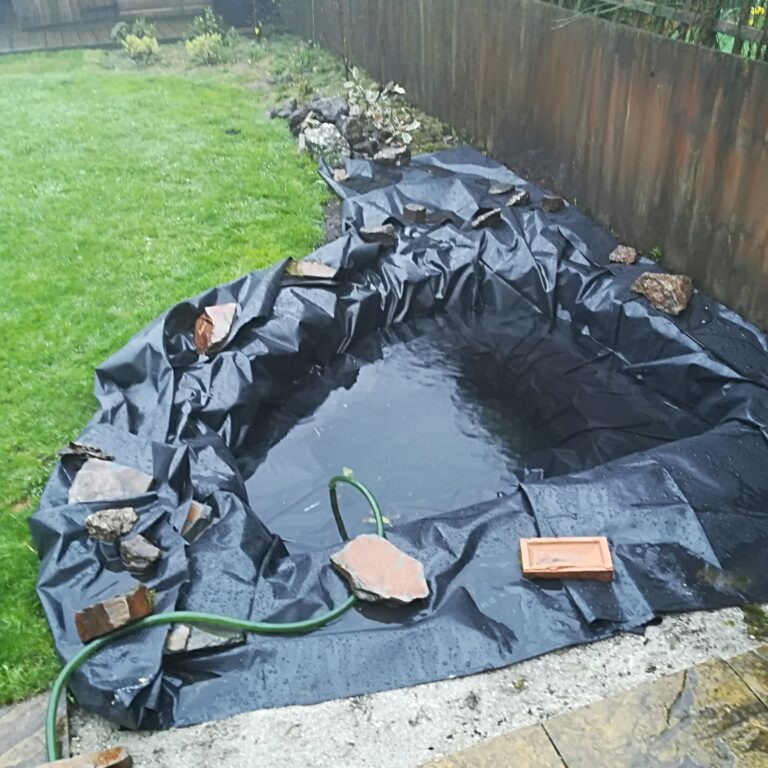
Protected flexible liner
The liner was fitted to the contours with additional material allowed for the stream feature.
Dartmoor slate and gravel
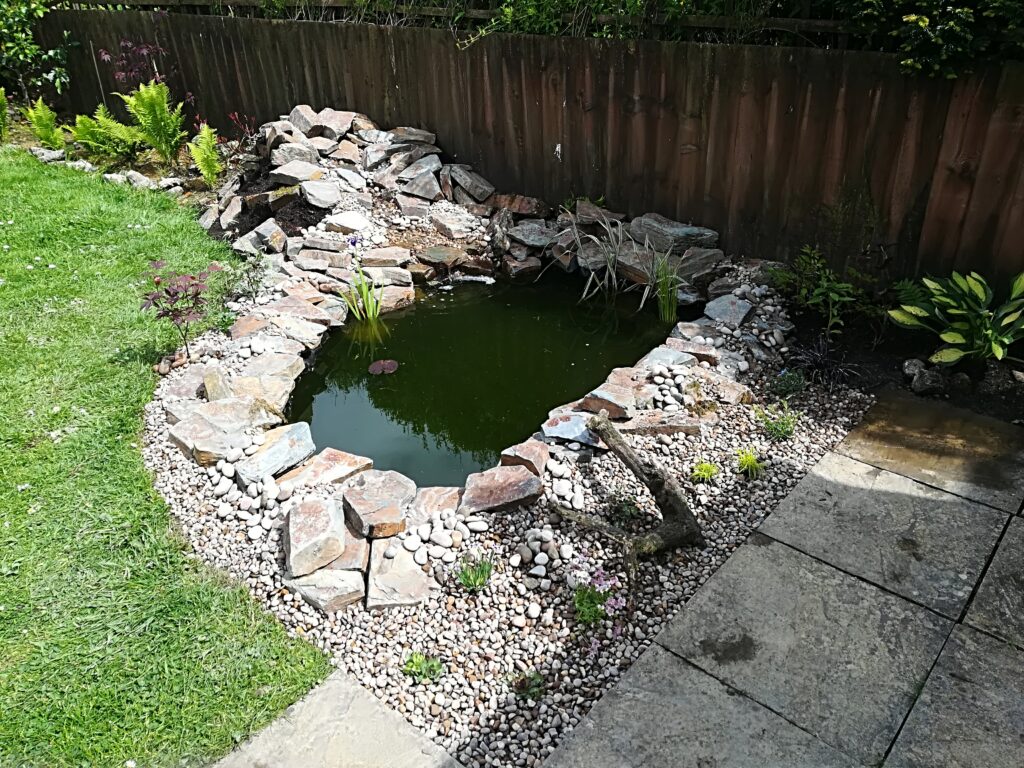
Local slate, cobbles and gravel formed a natural edge and concealed the construction.
Rainwater and planting
Collected rainwater and staged aquatic planting helped the new pond begin with a restrained nutrient load.

Twelve weeks later
The pond had already begun to feel established
Within three months, the client reported frogs, newts and pond insects using the water. Aquatic planting was developing around the margins and the pond was beginning to sit naturally within the garden.
- Open water with deeper refuge and shallow access
- Marginal planting supporting cover and emergence
- Local stone connecting the feature to the wider setting
- A small stream adding movement and sound
- An adjacent gravel garden using the excavated material
Why it worked
Useful habitat came from the profile, not unnecessary equipment
Depth, shallow access, planted cover and restrained materials gave wildlife several ways to use the pond from the outset.
Considering a garden wildlife pond?
Start with the garden and what you want the pond to achieve
Share photographs, the location, approximate size and the situation that feels closest—new pond, restoration or improvement. We will guide you to the most useful next step.