Pond Desilting & Restoration in Devon and Cornwall
Bring your pond back to life with expert desilting and restoration from SAS Aquatics
Over time, ponds naturally fill with silt, decaying leaves, and organic debris — gradually becoming shallower, murkier, and less hospitable to wildlife.
At SAS Aquatics, we specialise in pond desilting and restoration across Devon and Cornwall, helping landowners, estates, and conservation groups recover healthy, balanced aquatic habitats.
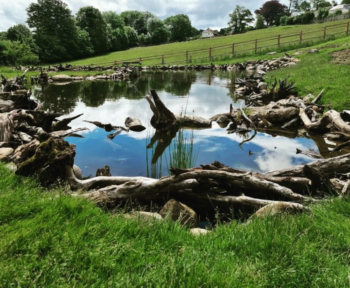
🌿 Why Pond Desilting Matters
Silt build-up is one of the most common causes of pond decline. As sediment accumulates, oxygen levels drop and water quality deteriorates — allowing algae and invasive plants to take over.
Regular or one-off desilting can:
- Restore your pond’s original depth and capacity.
- Improve water clarity and flow.
- Create healthier conditions for fish, amphibians, and aquatic plants.
- Prevent flooding and bank erosion.
- Extend the lifespan of your pond or lake for decades.
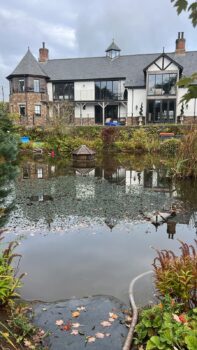
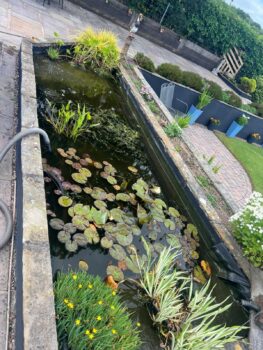
⚙️ How Our Pond Desilting Process Works
Every pond is unique, so we tailor our approach to your site’s ecology, size, and access. Our restoration process typically includes:
Assessment & Planning – We carry out an on-site survey to assess silt depth, water volume, and habitat sensitivity.
Drain-down or Partial Pumping – Water is managed safely, with temporary holding pools for fish, amphibians, and invertebrates.
Silt Removal – Using pond vacuums, pumps, or excavators depending on site size and access. We minimise disturbance to banks and surrounding habitats.
Silt Disposal or Reuse – Silt can be composted on-site, used for landscaping.
Habitat Enhancement – Marginal planting, bank re-profiling, or new shallow zones for wildlife can be added post-desilting.
Refill & Aftercare – Once clear, the pond is refilled and monitored to ensure stable water quality and biodiversity recovery.
🛠️ Removing Silt, Overgrowth & Dead Zones
We use lightweight, low-impact equipment suited to sensitive sites across Devon and Cornwall, including:
- Pond vacuums and sludge pumps for small or lined ponds.
- Compact excavators with low ground-pressure tracks for larger ponds.
- Manual tools and hand dredging for conservation areas and wildlife ponds.
Our teams follow strict biosecurity and Health & Safety procedures — disinfecting all equipment between sites and operating under approved RAMS.
🦋 Restoring Depth, Clarity & Wildlife Balance – Ecological and Environmental Care
SAS Aquatics is led by specialists in rewilding and wetland ecology. We balance technical efficiency with ecological sensitivity:
- Wildlife-safe methods (no chemical use or mechanical over-disturbance).
- Seasonal timing to avoid nesting, breeding, or hibernation periods.
- Retention of some silt and vegetation for habitat structure.
- Use of native planting schemes post-restoration.
- All fish and wildlife are housed in a holding pool if needed.
Our goal is always to leave your pond cleaner, deeper, and richer in biodiversity.
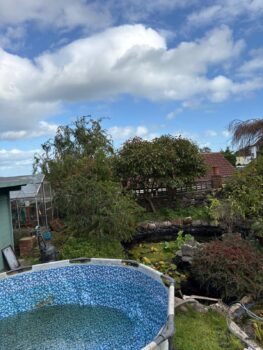

Before and After: Pond Restoration Results
We’ve helped clients across Devon, Cornwall, and the South West restore everything from small garden ponds to large estate lakes.
Our recent projects include:
- A 1-acre fishing pond near Modbury — 300 m³ of silt removed, new wildlife shelves created, and native reed planting established.
- A natural clay pond near Lifton — selective desilting and vegetation control restored open water and improved amphibian habitat.
Signs Your Pond Needs Desilting
Over time, even the best-built ponds gradually accumulate silt, leaf litter and organic debris. If your pond is becoming noticeably shallower, filling with vegetation, turning murky after rain, or developing reduced flow through inlets and outlets, it may be time for desilting. Other warning signs include declining wildlife, unpleasant smells, flooding around the margins, or sediment fans forming where water enters the system. Early intervention prevents long-term damage, restores water clarity, and brings your pond back into ecological balance—while protecting downstream wetlands and infrastructure. If you’re noticing any of these symptoms, Sasaquatics can assess sediment levels and recommend the most sustainable, low-impact desilting approach for your site.
💧 Why Choose SAS Aquatics
- Experienced aquatic restoration specialists with ecological expertise.
- Covering all of Devon and Cornwall, from Exmoor to the Lizard.
- Fully insured, RAMS-compliant, and environmentally responsible.
- Flexible approach — from small private ponds to large conservation sites.
- Hands-on and design-led: we handle everything from survey to silt removal and replanting.
📞 Get a Free Pond Desilting Quote
If your pond is filling with silt or losing clarity, we can help.
Contact SAS Aquatics for a no-obligation quote and professional site advice.
Please send us photo’s and further information via email or you can whatsapp our number.
📍 Serving Devon & Cornwall | 🌐 www.sasaquatics.com | ☎️ 08000371125 | ✉️ info@sasaquatics.com
Costs of Pond Desilting
Prices begin at £600.00
Related Pond Services
What is pond desilting and why is it necessary?
Over time, ponds naturally fill with silt and organic matter, reducing depth and water quality. Desilting removes this build-up to restore healthy aquatic habitats, improve oxygen levels, and extend the life of the pond.
How often should a pond be desilted?
The frequency depends on the pond’s size, setting, and catchment. Smaller garden ponds often build up silt more quickly due to leaf fall and runoff, and may need cleaning every few years. Larger, more open ponds can remain healthy for a decade or more before desilting is required. We assess each site individually to find the most appropriate and least disruptive approach.
Will desilting harm wildlife?
When timed and managed correctly, desilting supports biodiversity. We schedule works outside breeding seasons, retain refuge areas, and can replant native species to enhance ecological recovery.
Do you provide full restoration services as well?
Yes. Alongside desilting, we offer complete pond restoration — including bank re-profiling, leak repairs, planting design, and water quality improvement — tailored to wildlife or amenity goals.
What areas do you cover?
Sasaquatics operates throughout Devon and Cornwall, including Dartmoor, Exmoor fringes, South Hams, and North Cornwall. Larger or high-impact ecological projects further afield are considered.
Can I access funding for pond restoration?
Yes — several grants support pond restoration and wetland creation, such as Countryside Stewardship, ELMS options, and the Rewilding Innovation Fund. We can help identify and prepare applications.
Do you handle sediment disposal?
Yes — we manage all aspects of sediment removal in line with Environment Agency (EA) and DEFRA guidance. In most cases, silt should be spread or deposited on adjacent land where it naturally originated. Under the Environment Agency’s Regulatory Position Statement 4 (RPS 4), this can usually be done without a waste permit if the material is non-polluting and stays within the same site.
If sediment needs to be removed from site, it must be handled by a licensed waste carrier and disposed of at a permitted facility. In these cases, we coordinate with qualified third-party contractors to ensure full compliance.
What’s the best time of year for pond desilting?
Late summer to mid autumn (August–November) is ideal — water levels are lower, and most aquatic species have completed breeding cycles.
What types of ponds do you work on?
We restore wildlife ponds, farm ponds, ornamental ponds, estate lakes, and natural swimming ponds — always prioritising ecological health and visual appeal.
How much does pond desilting cost in Devon and Cornwall?
Costs vary depending on access, size, and depth. Most domestic ponds range between £600 and £1200, while larger conservation ponds are quoted individually.
Pond Desilting & Restoration in Devon and Cornwall
Find out how we can help you, by speaking to one of our pond specialists today.