Natural-Looking Koi Pond Design & Construction
Koi pond design · Devon & Cornwall
Natural-looking koi ponds, designed around fish and landscape
New koi ponds and considered refurbishment, bringing water volume, circulation, filtration, fish welfare and long-term maintenance into one coherent design.
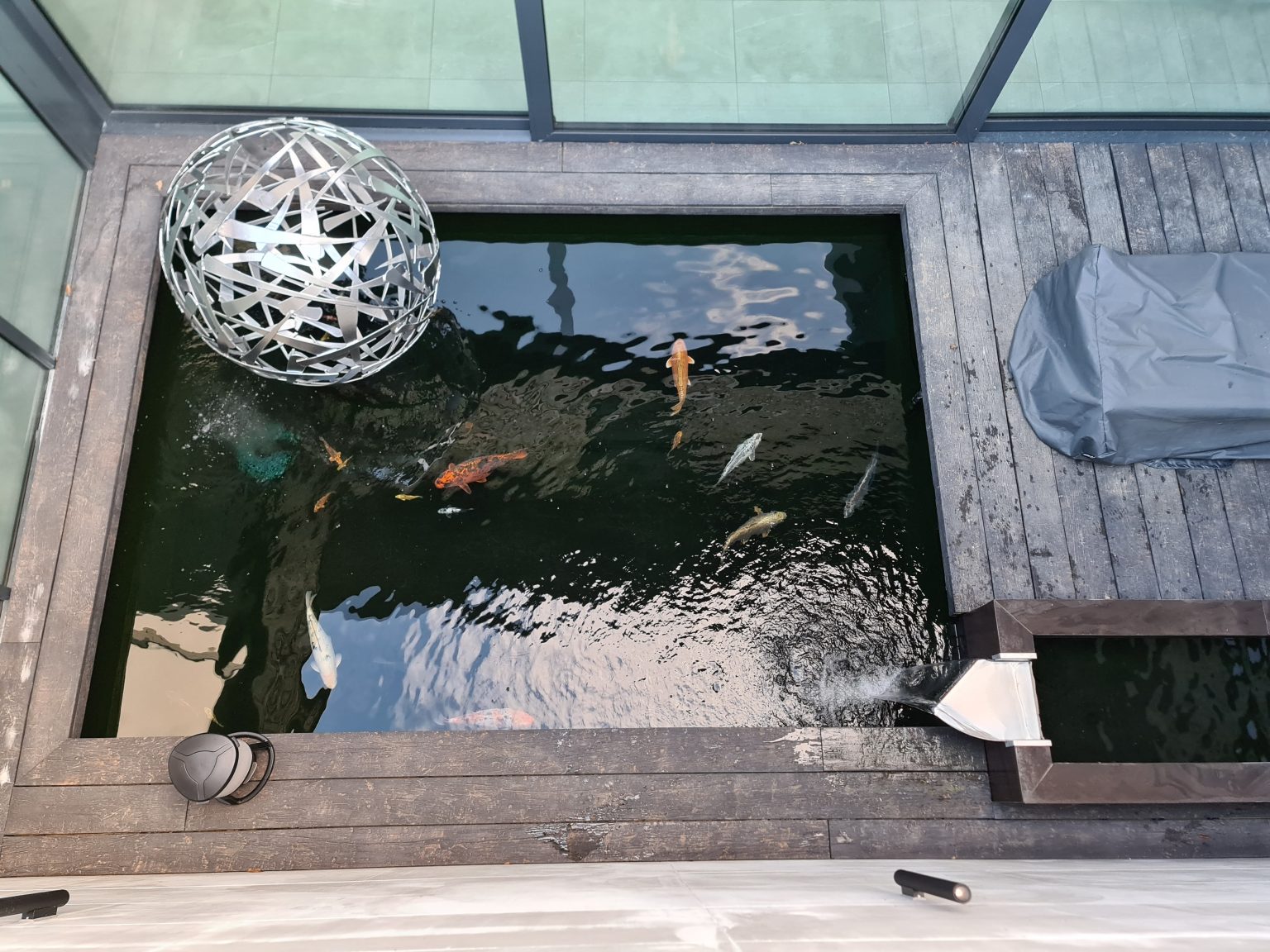
Technical requirements firstThe same principles apply whether the finish is contemporary, formal or integrated more naturally into the garden.
A living system
Design the pond and its equipment together
A successful koi pond has to work as a complete system. Water volume, circulation, oxygen, filtration, safe electrics and access for maintenance all matter, but the finished pond should also sit comfortably in its garden.
Natural-looking does not mean under-filtered. Equipment can often be screened or located discreetly, but it still needs enough space, ventilation and safe access to perform properly.
New pond design
Start with the fish load, site and maintenance plan
The right arrangement depends on the intended fish stock, the pond form and how the system will be managed. We consider the whole installation before recommending construction or filtration.
Useful depth and proportions
The water volume and pond geometry should support stable conditions, practical circulation and enough swimming space for the intended fish.
Drainage and skimming
Bottom drainage, surface skimming and circulation are planned together so settled and floating waste can reach the filtration effectively.
Mechanical and biological filtration
Filtration and aeration need to reflect the expected fish load, feeding, turnover and maintenance approach rather than a generic equipment list.
Safe, serviceable equipment
Pumps, controls, electrics and filter components need suitable space, ventilation and access for cleaning, servicing and future replacement.
Overflow and top-up
Overflow, top-up and surrounding surface water are considered so the pond and equipment area remain manageable in changing weather.
Edges and planting
Stone, levels, planting and screened equipment can soften the construction while protecting the technical needs of the pond and fish.
Existing ponds
Look beyond a replacement pump or filter
Poor clarity, recurring algae, low oxygen, difficult maintenance, leaks and unreliable circulation can have several interacting causes. We assess the pond as a whole and recommend a proportionate route.
Explore pond refurbishment and repair →- Filtration, circulation or aeration upgrades
- Improved skimming or bottom-waste collection
- Repair or replacement of waterproofing
- Safer and more practical edges
- Better equipment access and maintenance arrangements
- A more natural treatment of hard landscaping and planting
How we work
Review, understand, design and deliver
We do not promise a universal system or permanent clarity before the pond, fish load and maintenance expectations have been understood.
Send the initial details
Share the location, approximate dimensions, photographs and whether the enquiry concerns a new or existing pond.
Pond, fish and equipment
For an existing pond, include the known equipment, fish stock, maintenance routine and the main problem you want to solve.
Inspect where required
Complex refurbishment, leakage, structure, access and filtration may need professional assessment before a responsible scope is prepared.
Prepare a clear proposal
The proposed work explains the system, key assumptions, exclusions, access requirements and long-term maintenance implications.
What to send
Give us enough information for a useful first review
Include photographs of the pond or proposed site, approximate length, width and depth, access information, known pumps, filters, drains, skimmers or aeration, the approximate fish stock and the outcome you want.

Waterproofing and construction
Choose the system after understanding the site
There is no single waterproofing system that is right for every koi pond. The choice depends on shape, ground conditions, structural design, penetrations, expected movement, finish and budget.
Options may include a suitable flexible liner, formed lining system or properly specified rigid structure. The recommendation should follow site and design assessment rather than a blanket claim that one material is always best.
Common questions
Useful answers before we talk
Can a koi pond still look natural?
Yes. Edges, stone, planting and the position of equipment can be designed to sit naturally in the garden. Fish welfare, filtration and service access still need to govern the technical design.
Do all koi ponds need a bottom drain?
Not every pond has the same solution, but collecting settled waste and moving it efficiently to filtration is an important design consideration. The recommendation depends on the pond form, construction and maintenance plan.
Can plants be used in a koi pond?
They can be included where they are protected and compatible with the fish and maintenance approach. Koi may disturb or eat planting, so planted areas often need deliberate separation or protection.
Can you improve an existing koi pond?
Yes. Start by sending photographs, dimensions, equipment details and the issue you want to solve. A site assessment may be needed before recommending filtration, circulation, waterproofing or structural work.
Can you guarantee clear water?
No responsible contractor should promise a permanent result without qualifications. Water clarity and quality depend on system design, fish load, feeding, sunlight, maintenance and changing conditions.
Tell us about the pond and the site
Start with photographs and practical details
Send approximate dimensions, location, access details, known equipment and what you want to achieve. We will review the information and explain the most useful next step.